
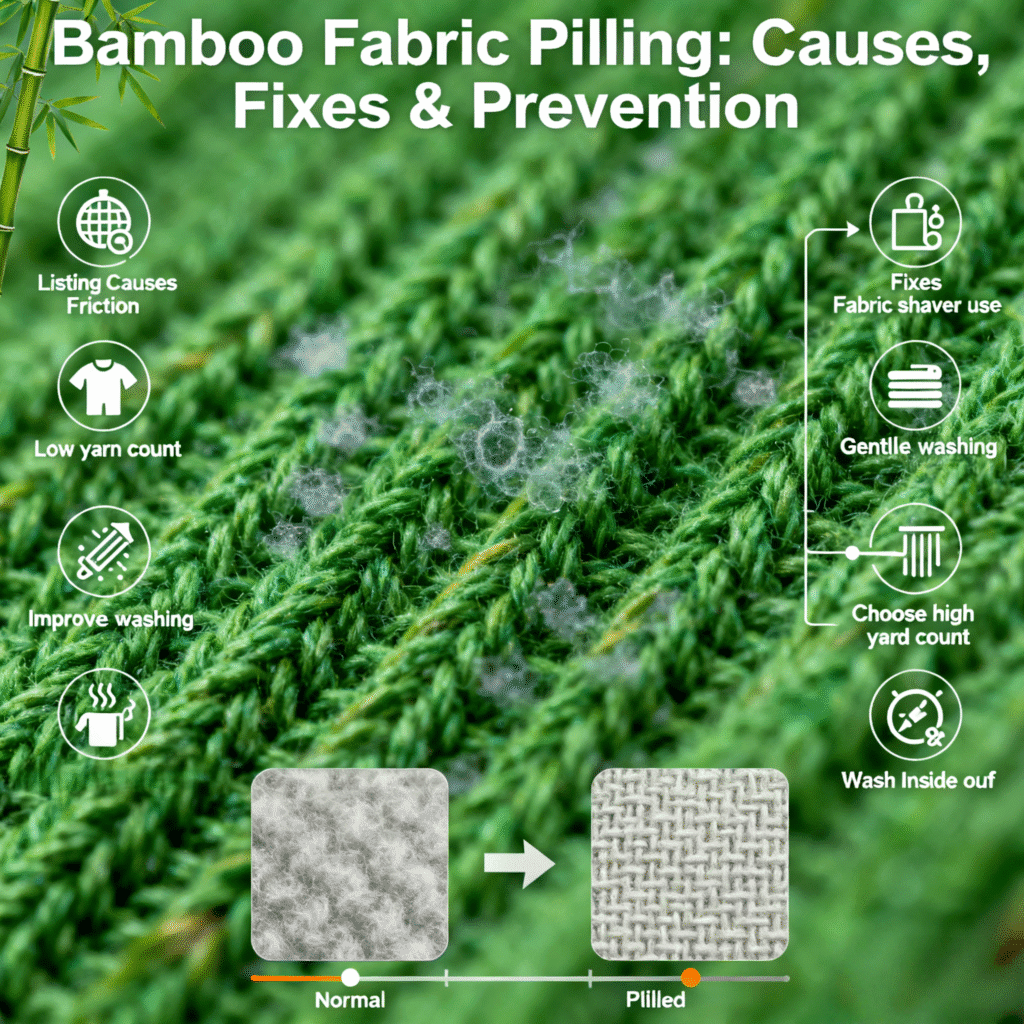
Bamboo fabric arrives like a promise: soft as a whisper, breathable, and wrapped in the green halo of sustainability. Its silky drape and eco-amiable reputation have made it a darling of bedding, activewear, and everyday garments. Yet, for many users, the fabric’s graceful first impression is marred over time by small, stubborn companions – pills: little bobbles of tangled fibers that gather on the surface and dull the fabric’s pristine look.
Pilling is often dismissed as a minor annoyance, but it raises real questions about durability, value, and expectations for eco-textiles. The phenomenon sits at the intersection of fiber chemistry, yarn construction, and everyday wear – and it reveals tensions between the softness consumers prize and the abrasion resistance designers must engineer. Understanding why bamboo fabric pills, when and how it happens, and what can be done about it helps knit together the story of this material beyond its marketing.
This article explores the pilling Issue with Bamboo Fiber Fabric: the science behind the fuzz, the manufacturing choices that amplify or reduce pilling, practical care tips to slow it down, and what the problem means for consumers and the textile industry as bamboo continues its ascent.
Table of Contents
- From Strand to Shirt: Why Bamboo Pill forms and what Fiber Structure Reveals
- Everyday Triggers That Worsen Pilling: Washing, Drying, and Friction Habits to Watch
- Safe Fixes That Preserve Your Garment: When to Use a Fabric Shaver, Lint Roller , or Gentle Hand Removal
- Preventative Care Routines for Long Lasting Bamboo Clothing: Washing Settings, Detergent Choices , and Storage Tips
- Q&A
- In Summary
 From Strand to Shirt : Why Bamboo Pill Forms and What Fiber Structure Reveals

Beneath the soft hand of a tee lies a microscopic landscape: long filament threads or short staple fragments, tightly or loosely bound, with surface microfibrils that either tuck in or stand up. When bamboo is processed into fabric-whether as viscose, modal, or the original plant fiber is chemically reconstituted into tiny strands whose length, surface roughness, and bonding dictate how they behave in a wash or against skin. shorter, cut staple fibers and loosened microfibrils are prime candidates to tease out of the yarn; once a few fibers protrude, friction turns them into fuzzy knots that become familiar pills.
Understanding that structure points to practical clues for prevention. Fabrics made from longer continuous filaments or those with tighter spin and finish treatments resist surface disturbance, while loose weaves and high-abrasion zones invite pilling. Look for these telling signs:
- Fiber length: longer filaments = fewer loose ends.
- Surface finish: Singeing and brushing determine how many microfibrils stand up.
- Yarn twist and density: higher twist and tighter packing limit fiber migration.
- Blend partners: Synthetic fibers can either reduce or exacerbate pills depending on their strength and elasticity.
| Fabric Type | Pilling Tendency | Why |
|---|---|---|
| Bamboo viscose | Moderate-High | Short regenerated staples, soft surface |
| bamboo lyocell | Lower | Smoother filaments, stronger bonding |
| Blend (bamboo+poly) | Varies | Polyester can form stubborn pills |

Everyday Triggers That Worsen Pilling : Washing, Drying, and Friction Habits to Watch
Hot water, aggressive cycles, and too much soap are like a boot camp for delicate bamboo fibers – they roughen the surface and invite tiny pills to form. Watch out for these common culprits that speed up wear:
- High-temperature washes – shrink and soften fibers, increasing surface fuzz.
- Overloading the machine – garments can’t move freely, creating extra abrasion.
- Aggressive detergents and bleach strip natural lubricants from the yarn, leaving fibers brittle.
- Hot tumble drying – constant tumbling at high heat repeatedly rubs surfaces together.
- Washing with rough items - zippers, denim, and Velcro acts like sandpaper in the drum.
Everyday friction – from backpacks to armrests - is just as guilty. Small, repeated rubs create the fuzzy halos you see on sleeves and knees. Try simple habit tweaks to reduce damage: turn garments inside-out, use mesh laundry bags, choose delicate cycles, and line-dry when possible. The little changes add up.
| Quick Action | Why It Helps |
|---|---|
| Mesh laundry bag | Reduces direct rubbing and snagging. |
| Cold or warm wash | Preserves fiber strength and surface smoothness. |
| Air drying flat | Minimizes tumbling abrasion and heat stress. |
Safe Fixes That Preserve Your Garment: When to Use a Fabric Shaver, Lint Roller, or Gentle Hand removal
Tiny bobbles don’t always mean the end of a favorite piece – treat them like small scuffs rather than stains. For dense, stubborn pilling on sweaters and heavier bamboo blends, a fabric shaver is efficient and preserves the fabric surface when used gently. Reach for a lint roller for light fuzz and surface pills on shirts and woven items, and use gentle hand removal (slow, rolling motions with your fingers or a single-edge razor held very flat) on seams, trims , and ultra-thin bamboo knits to avoid stretching or snagging.
- Fabric shaver: Best for thick knits and large areas; shave in short passes and keep the device flat to avoid diving into the weave.
- Lint roller: Best for quick touch-ups and travel; not effective on tight pills but perfect for surface lint and pet hair.
- Gentle hand removal: Best for delicate finishes and near seams; use light pressure and test a hidden spot first.
| Tool | When to Use | Risk |
|---|---|---|
| Fabric shaver | Heavy pilling on sweaters | Low if careful |
| Lint roller | Surface fuzz, shirts | Minimal |
| Hand removal | Delicate bamboo knits & trims | Higher if rushed |
Preventative Care Routines for Long Lasting Bamboo Clothing washing Settings, Detergent Choices, and Storage Tips
Wash bamboo gently to extend its life: choose a cold or cool water setting and the delicate/gentle cycle, place garments in a mesh laundry bag, and turn pieces inside out to protect the surface fibers. Use a mild, liquid detergent (pH-neutral or formulated for delicates) and avoid bleach, fabric softeners, and products with optical brighteners that weaken fibers and attract abrasion. When possible, skip the dryer – air-dry flat or hang to dry in shade – and use a low-heat tumble only for heavily wrinkled items. Small habits like a short spin and separating heavy items (jeans, towels) from bamboo will dramatically reduce friction and future pilling.
Storage and handling are as vital as washing. Fold bamboo garments to avoid shoulder stretching from hangers, store in breathable cotton bags or drawers with cedar or lavender sachets to deter pests, and give each item room – do not overcrowd. Keep a soft lint shaver or sweater comb handy and remove pills gently; frequent light maintenance beats aggressive scraping. Helpful quick reference:
| Product Type | Best Use | Why |
|---|---|---|
| Mild liquid detergent | Everyday wash | Gentle on fibers, no residues |
| Enzyme-free formulas | Delicates & blends | Prevents fiber breakdown |
| Pods & powder (avoid) | Not recommended | Can leave residues and be abrasive |
- Do fold flat, air out before storing, and rotate wear to minimize repeated abrasion.
- Don’t cram garments into drawers or use plastic bags that trap moisture.
- Quick fix: remove tiny pills with a soft comb and treat rough spots with gentle hand-washing rather than aggressive mechanical cleaning.
Q&A

Q: What exactly is pilling?
A: Pilling is the formation of small balls or “pills” of tangled fibers on a fabric’s surface. They appear where fibers break, work loose, and then knot together under friction. Pills are a cosmetic change – a sign of surface wear – rather than a hole or structural failure.
Q: Why does bamboo fiber fabric pill?
A: Many bamboo fabrics are made by chemically regenerating bamboo into viscose or lyocell fibers. Those regenerated fibers are relatively short and smooth; the short length allows broken ends to work to the surface under abrasion and form pills. Knit construction, brushing, and high-friction use also increase the chance of pilling.
Q: Are all “bamboo” fabrics equally likely to pill?
A: No. The pilling tendency depends on how the bamboo is processed and the fabric construction. Bamboo viscose/rayon (common and inexpensive) pills more than bamboo lyocell (TENCEL), made with closed-loop processes. Tight weaves and woven fabrics generally pill less than loosely knitted or brushed finishes.
Q: Is pilling a sign of poor quality?
A: Not always. Pilling is often a normal result of fiber and fabric properties and everyday abrasion. Tho high-quality manufacturing choices (longer staple fibers, higher yarn twist, compact spinning, anti-pilling finishes) reduce pilling. Extensive, early pilling on a garment meant to be high-end can reflect lower manufacturing standards.
Q: Does blending bamboo with other fibers affect pilling?
A: Yes. Blends can either increase or decrease pilling depending on the partner fiber. Synthetic fibers like polyester are strong and can cause pills to cling and be very visible; cotton blends with long-staple fibers may pill less. The overall yarn construction and finishes are decisive.
Q: How can I prevent pilling when buying bamboo clothing?
A: Look for garments made from bamboo lyocell/TENCEL or labeled ”long-staple” or “low-pile”. Prefer tightly woven fabrics, higher yarn twist, and products that mention anti-pilling or enzyme finishing. Read user reviews for real-world wear reports. If possible, test by rubbing an inconspicuous area in-store to feel for loose fibers.
Q: What laundry practices reduce pilling?
A: Wash inside out, use a gentle cycle with cold water and a mild detergent, avoid overloading the machine, and choose a front-loader over an agitator top-loader. Put delicate bamboo garments in a mesh laundry bag. Skip harsh drying cycles - tumble-dry on low or air-dry flat to limit friction.
Q: Do fabric softeners help or hurt pilling?
A: Fabric softeners may temporarily reduce friction but can also coat fibers and make pills more noticeable or harder to remove. For bamboo fabrics, it’s usually better to avoid heavy softeners and rely on gentle washing and proper drying.
Q: How do I remove pills safely?
A: Use a fabric shaver or a pill comb designed for textiles; run it gently across the surface. A fine-tooth razor can be used carefully on flat surfaces, and adhesive tape can lift small pills. Always test on an inconspicuous area first to avoid thinning the fabric.
Q: Will pilling come back after I remove it?
A: It can. Removing pills addresses the symptom but not the underlying loose fibers. If the fabric continues to be exposed to friction, new pills may form. Reducing abrasion and altering care habits can slow recurrence.
Q: Are certain bamboo garments more prone to pilling?
A: Yes. Knitted items (T‑shirts, sweaters), brushed fabrics, and garments that experience frequent abrasion (underarm, cuffs, seat) are more prone to wear. Smooth, tightly woven shirts and bedding usually pill less.
Q: Can manufacturers eliminate pilling ?
A: Complete elimination is rare for fabrics made from short or regenerated fibers under normal wear. Manufacturers can substantially reduce pilling through fiber selection (longer fibers), yarn engineering (higher twist, compact spinning), and finishing treatments (anti-pilling finishes, singeing). These steps add cost but improve performance.
Q: Is pilling a sustainability issue for bamboo products?
A: Pilling can shorten a garment’s usable aesthetic life if the consumer discards clothing as it looks worn. Choosing better-made fabrics and caring for garments prolongs life and supports sustainability. Separately, prefer bamboo products certified for enduring processing (e.g., lyocell from closed-loop systems) to reduce environmental impact.
Q: When should I return or complain about pilling?
A: Check the retailer’s returns and warranty policy. If a new garment pills excessively after minimal, normal wear and the product was marketed as ”anti-pilling” or premium, it’s reasonable to seek an exchange, refund, or repair. Keep photographs and care-log details to support a claim.
Q: Bottom line – should I avoid bamboo fabrics due to pilling?
A: Not necessarily. Bamboo-derived fabrics offer softness, breathability, and moisture-wicking properties, especially when made as lyocell. Be aware of pilling risk with certain constructions (knits, viscose rayon) and choose fabric type, garment construction, and care methods that fit your expectations for longevity and appearance. With informed choices and gentle care, you can enjoy bamboo textiles while keeping pilling manageable.
In Summary
Like tiny islands rising on a calm sea, pills are a quiet reminder that even the softest fabrics have their own life cycle. Bamboo fiber’s appeal - its softness, breathability, and eco-minded reputation - doesn’t make it immune to the mechanical realities of wear and washing. Understanding pilling as a predictable, manageable effect rather than a fatal flaw lets shoppers and makers approach the material with both appreciation and practicality.
For consumers, that means choosing quality, reading care labels, and using gentle laundering practices to keep garments smoother for longer. For designers and manufacturers, it means continuing to refine blends, spinning techniques, and finishes that preserve bamboo’s strengths while reducing abrasion-prone tendencies. Together, these small, informed choices can extend the useful life of garments and reduce waste.
Pilling doesn’t have to signal the end of a favorite piece; it can be a prompt to repair, rehome , or repurpose. With thoughtful care and ongoing innovation, bamboo fiber fabric can remain a comfortable, sustainable option in wardrobes – or, at the very least, teach us to treat our textiles with a little more patience and curiosity as they age.