
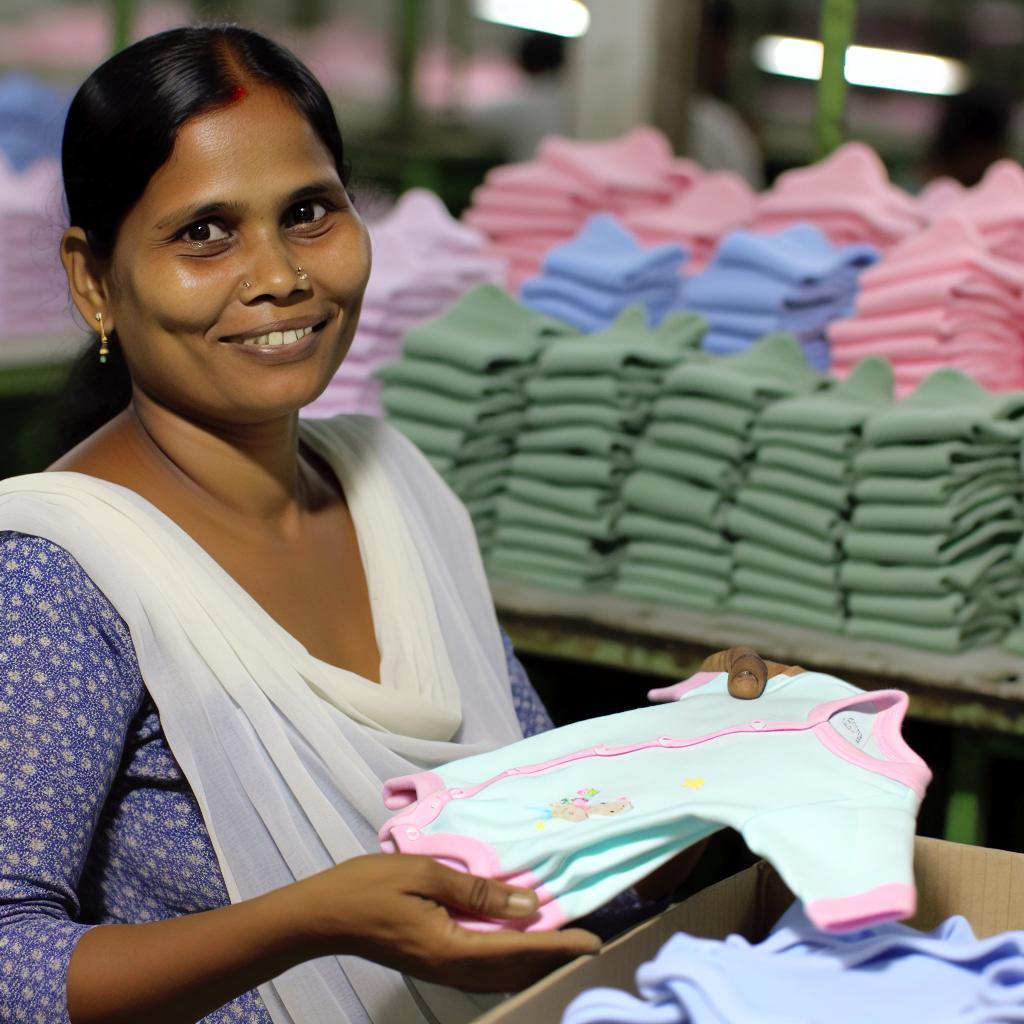
In a world brimming with adorable baby fashion and personalized infant wear, the demand for customized baby clothing is on the rise. Whether you’re launching your own boutique brand or searching for unique pieces to delight new parents, finding the right factory to bring your designs to life is a crucial first step. But amid the countless online listings and overseas manufacturers, how can you be sure you’re partnering with a reliable and trustworthy supplier?
In this article, we’ll guide you through the essential steps to identify a dependable baby clothing customization factory—while steering clear of scams that can cost you time, money, and peace of mind. With the right knowlege and a few smart strategies, you can make confident decisions that set your brand or baby gift collection on a path to success. Let’s dive in.

Table of Contents
- Understanding the Essentials of Baby Clothing Manufacturing
- Researching factories with a Safety-First Mindset
- Evaluating Certifications and Quality Assurance Standards
- Communicating Expectations Clearly and Professionally
- Requesting and Reviewing Product Samples with Care
- Q&A
- key Takeaways
Understanding the Essentials of Baby Clothing Manufacturing
The roadmap of baby clothing manufacturing starts long before stitching begins. It revolves around a tightly coordinated succession of steps—from pattern creation and sample growth to final production and quality control.A reliable supplier should be obvious in every stage. Here’s what to look for in a manufacturing partner:
- Fabric sourcing: Does the factory use baby-safe, hypoallergenic fabrics?
- Customization options: Can they adapt to your design and sizing needs?
- Production timeline: Are they clear and consistent with delivery schedules?
- Compliance certifications: Do they meet local and global standards?
- Communication flow: Is it easy to recieve timely updates and answers?
| Phase | Key Focus | Importance |
|---|---|---|
| fabric Selection | Organic, Non-toxic materials | Skin Safety |
| Pattern Making | Comfort-Driven Design | Correct Fit |
| Manufacturing | Precise Stitching & Care Labels | Durability |
| Quality Control | Final Inspection & Packaging | Brand Trust |
Researching Factories with a Safety-First Mindset
When it comes to baby clothing, safety isn’t just a feature — it’s a necessity. Begin by evaluating potential factories through the lens of international safety standards. ISO certifications, CPSIA compliance, and OEKO-TEX® labels aren’t just acronyms; they are your allies in filtering out factories that take shortcuts. Request documents, look for audit reports, and consider third-party verification where possible. A factory with nothing to hide will gladly walk you through their safety protocols — frequently enough with pride.
Beyond certifications, dive deeper into their production ethos. Ask about how they handle chemical use in dyes and fabrics,whether they enforce formal needle detection processes,or if sharp tools are properly managed near garment assembly lines.Be especially cautious with claims like “organic” and “child-safe” — these should be backed by transparent sourcing and material testing records. When in doubt,use this quick checklist during your communication phase:
- Are MSDS (Material Safety Data Sheets) readily available?
- Do they enforce child safety checks during the QC stage?
- Is fabric tested for lead,formaldehyde,and phthalates?
- Can they provide recent compliance certificates?
| Criteria | Safe Practice | Red flag |
|---|---|---|
| Fabric Sourcing | GOTS-certified organic cotton | Unverified local mills |
| Worker Safety | Regular health inspections | No employee safety training |
| Quality Control | Dedicated child-safety checks | Visual inspection only |
Evaluating Certifications and Quality Assurance Standards
Before securing a partnership with a baby clothing factory,it’s crucial to verify that the manufacturer adheres to internationally recognized certifications and follows stringent quality assurance protocols. These certifications not only reflect a factory’s compliance with safety and ethical standards but also act as indicators of product reliability and consistent quality—a must when dealing with sensitive infant garments.
- OEKO-TEX® Standard 100 – Ensures textiles are free from harmful substances safe for babies.
- GOTS (Global Organic Textile Standard) – Verifies organic status and socially responsible manufacturing.
- BSCI (Business Social Compliance Initiative) – Audits labor practices for fair and ethical production.
- ISO 9001 – Confirms quality management systems are in place and continuously improved.
Look beyond the logos: ask for audit reports, recent certification documents, and even third-party lab testing results. Diligence here can prevent costly issues later. A factory worth your trust will gladly share proof of its commitment to quality and safety standards.
| Standard | Focus Area | Ideal For |
|---|---|---|
| OEKO-TEX® 100 | Chemical Safety | Infant skin protection |
| GOTS | Organic Materials | Enduring babywear |
| BSCI | Labor Ethics | Fair trade assurance |
| ISO 9001 | Process Quality | Consistent production |
Communicating Expectations Clearly and Professionally
When working with a baby clothing factory overseas or locally, setting the tone early through clear and professional communication is key.Before you even place a sample order, take the time to outline your specific requirements in detail. This helps avoid misunderstandings and ensures that the manufacturer knows exactly what your brand expects in terms of quality, safety, and style.
- Material standards: Specify organic or hypoallergenic fabrics, and any certifications required.
- Design expectations: Clarify style, sizing charts, and custom prints or labels.
- Production timelines: Set realistic deadlines and include buffers for quality control.
- Packing & labeling: Indicate how the clothing should be folded, tagged, and packaged.
use professional language in all your interactions, whether you’re communicating via email, video call, or shared documents. Keep records of all discussions, especially changes in agreements or production specs. For added clarity, consider creating a Product Specification Sheet (also known as a tech pack). Here’s a basic example:
| item | Material | Size Range | Color | Notes |
|---|---|---|---|---|
| Organic Baby Onesie | 100% Organic Cotton | 0–24 months | Neutral Pastels | Include tear-away label |
| Baby Sleep Set | Bamboo Blend | 3–12 months | Mint, Gray | Use nickel-free snaps |
Requesting and Reviewing Product Samples with Care
A crucial step in selecting the right manufacturer for baby clothing is testing the product firsthand. Samples act as a tactile business card, revealing not only the factory’s craftsmanship but also their commitment to detail and safety. Opt for a small batch of varied designs—bodysuits,rompers,bibs—to assess fabric softness,stitching durability,and embellishment safety like snaps or prints. Prioritize Oeko-Tex or organic certified fabrics if eco-friendliness is high on your brand’s values.
Before placing bulk orders, analyze each sample with a critical eye but also gently—remember, these are handmade items and slight variances may occur. Create a checklist or use a comparison table to make fair evaluations:
| Criteria | Ideal Standard | Observations |
|---|---|---|
| Fabric Quality | Soft, breathable (100% cotton or bamboo) | ✔️ Very gentle on skin |
| Seam Strength | Even stitching, no loose threads | ⚠️ Slight unraveling on sleeve hem |
| Color Fastness | No fading after wash | ✔️ Maintains color well |
| Safety Features | Nickel-free snaps, secure labels | ✔️ Meets infant safety norms |
- Communicate clearly: If a sample doesn’t meet expectations, provide specific feedback and ask for revised versions.
- Document everything: Notes, photos, and even videos can help your internal team decide which supplier upholds your brand’s values.
- Test real-world usability: Launder samples multiple times, stretch seams, and let real parents give feedback when possible.
Q&A
Q&A: How to Find a Reliable Baby Clothing Customization Factory (Tips to Avoid Scams)
Choosing a trustworthy baby clothing customization factory can make or break your brand—or your baby shower plans! We sat down with a sourcing specialist and a product designer to answer common questions and share practical tips for navigating the world of custom baby apparel manufacturing.
🍼 Q1: Why is it vital to choose a reliable baby clothing customization factory?
A: Because your baby (or your business) deserves more than itchy labels and disappointing delivery times. Reliable factories ensure product safety, timely production, ethical practices, and—most importantly—adorable clothes that actually match your design ideas.
🕵️♀️ Q2: what are the red flags when researching a potential factory?
A: Watch out for:
- Vague contact facts or no physical address
- Unrealistically low pricing (too good to be true usually is!)
- Poor communication or unwillingness to provide samples
- No certifications or quality assurance policies
- Stock product photos in their portfolio (or worse: stolen images)
Bonus tip: If their reply speed is lightning-fast irrespective of time zones… they might be bots.
📋 Q3: Are there any must-have certifications to ask for?
A: Absolutely. Look for:
- OEKO-TEX® certification (chemical safety)
- GOTS (Global Organic Textile Standard) if you want organic cotton
- ISO standards for quality management
- BSCI or Sedex if you’re focused on ethical labor
These aren’t just letters—they’re your first defense against subpar or unsafe products.
🔍 Q4: How can I verify a factory’s legitimacy before placing an order?
A: Conduct a little detective work:
- Ask for client references and past project examples
- Request a video call or virtual factory tour
- Check their business license and tax information
- Read third-party reviews (and not just what’s on their website)
- Use trusted sourcing platforms like Alibaba,ThomasNet,or Global sources—but still vet each supplier independently
💬 Q5: Is it worth visiting the factory in person?
A: If your order volume and budget justify it—yes.nothing beats walking the factory floor, meeting the team, and seeing the actual production conditions. For startups or individuals, though, hiring a third-party inspection agency is a great alternative.
📦 Q6: What should I request before placing a bulk order?
A: Never skip these:
- A sample or prototype of the customized product
- A written agreement including materials,size specs,MOQ,pricing,and delivery timelines
- Clear return and refund policies
- An invoice with payment terms that protect both parties
Pro tip: Avoid 100% upfront payments. Negotiate a 30/70 split so you only pay in full once production’s complete.
💻 Q7: Can I use platforms like Etsy or Instagram to find manufacturers?
A: You can spot some promising partners there, but proceed with caution. always verify the credibility of sellers found via social media. Ask for testimonials, legal documents, and samples before handing over your budget or your brand’s reputation.
🧠 Q8: What’s the smartest way to start a partnership with a new factory?
A: Start small. Place a low-quantity test order to evaluate quality, timelines, and communication.This helps minimize risk while building relationships. Remember, a factory that treats your small order with care will likely scale well with you.
👶 Final Thought:
The baby clothing market is full of charm—but don’t let cute designs cloud your business judgment. Finding a reliable customization factory takes research, persistence, and sometimes a bit of instinct. But get it right, and you’ll be well on your way to delivering cozy, safe, and stylish little outfits to the world.Got more questions? Drop them below or consult a product sourcing agent before signing that dotted line. 👕
Key Takeaways
And there you have it—a roadmap to finding a trustworthy baby clothing customization factory without falling into common traps. In a marketplace filled with glittering promises and picture-perfect samples, it pays to do your homework, ask the right questions, and trust your instincts.Remember, behind every successful custom baby clothing line is a reliable partner who values quality, transparency, and your peace of mind.With these tips in your toolbelt, you’re well on your way to turning your creative vision into beautifully stitched reality—scam-free.