
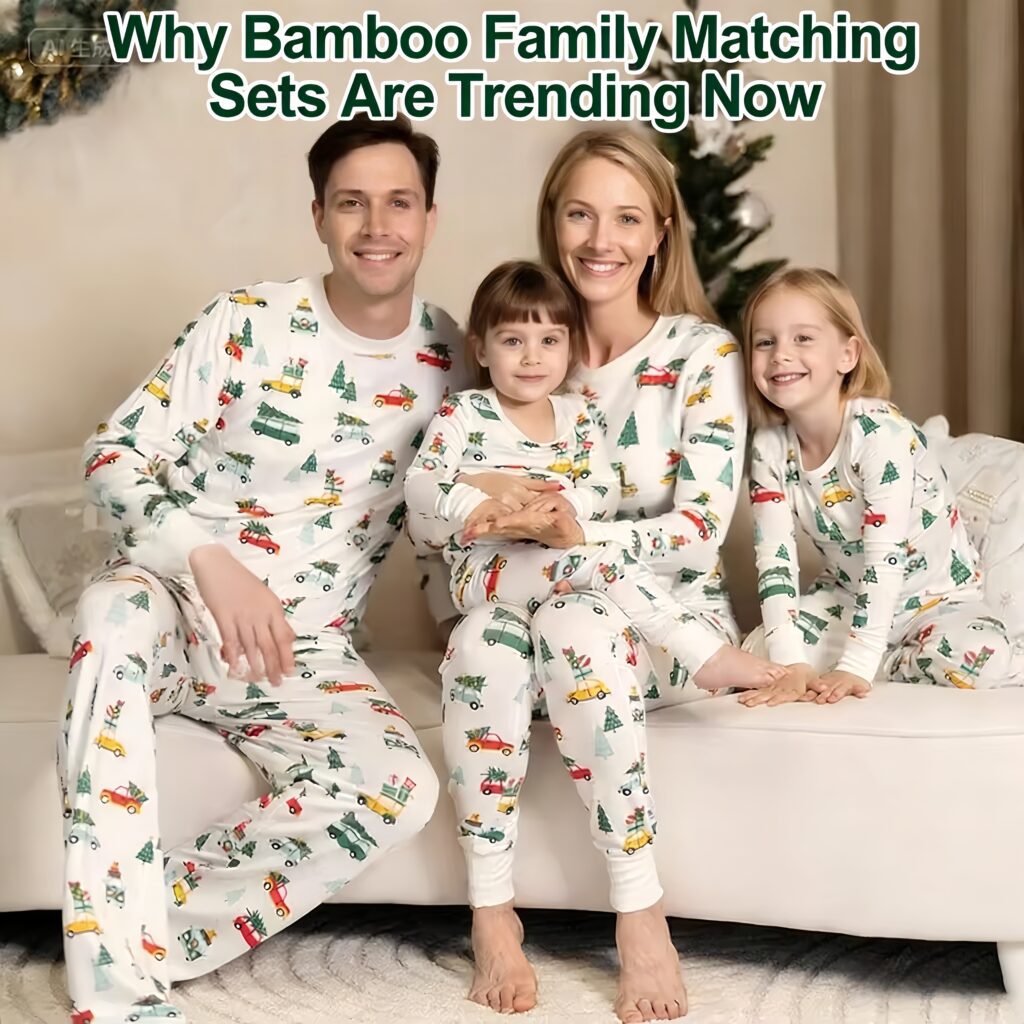
On a sunlit weekend picnic or in the soft glow of a family portrait, matching outfits have long signaled togetherness. Recently, a new player has joined that tradition: bamboo fabric family sets. Their rise from niche eco-boutiques to mainstream wardrobes blends practical qualities with a modern aesthetic, prompting curiosity about what is driving their momentum.
Bamboo textiles are often praised for their smooth hand, breathability , and moisture-wicking feel, and many brands highlight perceived environmental and hypoallergenic benefits. Coupled with minimalist designs, muted color palettes, and the ease of machine care, these sets present a combination of comfort and style that appeals to parents looking for both function and cohesion. At the same time, social media-ready visuals and an appetite for coordinated family imagery have amplified their visibility.
This article explores the forces behind the growing popularity of bamboo family matching sets: the material’s characteristics and manufacturing realities, consumer values around sustainability and comfort, marketing and influencer trends, and how families are choosing to express identity through clothing. The goal is to map the practical and cultural reasons that have turned a fabric choice into a familial fashion phenomenon.
Table of Contents
- Why Bamboo Family Matching Sets Are Dominating Wardrobes: Comfort, Sustainability, and Practical Benefits
- The Science Behind Bamboo Fabric Performance and What It Means for Busy Families
- Ethical and Environmental Tradeoffs to Weigh Before Buying Bamboo Matching Sets
- Choosing the Right Bamboo Family Set: Fit, Care Tips, and Styling Recommendations for Every Season
- Q&A
- The way forward
Why Bamboo Family Matching Sets Are Dominating Wardrobes: Comfort, Sustainability, and Practical Benefits
There’s a reason these coordinated sets feel like a second skin: bamboo-based knits are naturally silky soft and exceptionally breathable, so everyone from newborns to grandparents can wear the same style and stay comfortable. Families love the way the fabric wicks moisture, regulates temperature, and resists odors without stiffening – perfect for active days, cozy nights, and everything in between. Paired with thoughtful cuts and neutral palettes, matching sets become an effortless way to look unified while enjoying practical everyday performance.
Beyond comfort, the material’s lifecycle and care profile make it a wardrobe favorite. Key perks include:
- Low-maintenance - machine washable, quick-drying, and crease-resistant for busy households.
- Durable – maintains shape and softness through repeated wear and washes.
- Eco-aware - grown rapidly with less land use than many crops when responsibly sourced.
Families also appreciate how one fabric can suit multiple climates and ages, reducing the urge to buy separate specialty pieces. For a quick comparison, consider this snapshot of common fabrics:
| Fabric | Feel | Sustainability Note |
|---|---|---|
| Bamboo | Soft, cooling | Fast-growing, lower water needs when responsibly processed |
| Cotton | Comfortable, familiar | Common but often water-intensive |
| Polyester | Durable, structured | Synthetic, not biodegradable |

The Science Behind Bamboo Fabric Performance and What It Means for Busy Families
Bamboo fibers are fine, naturally hollow strands that behave like tiny straws, pulling moisture away from the skin and letting air circulate – that’s why garments feel cool and dry even after a busy morning. Simultaneously occurring, the fabric’s soft, round fiber structure produces a velvety hand that resists pilling and moves with the body, while naturally occurring compounds in the raw plant lend modest antimicrobial properties. Modern processing turns that raw potential into a consistent textile: what starts as a plant becomes a performance fabric that balances breathability, thermal regulation, and surprisingly low maintenance.
- Fast-drying: Less time on the line, fewer damp laundry piles.
- Odor-control: Helps active kids and parents stay fresher between washes.
- Soft & durable: Keeps matching sets looking tidy through play and washing.
- Gentle on skin: Ideal for sensitive children and newborns.
| Property | Bamboo | Cotton | Polyester |
|---|---|---|---|
| Breathability | high | High | Low-Medium |
| Dry time | Quick | Moderate | Fast |
| Softness | Very soft | soft | Variable |
| Odor control | Good | Fair | Poor |
For busy families, that combination translates into real-life wins: fewer outfit changes, less time ironing, and garments that tolerate frequent wear without losing shape. Matching sets become practical uniforms – cozy enough for naps, breathable for outdoor play, and low-fuss enough to stay in rotation. With simple care (cold wash, avoid fabric softener, tumble low or air-dry), the performance benefits are preserved, so a set that looks great on day one still performs on day one hundred.
Ethical and Environmental Tradeoffs to Weigh Before Buying Bamboo Matching Sets
Bamboo garments often arrive with a green halo, but the story behind the fiber can be more complex than the label suggests. While raw bamboo is fast-growing and low-input, much of what lands in stores is bamboo viscose, a chemically intensive product made by dissolving cellulose and regenerating it into fibers. That process can be done responsibly, but it can also involve harsh solvents, poor wastewater treatment, and opaque labor practices. When shopping, favor brands that disclose their supply chain and carry third‑party credentials like OEKO‑TEX, GOTS, or FSC to reduce the risk of hidden costs to people and ecosystems.
To make smarter choices, weigh these practical considerations before committing to a family set:
- Fabric origin: bamboo grown in monocultures vs. agroforestry systems.
- Processing method: mechanically processed or closed‑loop chemical systems.
- Durability: how it holds up to kids, washing, and repairs.
- End‑of‑life: biodegradability and recyclability options.
- Brand transparency: clear labels and social responsibility reports.
Some environmental tradeoffs are subtle – for instance, soft viscose may reduce the need for ironing (saving energy) but can shed microfibers in the wash.Below is a quick comparison to help visualize the main differences:
| Fiber | Processing | Typical Impacts |
|---|---|---|
| Bamboo Viscose | Chemical regeneration | Soft, often higher emissions unless closed‑loop |
| Mechanical Bamboo | Crushing & combing | Less chemical use, coarser texture |
| Organic Cotton | Traditional spinning | Higher water use, strong biodegradability |
Ultimately, the most ethical and environmental choice depends on the whole lifecycle: from where the bamboo was grown to how the final garment is cared for. Prioritize transparency, pick higher‑quality sets that last, and treat matching outfits as investments rather than fast‑fashion impulses – that’s the smallest footprint of all.
Choosing the Right Bamboo Family Set: Fit, Care Tips, and Styling Recommendations for Every Season
Finding the perfect fit means thinking beyond size tags – bamboo drapes differently, so opt for a slightly relaxed silhouette for toddlers and a tailored-but-breathable cut for adults. Prioritize stretch across shoulders and seat for active little ones, and check cuff and hem finishes so pieces layer easily. When selecting patterns and colors, pick a palette that can be mixed across ages so each family member feels coordinated without being identical.
- Wash cold with mild, enzyme-free detergent.
- Avoid bleach and fabric-softener sheets to preserve fibers.
- Dry flat or on low heat; remove promptly to reduce wrinkles.
- Store folded in a cool, dry place to keep the fabric soft.
Seasonal styling is simple: use the set as a base and change layers and accessories to suit sun or snow. For spring and summer, pair lightweight tops with sandals and straw hats; in fall and winter, add insulating layers like cardigans, quilted vests, or soft knit beanies. Neutral sets are versatile year-round, while small pops of color (scarves, socks, sneakers) create playful family unity without overpowering each look.
- Spring: light layers, sneakers, airy scarves.
- Summer: minimal jewelry, breathable hats, sandals.
- Autumn: denim jackets, ankle boots, warm tones.
- Winter: thermal base, wool coats, coordinating beanies.
| Season | Recommended Weight | Quick Pairing Idea |
|---|---|---|
| Spring | Light | cardigan + canvas sneakers |
| Summer | Ultra-light | shorts + straw hat |
| Autumn | Mid-weight | Denim + suede boots |
| Winter | Heavy blend | Layered coat + knit scarf |
Q&A
Q: What exactly are bamboo family matching sets?
A: Bamboo family matching sets are coordinated outfits made from bamboo-derived fabrics, offered in sizes for adults and children so families can wear the same patterns, colors, or styles. They range from loungewear and pajamas to casual tees and dresses, designed for coordinated looks in photos, holidays, or everyday wear.
Q: Why are these sets becoming more popular now?
A: Several factors converge: growing demand for comfortable, breathable clothing; increased interest in sustainable materials; social-media-driven trends like family photo shoots and “matching” posts; and brands expanding size ranges and stylish designs that appeal to parents and kids alike.Q: What makes bamboo fabric different from cotton or synthetic fibers?
A: Bamboo-derived fabrics-often sold as bamboo viscose, bamboo rayon, or bamboo lyocell-tend to be very soft, lightweight , and breathable. They often feel smoother than cotton, wick moisture well, and can regulate temperature, which makes them comfortable for sleep and casual wear. Fabric properties depend heavily on the production method and fiber blend.
Q: Are bamboo fabrics truly sustainable?
A: Bamboo, as a plant, grows quickly, needs little water, and often requires no pesticides, which gives it sustainability potential. However, the environmental footprint depends on processing: mechanically processed bamboo is more eco-friendly, while chemically processed viscose can use harsh chemicals unless produced in a closed-loop system. Look for clear supply-chain claims and certifications to assess sustainability.
Q: Are bamboo matching sets safe for babies and people with sensitive skin?
A: Many people with sensitive skin find bamboo fabrics gentle and less irritating than some synthetics because of the fabric’s softness and breathability. Still, reactions can occur, and dyes or finishes may cause sensitivities, so choose OEKO-TEX or similar certified products and test a small area if you’re worried about allergies.
Q: Do bamboo garments hold up over time? How durable are they?
A: High-quality bamboo lyocell and well-made blends can be quite durable, maintaining softness through many washes. Lower-quality bamboo viscose may pill or weaken sooner, so durability varies by brand, weave , and care. Follow care instructions and avoid harsh detergents to extend life.
Q: How should I care for bamboo clothing to keep it looking good?
A: Wash on a gentle cycle with cool or warm water, use mild detergent, avoid bleach and fabric softeners, and either tumble dry on low or hang to dry. Turning garments inside out and avoiding high heat helps preserve fibers and colors.
Q: Are there design or lifestyle reasons families prefer matching bamboo sets?
A: Yes. Bamboo’s drape and soft finish lend themselves to modern, minimalist designs that appeal to contemporary tastes. Matching sets simplify wardrobe planning, work well for photos and gatherings, and give a sense of togetherness without sacrificing comfort, appealing to families who value both style and ease.
Q: How do I choose a good bamboo matching set? What should I look for?
A: Check fabric type (lyocell tends to be more eco-friendly than generic viscose), fiber content and weight, clear size charts, return policies, and independent certifications like OEKO-TEX. Read reviews for fit and longevity, and inspect stitching and hems for construction quality.
Q: Are there any drawbacks to buying bamboo matching sets?
A: Potential downsides include variable quality across brands, the environmental concerns tied to certain chemical processing methods, possible higher price points for premium lines, and occasional pilling in cheaper fabrics. Sizing can also vary, so expect to consult size charts.
Q: Do bamboo matching sets cost more than alternatives?
A: Prices vary widely. Premium, transparently made bamboo or lyocell blends frequently enough cost more than basic cotton, while lower-cost bamboo viscose lines can be competitively priced. Consider long-term value, comfort, durability, and reduced need to replace garments , which can offset higher upfront costs.
Q: Are certifications vital when buying bamboo clothing?
A: Yes. Certifications or claims you can trust: OEKO-TEX Standard 100, GOTS (for blends that include certified fibers), or verified closed-loop processing for lyocell-help confirm low chemical residues and safer manufacturing. Brand transparency about sourcing and processing is also valuable.
Q: Is bamboo fabric suitable year-round?
A: Generally, yes. Bamboo’s breathability and moisture-wicking properties help keep you cool in warm weather, while its insulating qualities can provide comfort in cooler months when layered. Fabric weight and garment cut determine seasonality more than the fiber alone.
Q: Where are bamboo family matching sets most commonly used?
A: Popular uses include sleepwear, casual loungewear, family photo sessions, holiday pajamas, travel outfits, and matching looks for special events. Their soft, coordinated appearance makes them versatile for both home and casual outings.
Q: Bottom line-should a family try bamboo matching sets?
A: If you prioritize softness, breathability, and coordinated family style, trying a bamboo set from a reputable brand is reasonable. Pay attention to fabric type, certifications, care requirements, and reviews to ensure you get a product that aligns with your values and expectations.