
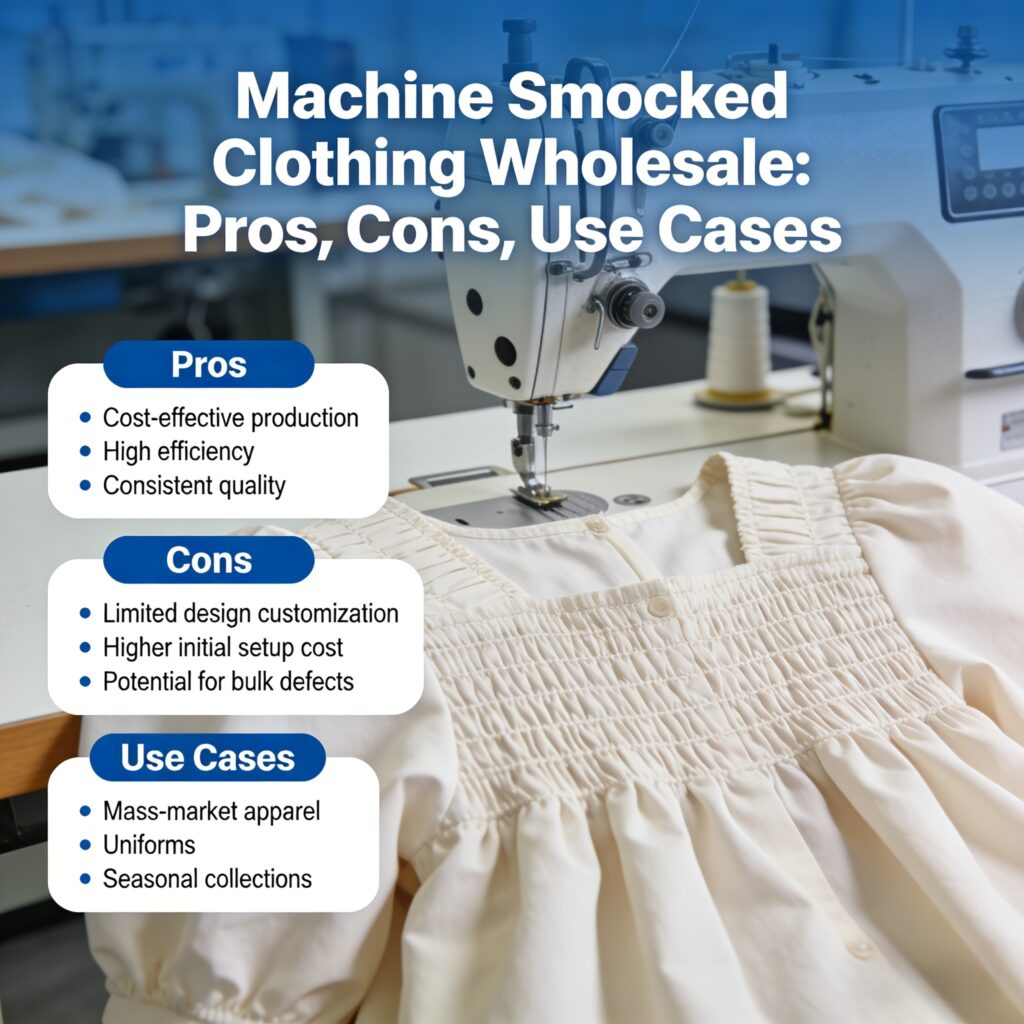
Like a chorus of tiny pleats singing in perfect unison, machine smocking transforms flat lengths of fabric into textured, elastic surfaces that catch light and movement. Once the exclusive realm of hand-stitched labour, smocking is increasingly mechanized, bringing speed, repeatability, and new scale to a craft historically prized for its artisanal touch. For wholesalers, that shift raises practical questions: when does automation enhance value, and when does it dilute the very qualities that make smocked garments desirable?
This article examines machine-smocked clothing from the wholesale vantage point, weighing the pragmatic benefits-reduced unit costs, consistent results, and faster turnaround-against the trade-offs, such as design limitations and the potential loss of handmade cachet. We’ll also map common use cases where machine smocking excels (children’s wear, casual dresses, mass-market collections) and scenarios where hand smocking or alternative finishes remain superior. Whether you’re a buyer, brand owner, or production manager, this introduction will help you decide when machine smocking is a smart logistical choice and when it’s merely a compromise.
Table of Contents
- Inside Machine Smocking: Production Mechanics, Accuracy Tolerances and Cost Drivers
- Weighing Benefits Against Tradeoffs: Durability, Aesthetics, and Pricing for Wholesale Buyers
- Fabric Choices, Pattern Adjustments, and Sizing Guidelines to Maximize Yield and Fit
- Manufacturing Partners, Minimum Orders , and Lead Time Tactics for Reliable Bulk Supply
- Best Market Fits and Launch Strategies: When Machine Smocked Lines Outperform Alternatives
- Q&A
- In Retrospect
Inside Machine Smocking: Production Mechanics, Accuracy Tolerances and Cost Drivers
At the heart of automated smocking lies a choreography of feeders, programmable heads, and tension-control systems that translate a digital pattern into rhythmic pleats. Modern equipment uses pre-programmed stitch maps and synchronized multi-needle carriages to hold fabric on guides while tiny, evenly spaced tucks are formed; stabilizers and backing layers are often added to keep lightweight textiles from skewing. Speed is deceptive here – machines can run hundreds of stitches per minute, but rhythm is governed by fabric behavior, thread elasticity, and the precision of the feed system. Small adjustments to pressure plates, feed dogs, and thread tension can make the difference between a couture finish and a puckered seam, so seasoned operators spend as much time dialing in setup as they do running production.
Quality is measured in millimetres and minutes: acceptable variation per tuck, seam alignment, and repeatability across the run determine both the garment’s look and its unit cost. Typical tolerances range from ±0.5 mm for high-end pieces to ±2 mm for casual styles; tighter tolerances increase inspection time and scrap rates. Key cost drivers include setup and programming time, specialist thread and stabilizer consumption, machine maintenance, and the learning curve for operators. Common levers for optimization:
- Run length: longer runs amortize setup costs;
- Fabric choice: stable knits cost less to smock than fine chiffons.
- Pattern complexity: more repeats and color changes raise cycle time.
- Quality tolerance: tighter specs raise sampling and rework.
| Spec | Typical Tolerance | Cost Impact |
|---|---|---|
| High-precision smock | ±0.5 mm | High |
| Standard retail | ±1.0 mm | Medium |
| Casual/utility | ±2.0 mm | Low |
 Weighing Benefits Against Tradeoffs: Durability, Aesthetics, and Pricing for Wholesale Buyers
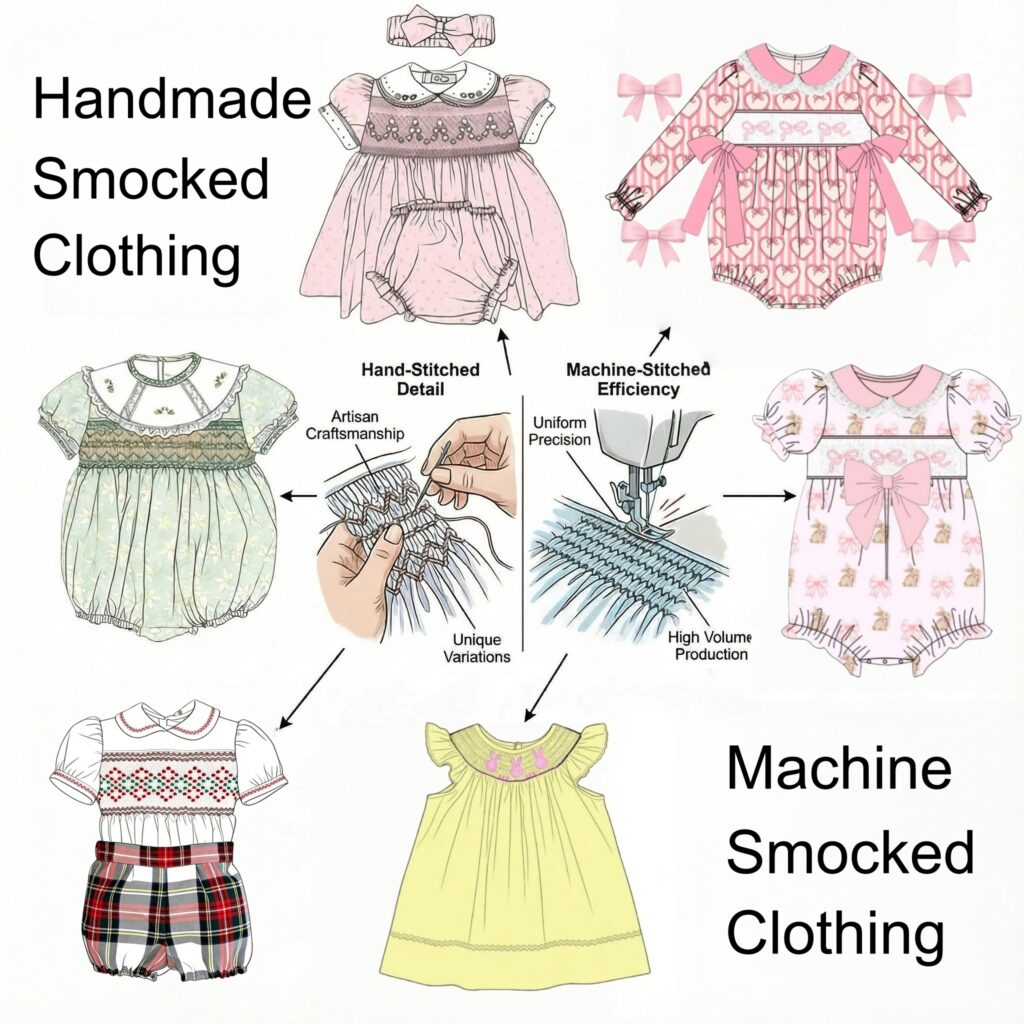
Wholesale buyers must balance the appeal of consistent, scalable machine smocking against subtle tradeoffs in longevity and visual character. Machine-smocked pieces give you tight, repeatable patterns and predictable per-unit costs, but durability will hinge on fabric weight, thread quality, and stitch tension; cheaper materials can lead to faster wear or puckering. Aesthetically, machine work reads as modern and uniform, excellent for coordinated collections, while losing the slight irregularities and artisanal charm that can command a premium in boutique markets.
Make purchasing decisions with clear priorities and checkpoints. Before committing to large runs, insist on samples and lab tests, and weigh these practical considerations:
- Fabric selection: natural vs. blends affects resilience and hand-feel.
- Stitch density: higher density = better hold, but higher cost.
- Finish & reinforcement: edge treatments and backing extend lifespan.
- Care labeling: clear washing instructions reduce returns and complaints.
| Quality Tier | Durability | Best Use |
|---|---|---|
| Value | moderate | Seasonal promos, large-volume giveaways |
| Standard | Good | Core retail lines, everyday wear |
| Premium | High | Boutique collections, higher margin assortments |
Fabric Choices, Pattern Adjustments, and Sizing Guidelines to Maximize Yield and Fit
Choose cloth that plays nice with gathering: lightweight to medium-weight fabrics that hold a crisp ridge without bulk will yield the cleanest machine-smocked panels. Stable wovens like cotton lawn, poplin, and fine linens give crisp smock pleats and predictable shrinkage, while drapier options such as rayon challis or lightweight linens create a softer, more fluid look. For casual or children’s wear ranges, lightweight knits with moderate recovery can be smocked if stabilized with a thin interfacing – but expect a different elastic feel and adjust stitch density accordingly.
- Cut economically: align panels on the bias only when style requires it; straight grain maximizes yardage.
- Adjust pleat spacing: wider pleats for thicker fabrics, tighter tucks for fine, slippery cloth.
- Grade smock panels: increase or decrease panel width by fixed increments (e.g.,½”-1″ per size) rather than reworking the entire pattern.
| Fabric | Smock Behavior | Best Use |
|---|---|---|
| Cotton Lawn | Holds crisp pleats | Dresses, blouses |
| Poplin | Durable, predictable | Uniforms, shirting |
| Rayon Challis | Drapey, soft gathers | Resort wear |
When sizing for wholesale runs, build in targeted ease rather than guessing: allow 1-2 inches of positive ease in bodices for children and 2-4 inches for adults, depending on style. Use a base sample to measure post-smocking dimensions (collapsed width and stretched width) and create a simple grade rule for the smocked panel so that the yield remains consistent across sizes. Communicate fabric stretch and recovery to buyers and factories. Small notes about shrinkage, recommended pre-wash, and required seam allowances will save yardage and preserve fit across large orders.
Manufacturing Partners, Minimum Orders , and Lead Time Tactics for Reliable Bulk Supply
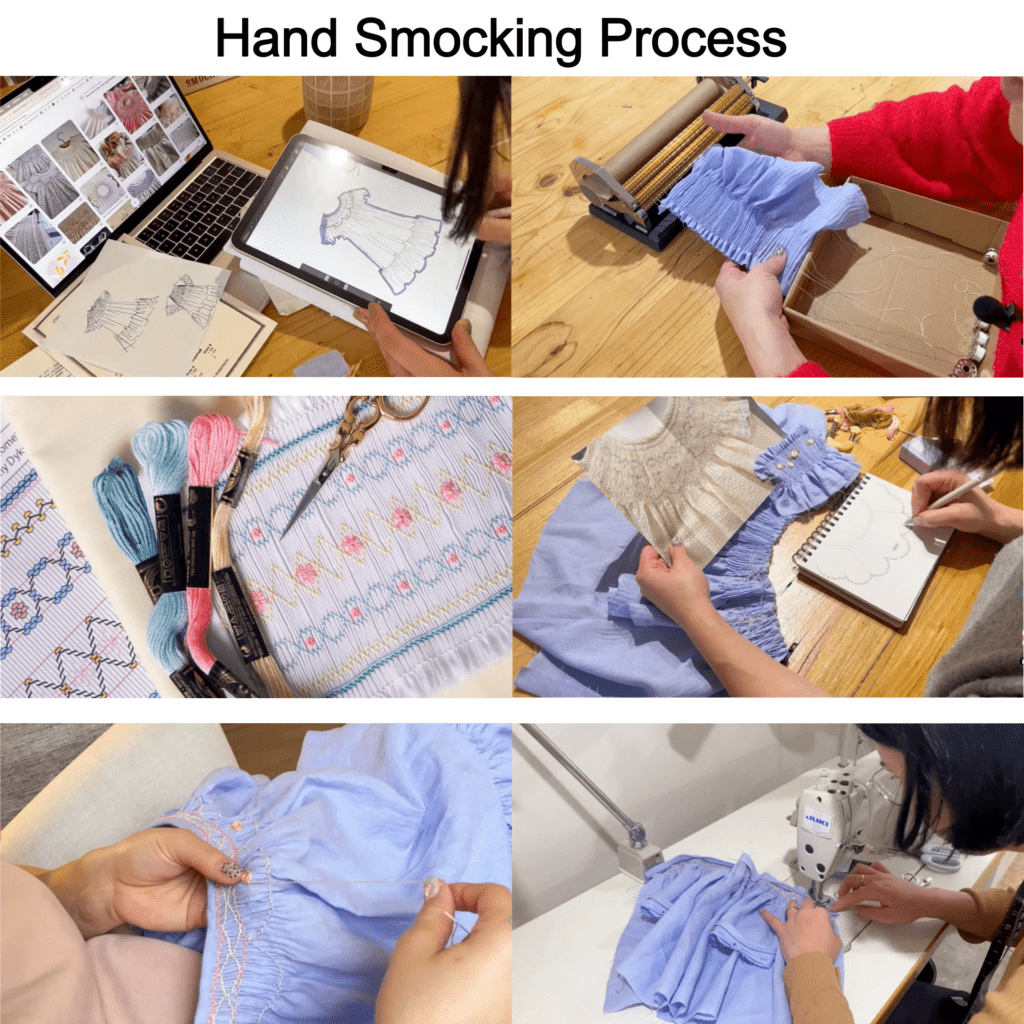
Choosing the right factory is as strategic as the design itself - think of partners who act like extensions of your brand rather than mere vendors. Prioritize manufacturers that demonstrate transparent production tracking, robust sample workflows , and a willingness to lock in clear quality benchmarks. Insist on visiting (or commissioning a virtual audit of) the production line, reviewing past bulk runs, and confirming their capacity buffers so a single delayed shipment doesn’t derail your launch.
- Negotiate MOQs: Ask for tiered minimums tied to commitment levels.
- Stagger releases: Split bulk orders into waves to reduce inventory risk.
- Local buffer stock: Keep a small onshore reserve for bestsellers.
- Shared tooling & colorblocking: Combine SKUs to meet MOQs without excess styles.
Lead times improve with predictable communication and realistic forecasting – send rolling 6-12 week forecasts and build in a 10-20% safety margin around peak seasons. Below is a speedy reference to match partner types with practical MOQs and expected timelines so you can choose tactics that fit your cadence:
| Partner Type | Typical MOQ | Typical Lead Time |
|---|---|---|
| Local cut & sew | 50-200 pcs/style | 1-4 weeks |
| Regional contract factory | 200-1,000 pcs/style | 4-8 weeks |
| overseas full-line | 1,000+ pcs/style | 8-16+ weeks |
Use these benchmarks to structure production agreements with penalties and incentives tied to delivery milestones; a well-crafted contract plus transparent forecasting is often the most reliable tactic for consistent, scalable supply.
Best Market Fits and Launch Strategies: When Machine Smocked Lines Outperform Alternatives
In markets where texture equals identity, machine-smocked pieces often win: think kids’ everyday wear, lightweight resort collections, and affordable boho or cottagecore lines that rely on tactile detail rather than high-cost embellishment. machine smocking scales the handcrafted look at competitive price points, making it ideal for brands targeting volume with personality-seasonal capsule drops, wholesale to independent boutiques, and D2C lines with rapid style turnover. As smocking reads well on small sizes and lightweight fabrics, it also outperforms alternatives for garments where comfort and stretch matter most, such as maternity tops and adjustable womenswear.
- Capsule-first launches: test one smocked silhouette in multiple colors to validate demand.
- Boutique partnerships: use local stores to prove wholesale velocity before scaling.
- Pre-order models: minimize risk on new smocked textures and prints.
- Influencer seeding: tactile details photograph well, leverage close-ups, and try-on content.
| Market | Why Smocking Wins | Best Launch Channel |
|---|---|---|
| Children’s Wear | Agreeable stretch, cute detail | Independent boutiques |
| Resort & Summer | Lightweight, breathable texture | Direct-to-consumer drops |
| Budget Bridal / Bridesmaids | Elegant look at a lower cost | Wholesale to specialty retailers |
Measure success not just by sell-through but by repeat reorder rates for smocked silhouettes and customer feedback on fit and feel; smocking’s true advantage is in retention of style-loyal buyers who come back for the same tactile DNA. When launching, prioritize channels that let customers touch or see close-up texture (boutiques, pop-ups, high-quality video), and choose production partners that can keep smock density and tension consistent. Small quality gains in the machine process translate directly into higher conversion and fewer returns.
Q&A
Q: What is machine smocking?
A: Machine smocking is a method for creating gathered, decorative texture on fabric using industrial or specialized sewing machines. It mimics customary hand-smocking patterns by stitching rows of tucks and elasticized threads or programmed embroidery to form geometric, stretchy panels that add both ornament and fit.
Q: How does machine smocking differ from hand smocking?
A: Hand smocking is artisanal, time-consuming, and offers more intricate, bespoke patterns. Machine smocking trades some of that artisanal nuance for speed, consistency, and lower unit cost. The result is often very similar visually, but machine work can lack the small irregularities that give hand-smocked garments their handmade charm.
Q: Why would a wholesaler choose machine-smocked clothing?
A: Wholesalers pick machine-smocking for scalability, cost-effectiveness, and consistent quality. It speeds production, reduces labor costs compared with hand techniques, and enables reliable repeatability across large runs – crucial for inventory planning, pricing, and brand consistency.
Q: What are the main advantages of machine-smocked clothing for wholesale?
A: Key advantages include:
– Fast production and shorter lead times
– Lower per-unit labor cost
– Consistent appearance across batches
– Easier scaling for larger orders
– Compatibility with a range of fabrics and automated finishing processes
Q: What are the downsides or limitations?
A: Limitations include:
– Less artisanal appeal than hand smocking
- Possible machine pattern restrictions (complexity and density)
– Not all fabrics smock well; some designs can pucker or distort
– Initial setup and programming costs for custom patterns
– Potential for lower perceived value in high-luxury markets
Q: Which fabrics are best for machine smocking?
A: Lightweight to medium woven fabrics like cotton lawn, voile, poplin, chambray, and some silks take smocking well. Lightweight knits can work if engineered correctly, but heavy, stiff, or highly textured fabrics are more challenging. Fabric with good drape and controlled fray yields the cleanest results.
Q: Can knits be machine-smocked?
A: Yes, but with caveats. Knits require different handling: elastic thread and stitch tension must be tuned so the smocking is stretchy without distorting the fabric. Some machines and techniques are better suited to knits than others, and production staff must be experienced to avoid runs or overstretching.
Q: How customizable are machine-smocked garments?
A: Very customizable within technical limits. You can vary stitch density, pattern geometry, panel size, thread color, and elastic properties. Fully bespoke or highly intricate patterns can be programmed, but they increase setup time and cost, so wholesalers balance customization with economies of scale.
Q: What minimum order quantities (MOQs) should buyers expect?
A: MOQs vary by manufacturer and the complexity of the smocking. Simple, stock designs may have low MOQs (dozens), while custom-programmed patterns typically require higher MOQs (hundreds to thousands) to amortize setup costs. Always ask suppliers for clear MOQ tiers.
Q: How does smocking affect sizing and fit?
A: Smocked panels add controlled elasticity and can reduce the need for darts or closures in certain areas. Though as smocking changes fabric behavior, pattern grading must account for stretch and recovery. Proper size charts should reflect the garment’s relaxed and stretched measurements.
Q: What quality-control checkpoints are important for machine-smocked wholesale shipments?
A: Key checkpoints:
– Consistency of stitch density and pattern alignment
– Even tension and no skipped stitches or thread breaks
- Panel placement and symmetry across sizes
– Finish quality on reverse side (no loose threads)
– Elastic recovery and stretch tests
– Fabric damage, puckering, or distortion around smocked areas
Q: How do costs compare with hand smocking or alternatives?
A: Machine smocking generally has much lower per-unit labor costs than hand smocking once setup is finished. Compared to alternatives like shirring (elastic thread) or embossed pleating, costs depend on complexity: shirring is inexpensive and stretchy; programmed machine smocking can be costlier than shirring but cheaper than hand smocking for larger runs.
Q: When is machine smocking the ideal choice?
A: Ideal when you need decorative stretch at scale – children’s dresses, summer blouses, waist and cuff panels, resort wear, and volume-driven fast-fashion collections. It’s also good for white-label manufacturing where consistent repeatability is critically important.
Q: When is machine smocking not recommended?
A: Avoid when ultra-high-end, artisanal authenticity is essential (e.g., couture bridal with hand-smocked heirloom details), when the fabric is unsuitable (very heavy or extremely delicate), or when order sizes are tiny, and customization is complex relative to budget.
Q: Can machine smocking be combined with other embellishments?
A: Yes. Machine-smocked panels are often paired with embroidery, trims, ruffles, pleats, or appliqué. However, sequencing matters: smocking is usually done before heavy surface treatments or final embroidery unless integrated into the programmed workflow.
Q: How long are lead times for machine-smocked wholesale production?
A: Lead times depend on complexity, order size, and supplier capacity. Stock patterns might potentially be turned in weeks; custom tooling or programming can add several weeks to months. Fast-turn suppliers exist, but they may charge premiums.
Q: What sustainability considerations should wholesalers keep in mind?
A: Sustainability factors include material waste from sample iterations, energy use of production machinery, and garment longevity. Choosing durable fabrics, minimizing rework, and working with suppliers that use efficient machines and responsible threads reduces environmental impact. Machine smocking can be more sustainable than hand work if it reduces sampling and rejections, but it depends on supplier practices.
Q: How should wholesalers price machine-smocked items?
A: Pricing should reflect material cost, machine setup, and programming amortization, labor, expected defect rates, and market positioning. As smocking adds perceived value, retailers can frequently enough command higher margins than on plain garments – but don’t overprice relative to competitors and customer expectations.
Q: What are common use cases and market segments for machine-smocked wholesale clothing?
A: Common segments:
– Children’s and baby wear (classic smocked silhouettes)
– Casual and resort women’s wear (tops, bodices, waistbands)
– Loungewear and lightweight dresses
– Fast-fashion and seasonal capsule collections
– cost-conscious bridal and special occasion lines seeking smocked detail at accessible prices
Q: Any tips for buyers when evaluating suppliers?
A: Ask for:
– Samples of current smocked products in the same fabric weight
– Details on machine types and programming capabilities
– Lead time and MOQ breakpoints
– Quality assurance processes and defect rates
– Photos of backsides and close-ups of stitching
– References from other wholesale clients
Q: Are there alternatives I should consider?
A: Alternatives include hand smocking (for artisanal lines), shirring with elastic thread (cheaper and highly elastic), laser or heat-set pleating (different aesthetic), and embroidered puckering techniques. Each has different cost, look, and scalability implications.
Q: Bottom line: Should a wholesale buyer consider machine-smocked clothing?
A: Yes – if you need a decorative, stretchy panel at scale with consistent quality and controlled cost. It’s a practical middle ground between hand-crafted detail and plain mass-produced garments. Evaluate fabric compatibility, supplier capability, and market positioning to determine if it fits your product strategy.
In Retrospect
As the last pleats fall into place, machine smocking sits at the intersection of precision and possibility—a technique that can tighten margins, accelerate production, and deliver a reliably neat aesthetic, while also asking brands to reckon with upfront investments, material limits, and the loss of some handmade nuance. For wholesalers, the choice isn’t simply pro or con; it’s a question of scale, brand identity, and market fit. Where demand calls for volume, consistency, and cost control, machine smocking can be an efficient ally; where exclusivity, heritage, or highly textured fabrics drive value, traditional handwork or hybrid approaches may still win the day.
Manufacturers with strong production experience, such as Kabeier, often bridge this gap by offering both scalable machine smocking and customized design solutions. With years of expertise in children’s apparel manufacturing, they help brands balance efficiency with craftsmanship, allowing businesses to experiment with smocking techniques while maintaining quality and brand identity.
Ultimately, the smartest path is the one tailored to your customers and your capacity: experiment on small runs, compare supplier samples, and match technique to your product story. Whether you view machine smocking as a tool to democratize a decorative craft or a compromise to be managed, it’s another stitch in the evolving garment landscape. Weigh the trade-offs, pilot with intention, and let your strategy decide whether machine smocking becomes a signature of your collection or a practical step in scaling production.