
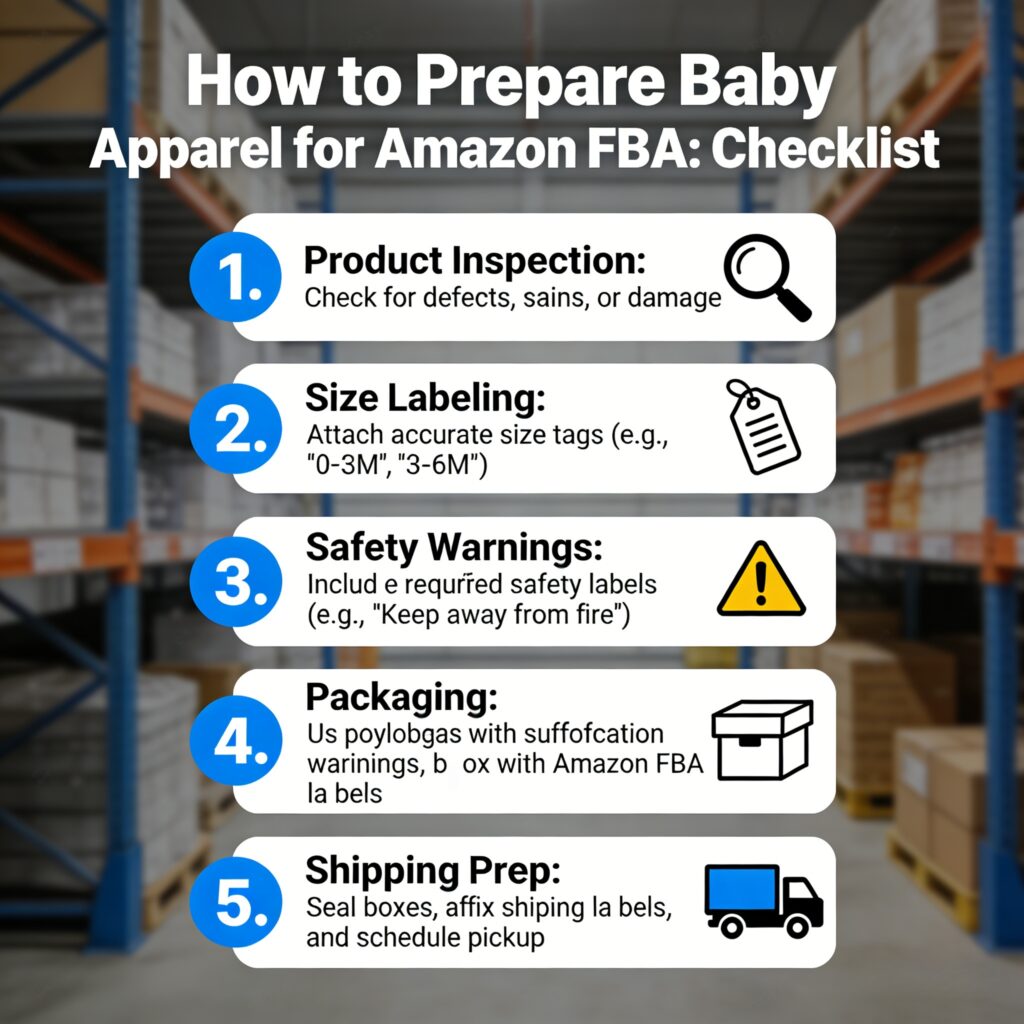
Imagine a tiny onesie folded like a promise, luminous with potential and headed for a warehouse that will connect it to a new family. Preparing baby apparel for Amazon FBA requires treating that promise with care: not just in design or quality, but in the way you package, label, and document it. The stakes are higher with children’s products-shoppers expect safety, cleanliness, and clarity-and Amazon’s fulfillment system demands precision. Get any of those elements wrong, and what started as a soft sale can turn into a returned shipment or a suspended listing. This article will walk you through the practical steps and compliance considerations that turn a pile of adorable garments into FBA-ready inventory. You’ll learn how to meet Amazon’s labeling and barcode requirements, apply appropriate suffocation and care warnings, choose packaging that protects items and meets hygiene standards, and spot quality issues before they reach customers. Along the way, we’ll cover sizing displays, accepted materials, acceptable prep methods (poly bags, folding, stickers vs. sewn-in labels), and options for using FBA prep services.
Whether you’re launching a boutique baby line or expanding an established apparel brand into Amazon’s marketplace, the right preparation keeps returns low, reviews high, and newborns comfortable. Read on to make sure your baby garments arrive at fulfillment centers ready to delight and comply.
Table of Contents
- Understanding Amazon FBA Compliance for Baby Apparel: safety rules, flammability tests , and textile regulations
- Size Materials and Fit: building accurate size charts, fabric descriptions, and infant safe construction recommendations
- Packaging That Protects and Sells: polybags, suffocation and care labels, barcode placement and bundle packaging tips
- Quality Control and Inspection Checklist: pre-shipment tests, label verification, defect thresholds, and corrective steps
- Listing and Inventory Prep for FBA Success: SKU setup, search optimized titles, photography standards, and inbound shipment labeling
- Q&A
- Final Thoughts
Understanding Amazon FBA Compliance for Baby Apparel: safety rules, flammability tests, and textile regulations
Think of compliance as the garment’s invisible seam: it holds your Amazon FBA listing together. Start by confirming the product meets safety and chemical limits (lead, phthalates), avoids banned features like long drawstrings or detachable small parts, and includes the required tracking label and care instructions. Work with an accredited lab for screening and keep certificates of conformity (COCs) and technical files handy – Amazon and customs can request them at any time.
- Test for restricted substances (lead, phthalates, AZO dyes).
- Inspect design hazards: drawstrings, toggles, loose buttons.
- Label with fiber content, country of origin, and care symbols.
Flammability standards and textile regulations vary by market, so map requirements early-U.S. federal flammability rules and EU REACH/textile labeling are common reference points. For sleepwear and layered garments, verify applicable flame-resistance or snug-fit criteria and retain lab reports for each SKU. Below is a quick-reference table to help prioritize tests and packaging checks before you ship to Amazon FBA.
| Test / Check | Purpose | Action |
|---|---|---|
| Restricted Substances | Confirm chemical safety | Lab report & COC |
| Flammability | Reduce fire risk for garments | Sample testing by an accredited lab |
| Labeling & Care | Consumer & regulatory info | Permanently attached label + packaging |
- Document everything: test reports, lab contacts, and batch records.
- Review packaging: child-safe packing and correct barcode/ASIN labeling for FBA.
Size Materials and fit: building accurate size charts, fabric descriptions, and infant safe construction recommendations
Think like a parent shopping in a rush: give them clarity. Use flat-lay garment measurements and translate them into body measurements with clear units (cm/in). Include age, weight, length, and at least three garment points - chest, body length, inseam - plus a short fit note (e.g., “slim fit, size up for extra layering”). Add a brief measuring guide and a labelled photo for each size so buyers can verify at home. Consider regional conversions and an explicit tolerance (±1-2 cm) so expectations match reality.
List the essentials below as part of every product page and tech pack:
- Measurement points: chest, length, sleeve/shoulder as applicable
- Fit note: true-to-size / roomy / snug
- Conversion: cm & in with age/weight ranges
- Care & wash: recommended temp and drying
| Feature | Why it matters |
|---|---|
| Soft, natural fibers | Breathable and gentle on newborn skin |
| Flat seams & tagless labels | Reduce irritation and choking risk |
| Secure closures (snaps over buttons) | Less detachment hazard and easier dressing |
- Do: note fiber % (e.g., 95% cotton/5% elastane), specify shrinkage allowance, and list any chemical finishes (e.g., OEKO-TEX certified).
- Don’t: use long ties/drawstrings, weakly stitched appliqués, or unsecured decorative elements.
 Packaging That Protects and sells: polybags, suffocation and care labels, barcode placement and bundle packaging tips
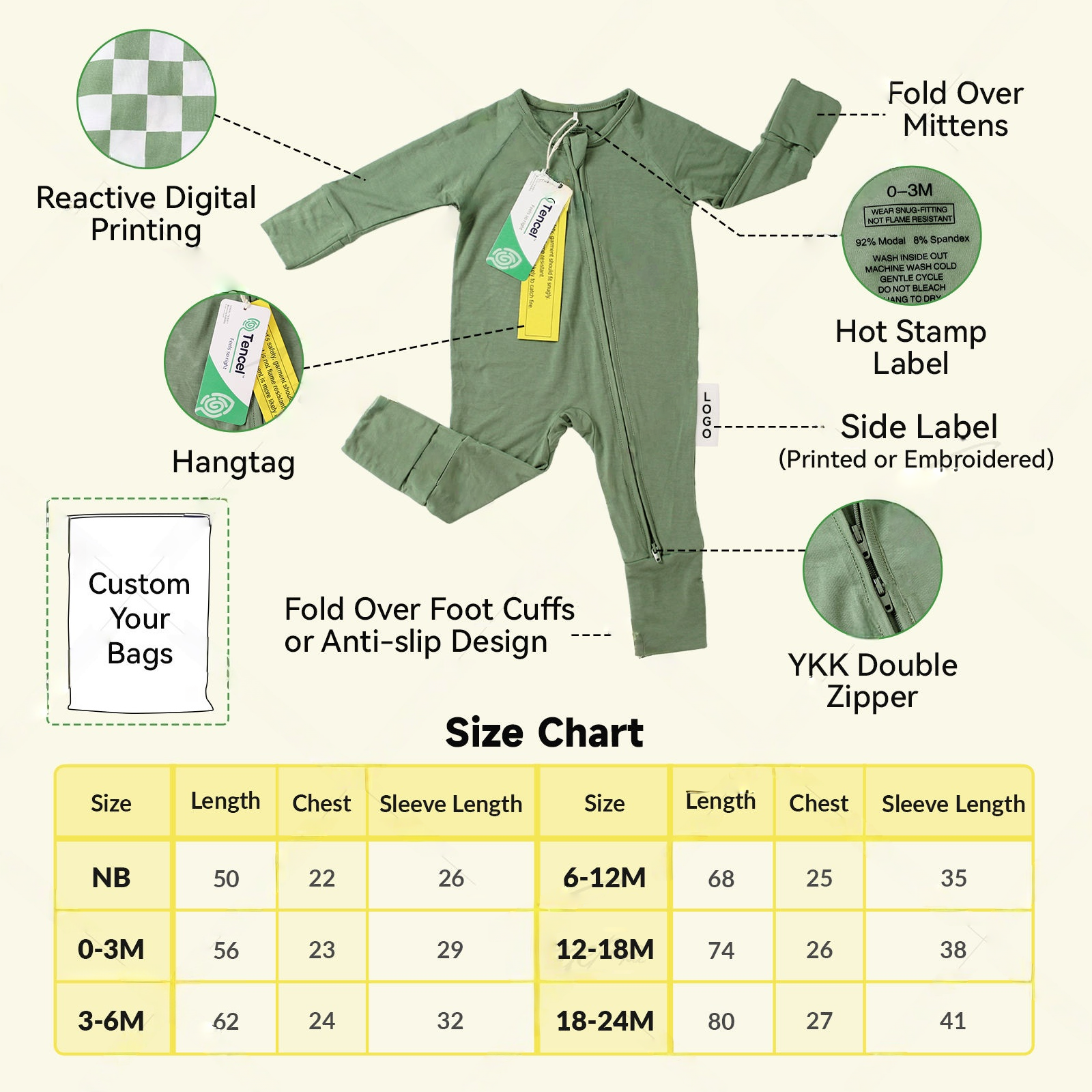
Use clear, snug polybags to protect fabric and preserve presentation during transit – but don’t let protection become a hazard. Always apply a printed suffocation warning on any plastic bag that could cover a child’s face, and attach care labels (wash, fiber content, size), so they remain readable without opening the package. For scannability, place the barcode on the outside of the polybag on a flat surface, away from seams, folds, and openings; never cover barcodes with tape or stickers that can curl or obscure the code. Small details matter: fold garments neatly, tuck tags flat, and use transparent polybags for designs you want to sell visually while keeping them hygienic.
When creating multi-piece sets or bundles, package them so Amazon’s pickers and your customers can tell what they’re buying at a glance. Use separate inner bags for delicate pieces, affix one visible bundle barcode (or FNSKU) to the exterior, and secure small items together to prevent loss. Quick reference:
| Bundle Type | Recommended Packaging | Barcode Placement |
|---|---|---|
| Matching Outfit Set | Single polybag, folded with insert | Front, flat area near seam |
| Multi-size Multipack | Individual inner bags + outer polywrap | Outer wrap, centered and unobstructed |
| Accessory Bundle | Small pouch inside a polybag or a box | On the outer package, not over the zipper |
- Label consistency: Use the same orientation and contrast for all barcodes in a shipment.
- Durability: Reinforce corners and seams for heavier bundles to avoid tearing in transit.
- Customer experience: consider a see-through window or product card so customers can verify style/size without opening.
Quality Control and Inspection Checklist: pre-shipment tests, label verification, defect thresholds, and corrective steps
Before your baby apparel hits Amazon’s fulfillment network, run a targeted battery of pre-shipment checks to catch issues that can cost returns and bad reviews. Prioritize fabric safety and performance (shrinkage, pilling, colorfastness), seam and trim strength, and any small-parts/choking-risk tests relevant to the item. Verify every label: the FNSKU/barcode scans cleanly,care instructions match the garment, country of origin is correct, and size/color info aligns with the Amazon listing. Use this compact checklist as your frontline inspection guide:
- Pre-shipment tests: shrinkage, colorfastness, tensile/seam, safety compliance
- Label verification: barcode readability, SKU match, care & fiber content, age grading
- Packaging checks: polybag seals, suffocation warnings, bundle counts
Set clear defect thresholds and swift corrective steps, so your team knows when to accept, rework, or reject a batch. Below is a simple reference table for defect types, acceptable quality levels, and recommended actions; pair it with immediate supplier corrective-action requests and documented rework procedures to close the loop quickly.
| Defect Type | AQL (% or level) | Recommended Action |
|---|---|---|
| critical (safety) | 0% | Reject & notify supplier |
| Major (function/fit) | 1-2% | Rework or partial reject |
| Minor (cosmetic) | 2-4% | Accept with price/repair plan |
- Corrective steps: isolate affected stock, document photos + batch numbers, require supplier CAPA (corrective action & preventive action), perform sample re-tests, and update QA checklists.
- Record keeping: log inspection reports and corrective histories to spot trends and reduce repeat failures.
Listing and Inventory Prep for FBA Success: SKU setup, search optimized titles, photography standards, and inbound shipment labeling
Think of your inventory like a carefully folded stack of onesies-each piece needs an identity that’s tidy, scannable, and search-friendly. Create SKUs that combine simple elements (brand-code, size, color, style) so you can trace inventory at a glance:
- Format: BRD-001-SM-WHT (Brand, style, size, color)
- Keep it short: under 20 characters if possible for internal systems
- Consistency: same order of elements across all products
For titles, think like a parent hunting for warmth and safety-lead with the most searchable attributes (brand, product type, size range), sprinkle in primary keywords naturally, and keep punctuation minimal. Example pattern: Brand + Product Type + Age/Size + Key Feature + color. This structure improves discoverability without keyword stuffing.
Visuals sell baby clothes faster than descriptions, so hold to strict photography standards. Your main image should be clean, on a pure white background, and show the full garment; supplemental shots should include close-ups of fabric, tags, fit on a model or mannequin, and lifestyle context. Use the table below as a quick checklist for image deliverables and technical specs:
| shot Type | Background | Min Size | Notes |
|---|---|---|---|
| Main | White | 1000 x 1000 px | No props, centered |
| Detail | Neutral | 800 x 800 px | Seams, tags, fabric |
| Lifestyle | Contextual | 1200 x 1200 px | Baby-safe habitat |
- File types: JPG for uploads; keep color profile sRGB
- Consistency: matching angles and lighting across SKUs
Inbound labeling is where logistics meets presentation-get it right to avoid delays. Print FNSKU labels clearly and apply them to the outside of packaging where they are scannable (not on seams or corners). Before shipping, confirm that each carton links to the correct SKU quantity in your shipment plan and that fragile baby items are cushioned and sealed. Quick checklist:
- Generate FNSKU per Amazon’s guidelines and attach to each unit
- Verify label placement and barcode readability with a phone scan
- Match carton contents to the shipment manifest and record the SKU batch
- Use polybags or hangtags where required for fabric protection
A tidy, standardized approach to SKUs, titles, images, and labels makes restocking smoother and helps your adorable pieces fly off virtual shelves.
Q&A
Q: What does “preparing baby apparel for Amazon FBA” mean?
A: It means making each item ready to be received, stored, and shipped by Amazon’s fulfillment centers. That includes correct labeling (FNSKU), protective packaging, following Amazon’s prep requirements, and ensuring the product meets safety and regulatory standards for children’s clothing.
Q: Why is baby apparel preparation different from other products?
A: Baby apparel must stay clean, intact, and safe. Because buyers expect garments to be pristine and compliant with child-safety rules, prep focuses on protection from dirt, moisture, and tampering, plus any regulatory requirements specific to children’s products (testing, tracking labels, flammability, etc.).
Q: How should I package individual baby clothing items?
A: Fold neatly, place each garment in a clear poly bag or other protective packaging that keeps it clean and dry, and seal it. Include size and variant information on the outside so pickers and customers can identify the item without opening the package.
Q: Do I need to use Amazon’s FNSKU labels?
A: Yes. Every unit sent to FBA typically needs an FNSKU label so Amazon can track inventory and attribute sales to your account. The FNSKU must be scannable and cover any manufacturer barcode (UPC/ISBN) on the package to prevent mis-scanning.
Q: Where should I place the FNSKU label?
A: Place the FNSKU on a flat, smooth, and easily scannable area of the outer packaging. It should not be wrinkled, cut, or placed over seams or closures.
Q: Are poly bags required, and do they need a suffocation warning?
A: Poly bags are commonly used to protect apparel. If Amazon’s rules require a suffocation warning for the specific bag size or opening, include it. Check current Amazon prep guidelines for exact thresholds. When in doubt, add the warning to avoid delays or rejections.
Q: Can I ship clothing on hangers?
A: In most cases, you should avoid sending apparel on hangers unless specifically allowed by your listing and Amazon instructions. Hangers take up extra space and can be removed at the fulfillment center, so it’s usually more efficient to pack garments flat or in poly bags.
Q: What about retail packaging, swing tags, or price tags?
A: Swing tags and brand tags are fine if they are part of the product. remove any retailer price tags that could confuse buyers. Ensure tags are properly attached so they won’t fall off or damage the garment during transit.
Q: How do I prepare multi-packs, sets, or bundled baby apparel?
A: Treat the bundle as a single sellable unit. Use a single outer package, label it with one FNSKU, and make clear the contents and sizes on the outside. Ensure all pieces are protected and will remain together in transit.
Q: Are there special safety or regulatory requirements for baby clothing?
A: Yes. Baby apparel might potentially be subject to consumer safety laws (for example, tracking labels, lead and phthalate testing, and flammability standards in some jurisdictions). Requirements vary by country-verify compliance (and have required documentation) before sending products to FBA.
Q: What if my product has both a manufacturer barcode and an Amazon barcode?
A: Cover or remove any manufacturer barcode (UPC/EAN) on the outer packaging so that the Amazon FNSKU is the scannable code. This prevents out-of-account sales attribution.
Q: How should I size-label apparel for FBA?
A: Include clear size markings on the item or its packaging. Consider a small external sticker or printed label on the poly bag with size and color so pickers and customers can identify the garment without opening the package.
Q: What packaging dimensions and weight should I enter for shipments?
A: Accurately measure and weigh the packed units and cartons when creating your FBA shipment plan. Accurate data helps Amazon allocate space and prevents delays or unexpected fees.
Q: What happens if I don’t prep clothing correctly?
A: Amazon may refuse units at the fulfillment center, require rework (with fees), or treat incorrectly labeled items as stranded inventory. Poor prep can cause customer complaints, returns, and slow processing.
Q: Can Amazon do the prep for me?
A: Yes. Amazon offers optional FBA Prep Services for an additional fee. They can apply labels, poly-bag units, and more. Use this if your volume, time, or ability to meet prep specs is limited.
Q: What are the most common preparation mistakes to avoid?
A: – Missing or improperly placed FNSKU labels
– Poly bags without required suffocation warnings
– Shipping with hangers or loose tags that increase damage risk
– Inaccurate shipment dimensions/weights
– Noncompliance with children’s product safety rules
Q: Any tips for quality control before sending inventory?
A: inspect batches for stains, loose threads, printing errors, and correct sizes. Verify FNSKU labels scan properly. Confirm poly bags are sealed , and warnings are visible. A final pre-shipment checklist prevents costly rework.
Q: How should I pack cartons for shipment to Amazon?
A: Pack cartons so items won’t shift. Use dividers if needed, seal boxes securely, and affix carton labels from your Amazon shipment plan. Ensure carton weight and dimensions are accurate and that each box contains only the SKUs listed on its carton contents.
Q: What should I include in my product listing to help customers?
A: Clear size charts, fabric content, washing instructions, photos that show scale, and descriptions about fit. Accurate listings reduce returns and buyer confusion.
Q: Quick checklist: what must I do before sending baby apparel to FBA?
A: - Confirm product meets safety/testing requirements
– decide unit prep (poly bag, folding, etc.)
– Add suffocation warnings if required
– Apply scannable FNSKU labels, covering other barcodes
– Remove unnecessary hangers/price tags
– Verify sizes are labeled externally
– Create an accurate shipping plan with weights/dimensions
– Inspect quality and seal cartons properly
If you’d like, I can turn this into a printable checklist or provide Amazon-specific links and label templates for your region.
Final thoughts
Preparing baby apparel for Amazon FBA is part craft, part checklist – a careful folding of quality, compliance, and clear presentation so each tiny garment arrives ready to delight. If you follow the basics – correct labeling, secure and clean packaging, accurate listings, and adherence to Amazon’s prep requirements - you remove most of the friction that can slow a good product down.
Treat the process like swaddling: gentle but thorough. Inspect pieces for defects, lock in reliable measurements and SKU data, protect seams and snaps in transit, and document everything so you can trace and fix issues quickly. Keep your images, size charts, and descriptions honest and easy to scan – shoppers and Amazon both reward clarity.
Stay current and iterate. Amazon’s rules, safety standards, and customer expectations evolve; periodic audits of your prep flow, packaging materials , and return patterns will help you adapt without surprises. Start small, refine as you grow, and the result will be a smoother path from your storage shelf to a parent’s welcoming arms.
If you are looking for a reliable baby clothing manufacturer or need support with custom production and Amazon-ready packaging, Kabeier can help. With over 15 years of experience in baby and children’s apparel manufacturing, Kabeier offers professional customization, quality control, and packaging solutions designed for e-commerce sellers.
Contact us today to discuss your project and learn how Kabeier can support your brand’s growth.