

Finding the right supplier for licensed children’s apparel can feel like navigating a bustling marketplace at dusk: colorful, full of promise, but easy to get lost in. Brands, retailers, and licensors all need partners who can translate beloved characters and logos into garments that meet strict safety standards, hit deadlines, and protect intellectual property, while still making a reasonable margin. The stakes are high: a single misstep can mean lost sales, damaged reputation, or costly legal headaches. This article cuts through the noise to show you how to locate leading suppliers and manufacturers who specialize in licensed kids’ wear. You’ll learn where to look-both online and offline-how to evaluate credibility and compliance, what questions to ask about production capacity and quality control, and how to balance cost against reliability. We’ll also touch on certification, sample runs, and red flags that deserve immediate attention.
Whether you’re a startup launching a character-driven collection or an established retailer seeking a new production partner, the right manufacturer can make the difference between a wardrobe staple and a comeback story. Read on to discover practical strategies for finding partners who understand the unique demands of children’s licensed apparel and can help turn your creative vision into safe, saleable garments.
Table of Contents
- Decoding licensing types and how they impact apparel for children
- Verifying supplier credentials and inspecting factory practices
- Evaluating design choices, safety standards , and materials in kids’ apparel
- Negotiating pricing, minimums , and sampling strategies to build reliable partnerships
- Q&A
- Concluding Remarks
Decoding licensing types and how they impact apparel for children
Licensing isn’t one-size-fits-all: some licenses give you a global,character-driven identity (think cartoon icons), others tie you to lifestyle or sports brands, and some are short-lived seasonal drops. Each model carries its own chain of approvals and financial rhythm – royalties, minimum guarantees, and territory restrictions quickly shape whether a design stays feasible for a small-batch children’s line or only works for a mass-produced run. Creative freedom varies too; character licenses frequently enough require strict artwork placement and color use, while brand collaborations might allow more reinterpretation but demand tighter quality controls.
The ripple effects show up in production, cost, and safety. Licensed pieces usually mean longer lead times for sample approvals, higher unit costs due to royalties, and closer scrutiny on labeling and material safety – all crucial when designing for kids. To keep things practical on the retail floor, consider these rapid checkpoints:
- Fit your audience: choose licenses that resonate with the age group, not just the trend.
- Negotiate approval windows: faster art approvals , lower time-to-market.
- Compliance plan: Factor in testing and labeling costs early.
- Watch exclusivity: territorial clauses can limit retail reach or require higher guarantees.
| License Type | Typical Impact | Best For |
|---|---|---|
| Character | Strict approvals, higher royalties | Mass-market kids’ tees & sleepwear |
| Fashion Brand | Design flexibility, premium positioning | Boutique collections |
| Sports/Franchise | Strong recognition, seasonal spikes | Activewear & fan apparel |
Verifying supplier credentials and inspecting factory practices
Think of supplier vetting as a short, sharp investigation: ask for proof, then verify it independently. Start by requesting core documents – business license, product safety certificates, and recent third‑party lab test reports – and cross‑check registrations on official databases. Don’t accept verbal assurances; insist on seeing factory audit reports, insurance certificates, and sample traceability logs. When a supplier provides documentation, follow up with direct verification (online registries, calling certifying bodies) and ask for raw lab data, not just a summary, to confirm tests were done to the standards you require.
- Business license – legal entity and registration
- Safety certificates – CPSIA/CPSC, OEKO‑TEX, GOTS, where applicable
- Self-reliant lab reports – dated, with testing methods
- Factory audit – social & quality audits (SMETA, BSCI)
- Insurance – product liability and export coverage
- Traceability – raw material sourcing and batch IDs
Nothing replaces an on‑site inspection: hire a trusted third‑party auditor or plan a factory visit to observe chemical storage, stitching quality, child‑safe trims, and worker conditions. Use short, repeatable checklists during visits so findings can be tracked over time and turned into corrective action plans. For quick reference, use the table below as a mini‑audit guide when scheduling inspections or reviewing third‑party reports.
| Audit Area | What to Look For |
|---|---|
| Safety testing | Recent lab reports, compliance limits,and sample IDs |
| Production practices | Tidy lines, consistent seams, QC stations |
| Chemicals | Proper labeling, MSDS on file, secure storage |
| Labor standards | Working hours, contracts, and PPE availability |
 Evaluating design choices, safety standards, and materials in kids’ apparel
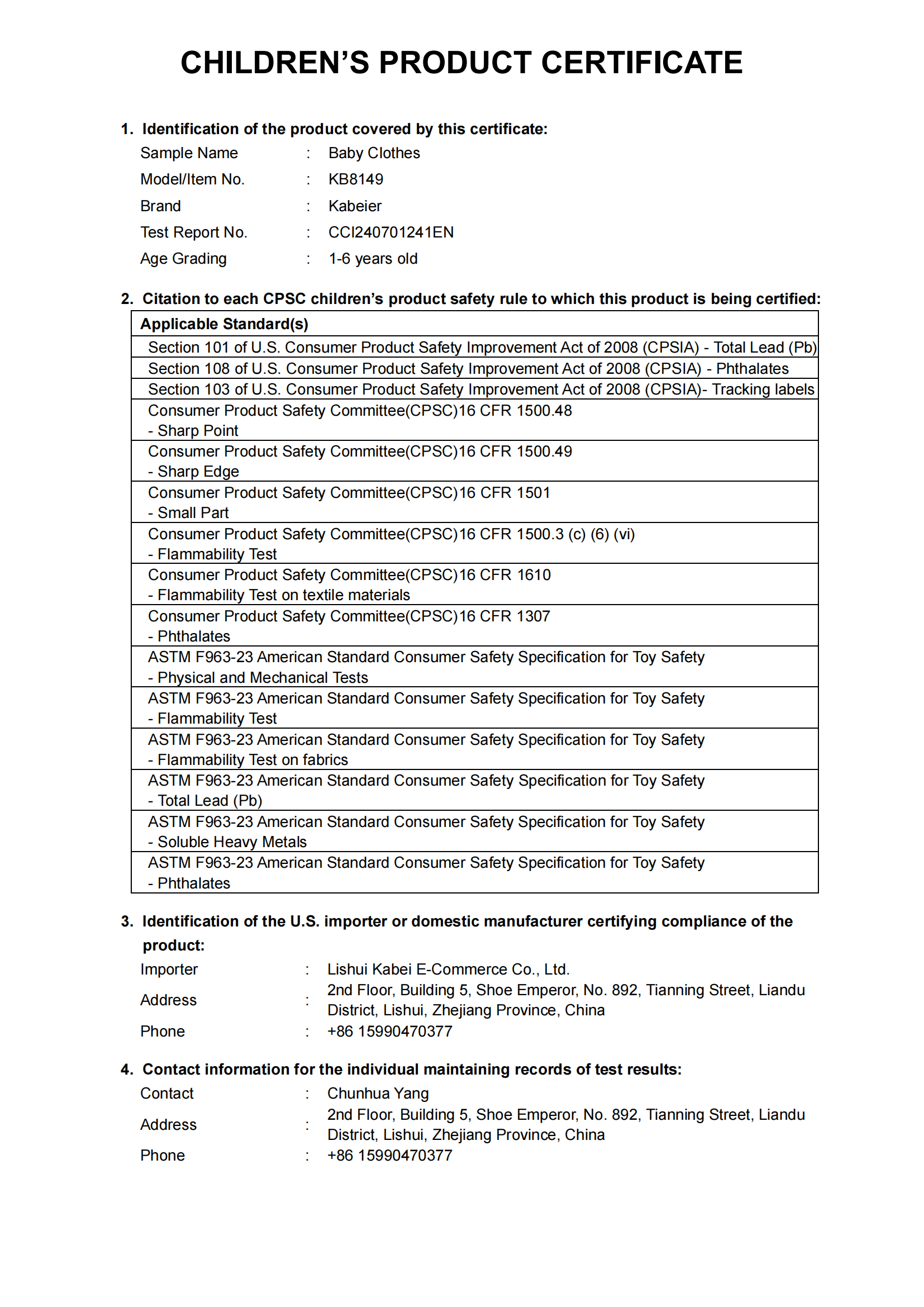
Design has to be playful but never at the expense of safety – think through how every button, applique, and trim behaves in real life. Inspect construction for secure stitching, hidden or reinforced seams, and age-appropriate closures; avoid long drawstrings and detachable embellishments that could become choking hazards. Ask suppliers for proof of compliance with major standards like CPSIA, ASTM , or EN71, and look for fabric certifications such as Oeko‑Tex or GOTS. Durable finishes, colorfast dyes , and verified flame‑resistance, where applicable, reduce risks while maintaining the look parents expect.
- Trim safety: snap/button pull tests and reinforcement
- Material performance: shrinkage, breathability, pilling
- Chemical testing: non‑toxic inks, heavy metals, phthalates
- Labeling & care: clear age grading and washing instructions
- Supplier transparency: sample testing and lab reports on request
When judging fabrics, balance softness and durability – a garment for toddlers needs different specs than one for school‑age kids. Request recent lab reports and independent third‑party testing, run your own sample testing through several wash cycles, and review a supplier’s recall history and QA process before scaling orders. These pragmatic checks separate creative proposals from reliably safe, long‑lasting products.
| Material | Best for | Notes |
|---|---|---|
| Cotton | Everyday comfort | Breathable, easy dyeing, may shrink |
| Organic Cotton | Sensitive skin | Certified, fewer chemicals |
| Polyester | Activewear, durability | Durable, quicker dry, watch for pilling |
| Modal Blend | Soft premium pieces | Luxury hand, good stretch retention |
Negotiating pricing, minimums, and sampling strategies to build reliable partnerships
Think of price conversations as the start of a long-term relationship: lead with data, not emotion. Ask suppliers for tiered pricing, clear breakdowns of landed costs (fabric, trims, duties, freight), and written schedules for price breaks as you scale. Bring concrete proposals to the table – a realistic forecast, preferred payment terms, and a willingness to commit to seasonal windows – and you’ll have more leverage to negotiate better rates and flexibility on order sizes.
- Request sample discounts or credit toward the first production run.
- Negotiate reduced MOQs for initial test batches or pilot SKUs.
- Agree on quality gates and who pays for rework or failed inspections.
- Share tooling or setup costs to lower per-unit pricing for custom licensed prints.
Smart sampling protects both parties: start with a pre-production prototype, follow with a small pilot run, then scale with a production sample that confirms fit, print registration, and wash performance. Below is a simple cheat sheet to frame those conversations and set expectations quickly:
| Sample Type | Typical MOQ | Sample Cost | Lead Time |
|---|---|---|---|
| Proto / Mock-up | 1-5 units | Low - reimbursable | 1-2 weeks |
| Pilot Batch | 50-200 units | Medium – discounted | 3-6 weeks |
| Pre-Production Sample | Full-size run | High-credited | 2-4 weeks |
Q&A
Q: What is “licensed children’s apparel” and how does it differ from regular kids’ clothing?
A: Licensed children’s apparel carries the intellectual property (characters, logos, franchises, or artwork) owned by a third party under a formal license agreement. Unlike generic kids’ clothing, licensed apparel requires permission from the IP owner, adherence to brand guidelines, and usually payment of royalties. This adds extra layers of approval, quality control, and legal compliance.
Q: Why is finding the right supplier more critical for licensed children’s apparel than for non‑licensed lines?
A: Licensed products must protect the brand’s image and meet strict quality and safety standards. Suppliers must be trustworthy with IP, able to follow brand specifications, pass regulatory safety tests for children’s products, and often accept tighter audit and approval processes. Mistakes can lead to costly rework, rejected shipments, or license termination.
Q: Where should I start my search for leading suppliers or manufacturers?
A: Start with a multi‑pronged approach: trade show directories, industry marketplaces, supplier databases,licensing‑industry contacts, and recommendations from the brand/licensor. Key starting points include sourcing trade shows, B2B platforms, and industry associations that focus on children’s wear and licensing.
Q: Which trade shows and events are best for finding suppliers in this niche?
A: Look for shows that feature children’s apparel and licensed merchandise, such as Playtime (Paris), Pitti Bimbo (Florence), MAGIC (Las Vegas), China Kids Expo, Licensing Expo, Brand Licensing Europe, and regional sourcing fairs. These events let you meet manufacturers, inspect samples, and evaluate capabilities in person.
Q: What online directories and marketplaces should I check?
A: Useful platforms include industry‑focused marketplaces (Alibaba, Global Sources, Made‑in‑China), B2B directories (ThomasNet, Kompass), and specialized sourcing platforms (Fibre2Fashion, Sourcing at MAGIC). Also search licensors’ recommended supplier lists and membership directories from Licensing International.
Q: How can I find suppliers that already work with licensed brands?
A: Ask licensors for approved manufacturer lists, request references from the brand, and look for supplier portfolios showing past licensed projects. During outreach, explicitly ask about previous licensed work, sample approvals, and any existing brand partnerships.
Q: What manufacturing models are common for licensed children’s apparel?
A: Common models include full‑package manufacturers (handle design-to-delivery), cut‑and‑sew contractors, print/embellishment houses (screen print, embroidery, heat transfer), and private‑label partners. For licensed work, you often need full‑package partners who can manage approvals, testing, and compliance.
Q: What are the most critically important compliance and safety requirements to check?
A: Prioritize child‑safety and chemical regulations: for the U.S., CPSIA requirements (lead and phthalate limits, tracking labels), flammability standards, and drawstring guidance; for the EU, REACH and EN standards. Also require third‑party testing from accredited labs (SGS, Intertek, Bureau Veritas) and maintain certificates of analysis and test reports.
Q: What social and environmental certifications should I look for?
A: Look for social‑compliance evidence (WRAP, BSCI, Sedex/SMETA audits) and environmental certifications where relevant (GOTS for organic textiles, OEKO‑TEX for harmful substances). Increasingly, licensors and retailers expect traceability and lasting practices.
Q: How do I vet and shortlist potential manufacturers?
A: Steps: request company registration and business license, review product portfolio and client list, ask for licensed project case studies, request photos of the factory and production lines, verify capacity and lead times, check third‑party audit reports, order samples, and , if possible, perform a site visit or hire a third‑party inspector.
Q: What documents and assurances should a licensed manufacturer provide?
A: Provide business license, quality-management procedures, compliance certificates, third‑party test reports, social‑audit reports, product samples, production lead‑time statements, and willingness to sign confidentiality and IP‑protection agreements.
Q: What are reasonable minimum order quantities (MOQs) and lead times for this segment?
A: MOQs vary widely: small full‑package suppliers might accept 200-500 units per style, larger factories often require 1,000+. Lead times depend on complexity and seasonality, typically 6-12 weeks from sample approval for offshore factories. Always confirm per supplier and plan buffers for approvals and testing.
Q: How do royalties and licensing approvals affect the supply chain?
A: Royalties increase product cost and must be accounted for in pricing. Licensors usually require pre‑production approvals for artwork, trims, and samples, adding time and checkpoints. Build these approval steps into your timeline and ensure the supplier understands and supports the approval workflow.
Q: Should I use an agent or a sourcing company?
A: Agents can speed up supplier discovery, handle negotiations, and manage quality control, especially if you lack local presence. Choose agents with proven experience in licensed children’s apparel and check references. Expect to pay fees or commissions, which should be weighed against time saved and reduced risk.
Q: How do I protect IP and control unauthorized production?
A: Use clear contracts requiring confidentiality, include trademark usage clauses, and require suppliers to watermark digital assets and limit tool ownership. Work with the licensor to ensure suppliers are approved and registered. Regular audits and tracking of purchase orders and fabric sources help deter unauthorized runs.
Q: What questions should I ask during initial supplier outreach?
A: Examples: Have you produced licensed children’s apparel before? Which brands have you worked with? Can you share compliance/test reports and audit certificates? What is your MOQ per style and lead time from sample approval? Do you provide full‑package services (pattern making, grading, trims)? How do you handle IP protection and approvals?
Q: How do I evaluate pricing without sacrificing quality or compliance?
A: Request detailed cost breakdowns (fabric, trims, labor, finishing, testing, royalties, packaging). Compare quotes on like‑for‑like specs rather than just per‑unit price. Factor in testing, freight, duties, and potential rework costs. Favor suppliers with obvious costing and a history of meeting safety standards.
Q: What role do samples and pre‑production prototypes play?
A: Samples are critical: they confirm fit, print placement, color, trim quality, and compliance readiness. For licensed items, you’ll usually need pre‑production samples for licensor approval and lab testing. Expect iterative sampling and build time for approvals into your schedule.
Q: How should I manage quality control across production runs?
A: Establish clear tech packs with tolerances, color specs, and inspection checklists. Use independent pre‑shipment inspections and random testing for chemical safety. Agree on corrective action plans with the factory, and set up routine QA checkpoints during production.
Q: How can I find suppliers with ethical and sustainable practices?
A: Screen for certifications (GOTS, OEKO‑TEX, BSCI, Sedex), request supplier sustainability policies, and ask for provenance documentation for materials. Visit factories or hire auditors to verify working conditions and environmental controls.
Q: What red flags should make me walk away from a supplier?
A: No proof of licensing experience, inability to provide test reports or audit certificates, unwillingness to sign confidentiality or IP clauses, excessive delays in responding, inconsistent sampling quality, opaque pricing, or poor references.
Q: Any final tips for building long‑term supplier relationships in licensed children’s apparel?
A: Communicate clearly and often, pay on time, share forecasts to help capacity planning, invest in collaborative problem solving, and respect the licensor’s brand requirements. Long‑term partnerships reduce risk, lower costs over time, and improve product consistency-valuable when working with high‑visibility licensed IP.
If you want, I can tailor a short checklist or outreach email template to use when contacting prospective licensed apparel manufacturers.
Concluding Remarks
Finding the right partners for licensed children’s apparel is less a one-off transaction than a carefully mapped journey. By combining targeted research – trade shows, verified directories, and direct factory outreach - with practical checks like sample orders, safety testing, and license verification, you build a reliable shortlist that balances creativity, compliance, and cost.
Treat the relationship as a partnership: communicate product expectations clearly, confirm production capabilities and lead times, and document agreements to protect both brand and child safety. Ethical sourcing and transparency aren’t just good practice; they reduce risk and support a more dependable supply chain.
The best suppliers are those who can translate licensed designs into safe, consistent garments while fitting your commercial reality. Start small, verify thoroughly, and scale deliberately – that steady approach will help you stitch together a supply base that supports both the magic of the license and the practicalities of production.