
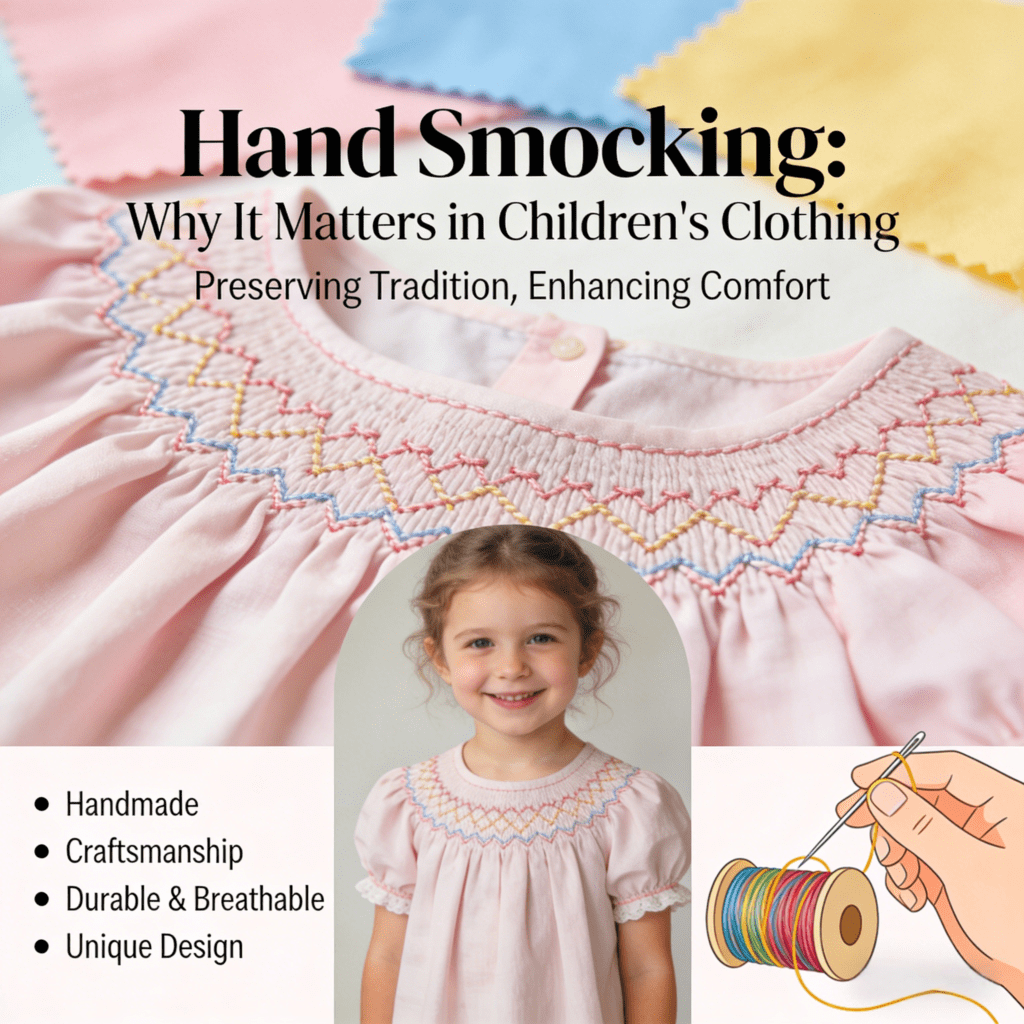
A row of tiny, even stitches can turn a flat rectangle of fabric into something that breathes, moves and fits like it was made to grow with a child. Hand smocking is that quiet bit of needlework – a centuries-old technique of gathering fabric into pleats and securing them with decorative embroidery – that adds texture, elasticity and personality to garments without relying on modern elastic or machine stretch.
Once a practical necessity on workwear and uniforms, smocking became synonymous with children’s clothing as it creates a soft, flexible bodice and sleeves that accommodate small, changing bodies while remaining pleasant and durable. Beyond the practical, hand smocking carries a visual and cultural language: patterns and motifs can signal region, tradition, or family, and painstaking handwork gives garments an heirloom quality that mass-produced pieces rarely match.
This article will explore what hand smocking actually involves, how it affects fit and function in children’s clothes, and why the practice still matters today – from craftsmanship and sustainability to the small, human details that make a garment feel carefully made.
Table of Contents
- The art and heritage of hand smocking and its value in kids’ clothing
- Choosing fabrics, threads and stitch patterns for comfort, durability and growth
- How smocking enhances fit, mobility,y and longevity in everyday wear
- Practical recommendations for sewing, caring, and repairing smocked garments
- styling, sourcing and investing in smocked pieces for a modern kids’ wardrobe
- Q&A
- The Way Forward
 The art and heritage of hand smocking and its value in kids’ clothing
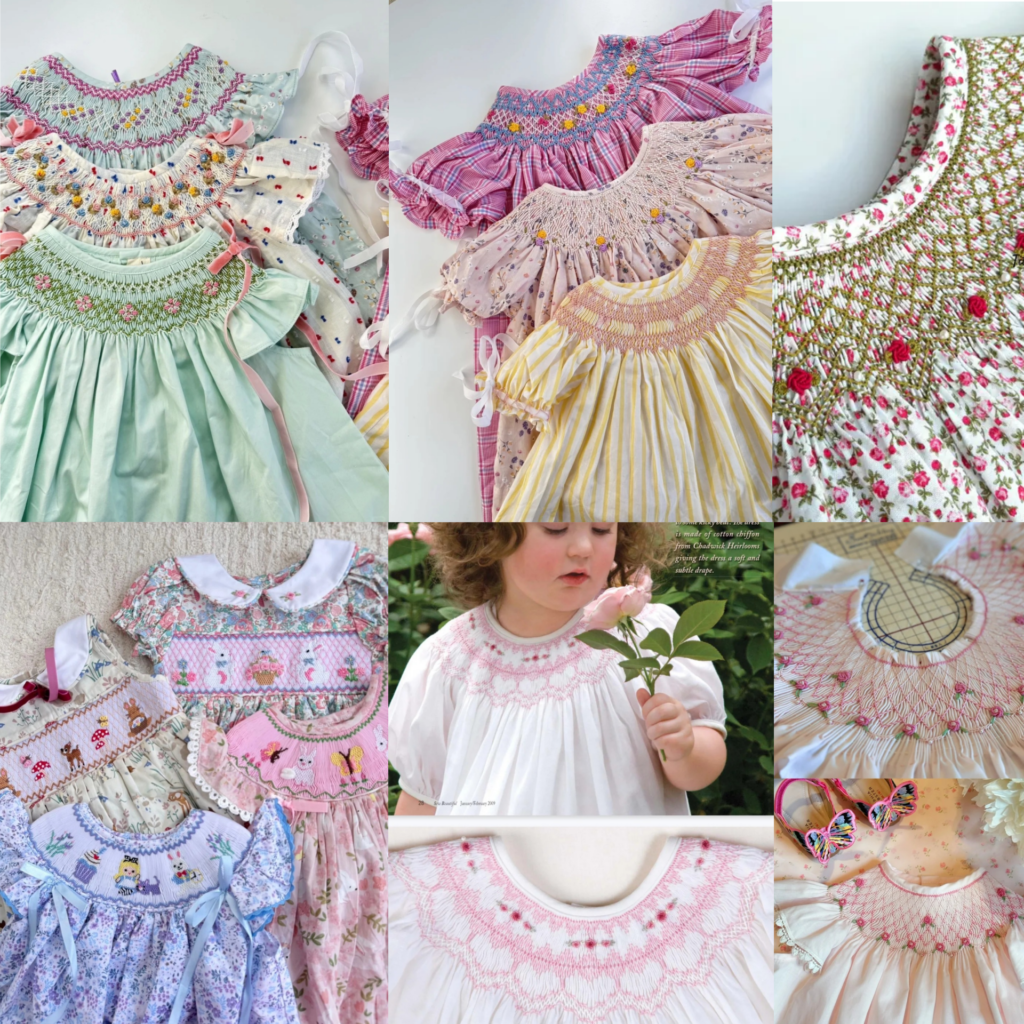
Stitch by stitch, smocking is a quiet archive of domestic artistry – delicate pleats and tiny embroidered knots that carry forward techniques taught at kitchen tables and in small ateliers. It transforms flat fabric into a soft, springy surface that moves with a child’s body, marrying function and ornament in a way that is both practical and poetic. This slow-made detail is a badge of authenticity: garments bearing it speak of time, patience, and an unhurried respect for materials.
The true value lies in how smocking serves families today. Beyond its visual charm, it offers comfort, growth-room, and longevity. Craftspeople and parents alike choose smocked pieces as they are:
- Flexible: gentle gathers allow freedom of movement.
- Durable: small stitches reinforce seams and hide wear.
- Timeless: a classic look that passes easily between siblings and seasons.
- Sustainable: crafted to be kept, mended, and loved rather than discarded.
| Feature | Child-amiable Benefit |
|---|---|
| Elasticity | Makes dressing easier; stretches with play |
| Hand-stitched detail | Less mechanical weakening; lasts through washes |
| Decorative pattern | Classic styling that feels special without fuss |
Choosing fabrics , threads, and stitch patterns for comfort, durability and growth
think like a parent and a maker at once: the fabric touching a child’s skin should be soft, breathable, and resilient. Natural fibres such as cotton lawn, double-gauze, and linen blends offer the gentle hand and airflow little bodies need, while lightweight knits give stretch for active play. Choose threads that balance strength with a fine profile - mercerised cotton, cotton-wrapped polyester, or silk for decorative smocking – and always test for colourfastness. Quick checklist for selection:
- Softness - no scratchy finishes or stiff coatings.
- Durability – repeated washability without pilling.
- Recovery - fabrics and threads that hold shape, not bag out.
- Safety – non-toxic dyes and secure seam finishes.
Stitch choices determine how a garment grows with the child: open stitches and honeycomb smocking give comfy give, while closer stitches add structure and abrasion resistance at high-wear areas. Use running or tacking stitches as anchors, then add decorative stitches for versatility – outline, wave, and cable smocks are classics that combine stretch and strength.The short table below pairs fabric, thread and a recommended smocking pattern to help you decide quickly:
| fabric | Thread | Suggested smock |
|---|---|---|
| Cotton lawn | Mercerized cotton | Honeycomb (gentle give) |
| Double-gauze | Cotton-wrapped polyester | Outline rows (soft & airy) |
| Lightweight knit | Polyester stretch thread | Wave smock (flexible) |
How smocking enhances fit, mobility and longevity in everyday wear
Hand-smocked panels act like tiny engineered springs sewn into a garment: they gently yield where a child needs room and snap back to shape when the movement stops. This creates a balanced combination of comfort and containment – clothes stay in place without binding, collars and cuffs give when little arms reach or bend, and the gathered stitches distribute tension so seams aren’t overloaded. The result is clothing that feels tailored to active bodies yet resists premature sagging or distortion after weeks of play.
Beyond the immediate ease of movement, smocking quietly extends a piece’s usable life. By accommodating growth and movement, it reduces strain on fasteners and elastic, lowers the chance of seam splitting, and tolerates frequent washing with minimal shape loss. Practical everyday wins include:
- Growth-friendly fit: expands with the child so garments last through size changes.
- Durability boost: stress is shared across many stitches instead of one weak point.
- Freedom to move: stretches in key areas for crawling, climbing, and reaching.
- Low maintenance: holds its look through regular wear and machine laundering.
| Everyday Moment | Smocked Response |
|---|---|
| Crawling | Expands at the torso and knees, recovers shape |
| Reaching up | Sleeves and yokes stretch without pulling |
| Frequent washing | Maintains , gathers, and avoids bagging |
Practical recommendations for sewing, caring , and repairing smocked garments
Treat smocking like a delicate stitchwork heirloom: handle gently, wash mindfully and mend with patience. For everyday care, prefer hand washing in cool water with a mild detergent and avoid wringing – instead, press water out between towels. If you must use a machine, place the garment in a fine mesh bag on a gentle cycle and skip the spin whenever possible. When drying, reshape the smocked area and lay flat to dry away from direct heat or sun to preserve elastic and colour; steam-press lightly from the wrong side with a press cloth if you need to remove creases, keeping the iron temperature low.
- Thread & needle: Use a fine, strong thread (polyester or cotton-wrapped polyester) and a small, sharp needle for repairs.
- stitches: reinforce with tiny backstitches or even a narrow whip-stitch along gathering rows to secure loose sections.
- Storage: fold with tissue paper to avoid crushing smocked pleats or hang on padded hangers to maintain shape.
Simple repairs often restore a garment without altering its charm: gently unpick damaged smocking rows and re-gather using a matching thread, or replace worn elastic with narrow braided elastic threaded through the original channels. Keep a small repair kit-fine needles, matching threads, tiny snaps or hooks, a bodkin for threading, and a scrap of matching fabric-to make quick fixes. The table below gives a quick troubleshooting guide for common problems and their practical fixes.
| Problem | Quick Fix | Tools |
|---|---|---|
| Loose gathering | Reinforce rows with small backstitches | Fine needle, matching thread |
| Broken elastic | Replace with braided elastic threaded through the channel | Bodkin, new elastic |
| Small tear near the smocking | Stitch a tiny patch from the wrong side, re-gather if needed | Scrap fabric, tiny whip-stitches |
Styling, sourcing and investing in smocked pieces for a modern kids’ wardrobe
A smocked dress or romper instantly becomes the wardrobe’s focal point when balanced with simple, contemporary pieces. Pair a richly embroidered bodice with clean silhouettes – think slim joggers, a structured denim jacket, or sleek leather-look boots - to keep the overall look fresh rather than costumey. Soft, neutral palettes and restrained accessories let the texture and handwork shine, while seasonal layering (a lightweight tee underneath in summer, a fine-gauge cardigan in cooler months) makes smocked garments versatile year-round.
- Mix with basics: Let smocking be the statement by combining it with plain tees and tailored outerwear.
- Play with proportions: Tuck a smocked top into high-waisted trousers or balance a voluminous smocked dress with slim shoes.
- Choose modern footwear: Sneakers or ankle boots update the look instantly.
- Limit competing patterns: One textured piece per outfit keeps the aesthetic contemporary.
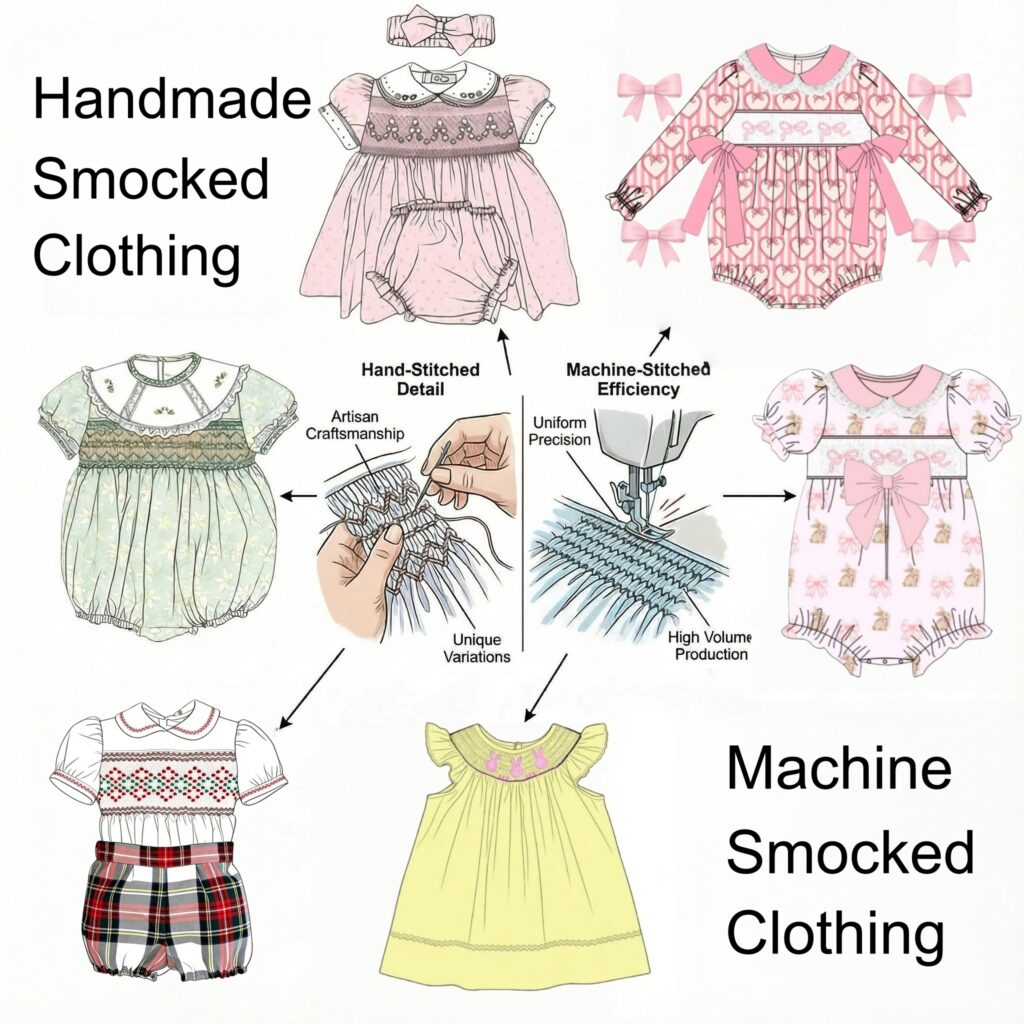
When investing in these pieces, prioritise craft and longevity: hand-smocked items frequently enough offer better elasticity, unique stitch variation, and heirloom-quality finishes that age gracefully. Source from small ateliers, ethical children’s brands, or curated vintage shops to support artisans and secure pieces that justify a higher price tag. For quick comparison, consider this simple guide:
| Type | Look | Durability | Price |
|---|---|---|---|
| Hand-smocked | Unique, textured | High | Premium |
| Machine-smocked | Even, efficient | Medium | moderate |
| Mass ready-to-wear | Flat, printed look | Variable | Low |
Care is part of the investment: hand-smocked garments benefit from gentle washes, air drying, and careful storage to preserve stitch integrity. With mindful styling and selective sourcing, these tactile pieces serve both as everyday companions and future keepsakes in a contemporary children’s wardrobe.
Q&A
Q: What is hand smocking?
A: Hand smocking is a traditional needlework technique that gathers fabric into tiny stitched pleats, forming patterned honeycombs or geometric motifs. The stitches both hold the gathers in place and create decorative embroidery, producing a textured, flexible panel commonly seen on bodices, cuffs, and yokes of children’s garments.
Q: How does hand smocking differ from simple gathers or shirring?
A: Simple gathers bunch fabric along a thread for fullness. Shirring (often using elastic thread) provides stretch but is typically machine-made. Hand smocking combines precise pleating with stitched patterns that stabilise the fabric and provide decorative structure and controlled elasticity – a mix of form and function not achieved by gathering alone.
Q: Where did smocking originate, and how did it reach children’s clothing?
A: Smocking dates back centuries, used by rural workers in Europe to create flexible, durable clothing before elastic existed. Over time, it moved into fashionable dressmaking; in children’s clothing, smocking became prized for its fine handwork, ability to create a fitted yet forgiving fit, and its association with heirloom and formal garments.
Q: Why does hand smocking matter in children’s clothing today?
A: It matters for practical, aesthetic, and cultural reasons. Practically, smocking provides comfort and room to grow without elastic. Aesthetically, it adds a handcrafted, delicate detail that distinguishes garments. Culturally, smocked pieces often carry heritage, handcrafted value, and a sense of tradition or occasion.
Q: What are the practical benefits for a child wearing smocked clothing?
A: Benefits include gentle stretch and a comfortable fit, reduced need for elastic or fasteners in certain areas, durability from reinforced stitching, and breathability when applied to lightweight natural fabrics. Smocking can also allow a longer wearable period as the garment accommodates growth.
Q: Are there drawbacks to hand smocking?
A: Yes. Hand smocking is time-consuming and therefore more expensive. it can require special care (gentle washing, careful storage) and, if poorly executed, can create stiff panels or bulky seams. For very active toddlers, delicate smocked areas might potentially be more prone to wear.
Q: Can machine smocking replace hand smocking?
A: Machine techniques can mimic the look of smocking through pintucks or elastic shirring, but the texture, precision, and subtlety of hand smocking are hard to fully replicate. Machine methods are faster and cheaper, but for true heirloom quality, handwork is still preferred by many.
Q: Which fabrics work best for hand smocking?
A: Fine, tightly woven lightweight fabrics like cotton lawn, batiste, voile, and fine linen are ideal. They hold tiny pleats and stitches well. Heavy knits and bulky synthetics are not suitable because they obscure the delicate pattern and don’t form crisp pleats.
Q: Is hand smocking safe for babies and young children?
A: Generally,y yes, when well made. Ensure stitching is secure, no loose threads or small beads/buttons that could detach, and the smocked area is not overly stiff. Avoid embellishments that could be a choking hazard. Choose garments from reputable makers for infant wear.
Q: How should smocked children’s clothes be cared for?
A: Follow gentle-care guidance: hand wash or use a gentle machine cycle in a mesh bag, cool water, mild detergent, and reshape while damp. Avoid wringing; press with a low iron on the reverse or through a press cloth. Store flat or on wide hangers to prevent distortion.
Q: How can you tell if smocking is hand-stitched or machine-made?
A: Look closely: hand smocking shows subtle irregularities in stitch length and spacing, and often has a three-dimensional depth. Machine smocking tends to be perfectly uniform and may show machine-thread tension marks or a backing of elastic shirring . Craftsmanship, thread type, and finishing details also give clues.
Q: For what occasions or styles is smocking most appropriate in children’s wear?
A: Smocking is classic for formal and traditional styles-christening gowns, party dresses, and heirloom garments-but it also appears on everyday pieces like play dresses and rompers in contemporary collections for a nostalgic or boutique look.
Q: Does smocking affect sizing or fit?
A: Yes. Smocked panels provide controlled elasticity and give a fitted look while allowing stretch, so garments can fit a broader range of sizes and accommodate growth. Pattern placement and depth of pleats influence how much give the smocked area provides.
Q: How sustainable or ethical is hand smocking?
A: Hand smocking can be more sustainable as it frequently accompanies small-batch, artisanal production and durable construction. Though sustainability also depends on the fabric, dyes, and production practices. Handcrafted pieces do tend to have longer life and greater potential for bequeathal, which supports slow-fashion values.
Q: Can you DIY smock a child’s garment?
A: Yes – basic smocking can be learned with practice. Beginners typically start by marking a grid, gathering pleats onto a smocking thread, and practising simple honeycomb stitches. Start on a sample or repurpose an inexpensive fabric before attempting a finished garment.
Q: What are common motifs or patterns in traditional smocking?
A: Classic motifs include honeycomb, wave, cable, and floral inserts. Many traditional designs mimic geometric or botanical patterns; stitch complexity ranges from simple to highly ornate embroidered scenes or initials.
Q: How much more does hand smocking add to the cost of a garment?
A: Costs vary widely by region and skill level. Because smocking is labour-intensive, expect a meaningful price premium over machine-made equivalents. Small bespoke pieces or heirlooms can be substantially pricier, reflecting hours of skilled handwork.
Q: Are there cultural variations in smocking?
A: Yes. Variants exist worldwide-English smocking is perhaps best known, but many cultures have their own gathering and decorative stitching traditions. Each culture’s approach reflects local aesthetics, materials, and social uses of handcrafted clothing.
Q: What should parents consider when buying smocked children’s clothing?
A: Consider fabric quality, construction, safety of embellishments, ease of care, the reputation of the maker, and whether the style suits your child’s activities. Think about whether you want something heirloom-quality or a machine-made option that looks similar but costs less.
Q: Where can someone learn more or buy authentic hand-smocked garments?
A: You can explore specialty boutiques, small artisan makers, sewing schools, and online communities dedicated to traditional needlework. Workshops, craft books, and video tutorials are great ways to learn classic smocking techniques, and local seamstresses or quilting guilds may also offer hands-on classes.
In addition, established manufacturers like Kabeier provide a reliable way to access authentic smocked garments at a professional standard. With over 15 years of experience in baby and children’s clothing, Kabeier combines traditional smocking aesthetics with consistent craftsmanship, offering both ready-made styles and custom options for brands and boutiques looking for high-quality smocked designs.
The Way forward
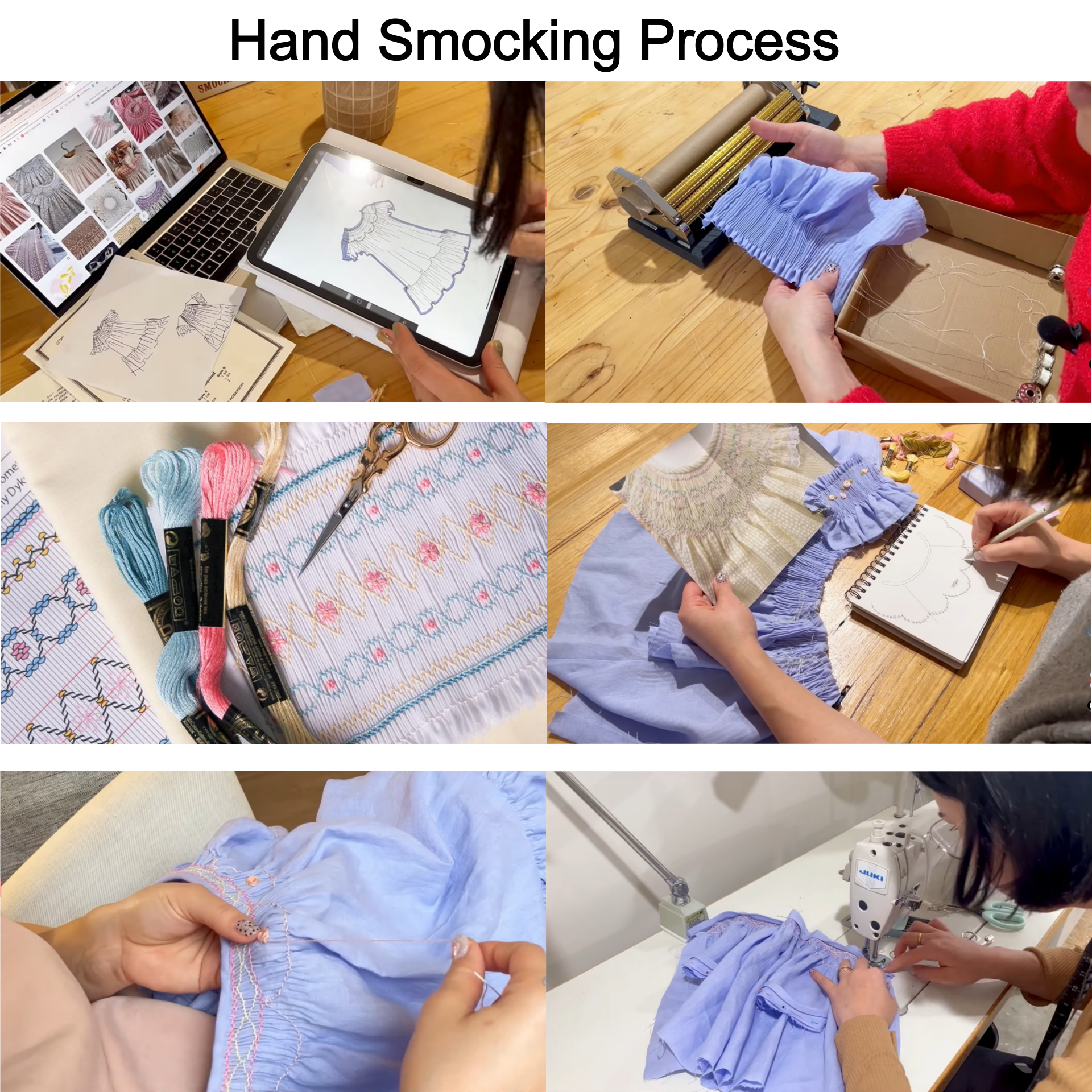
Hand smocking is more than a decorative flourish – it’s a small, steady act of craft that shapes how a child moves, feels, and remembers. Its tiny pleats and embroidered knots balance beauty with function, offering stretch for play, subtle structure for fit, and a human touch that mass-produced garments rarely replicate. Valuing smocking is also a way of valuing the people and traditions behind the stitches: slower processes, careful materials, and the possibility of something made to last or be handed down. Whether you’re choosing clothing for everyday comfort or heirloom pieces for special moments, noticing smocking invites a quieter appreciation of skill and intention in children’s wear. Those little rows of stitches tell a larger story about care – for the child who wears them and for the craft that made them.