
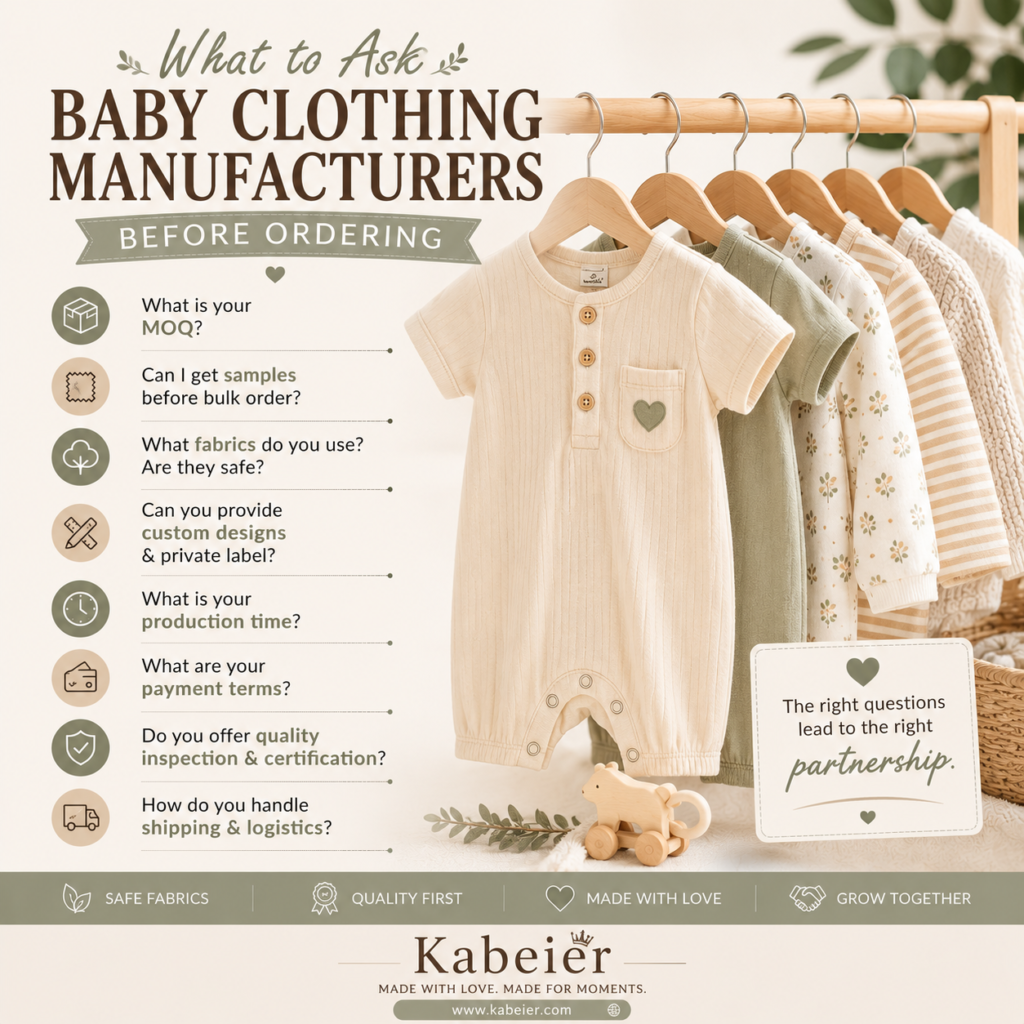
Choosing a baby clothing manufacturer is a little like choosing a partner for one of the most delicate jobs in retail: every stitch, seam, seamand fabric decision carries extra weight. When you’re creating garments for infants, there is no room for guesswork-comfort, safety, quality, and consistency all matter from the very first order. That’s why asking the right questions before placing an order is not just helpful, but essential.
Whether you’re building a new brand or expanding an existing collection, the manufacturer you select will shape everything from product quality to delivery timelines and customer satisfaction. In this article,we’ll explore the key questions to ask a baby clothing manufacturer before committing, so you can make informed decisions and set your business up for success.
Table of Contents
- Confirm Fabric Safety Certifications and Testing standards
- Clarify Sizing Consistency and Age Range Fit
- Review Minimum Order Quantities and Sample Approval Process
- Discuss Customization Options for Labels Packaging and Design Details
- Verify Lead Times Production Capacity and Return Policies
- Q&A
- In Conclusion
Confirm Fabric Safety Certifications and Testing Standards
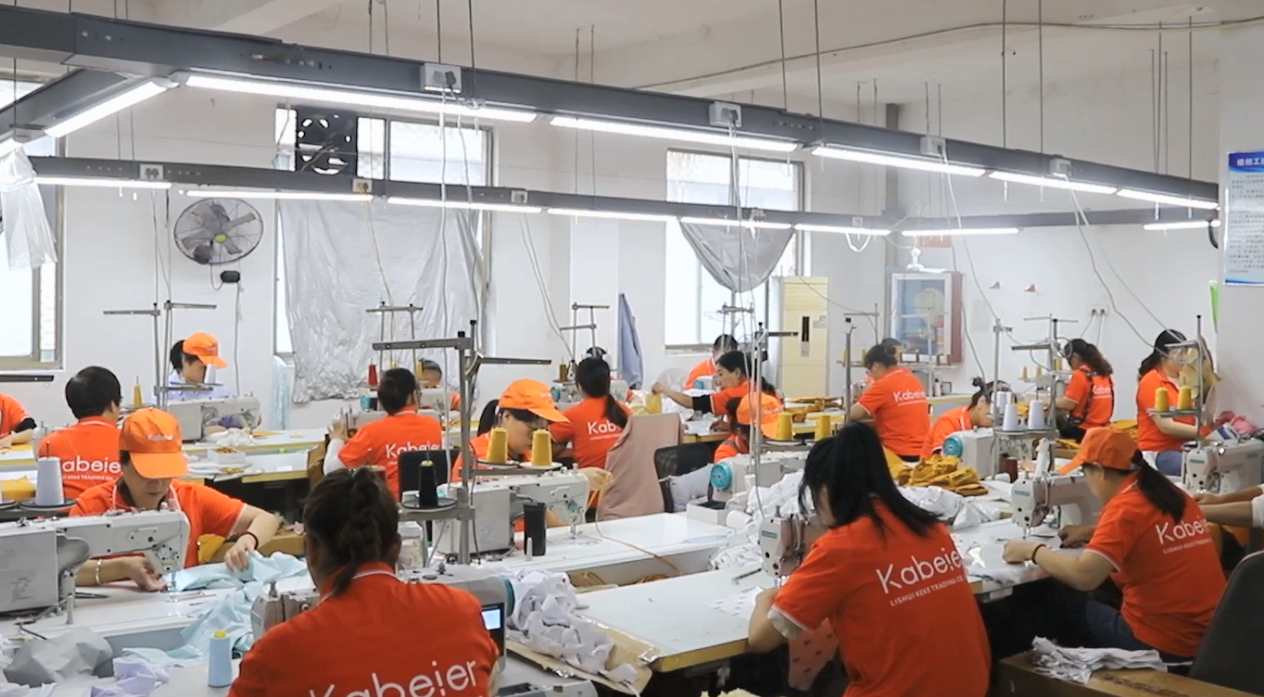 Ask for proof, not promises. Reliable baby clothing manufacturers should be able to show current certificates for fabric composition, dye safetyand chemical compliance, along with the test methods used to verify them. For infant garments, the smallest details matter: seams should be gentle, prints should be secureand trims should meet the same safety expectations as the fabric itself. A supplier that understands these requirements will usually share documentation without hesitation and explain what each test covers.
it also helps to confirm which standards are used for everyday wear versus newborn or sleepwear lines. Some fabrics may look soft and wholesome but still fail on issues like colorfastness, formaldehyde limitsor flammability requirements. A clear testing trail reduces the risk of surprises after production and gives you confidence that the material is suitable for delicate skin.
| Test | Why It Matters | What to Request |
|---|---|---|
| Fiber content | True material labeling | Lab report |
| Chemical safety | Skin protection | Compliance certificate |
| Colorfastness | Less dye transfer | Test summary |
A strong manufacturer will treat certification as part of the design process, not an afterthought. Ask whether testing is done in-house or by an accredited third party and request samples from the same batch you plan to order. if the supplier can speak confidently about standards, audits, and re-testing, that is usually a sign they take babywear safety as seriously as you do.
Clarify Sizing Consistency and Age Range Fit
Baby sizing can be deceptively simple on the surface, but in manufacturing, it frequently enough hides the biggest source of returns and customer complaints. Two onesies labeled “6-9 months” may fit very differently depending on the pattern block, fabric stretch, and how the brand defines average body proportions. Ask the manufacturer for a detailed size chart that includes chest, length, sleeve, inseam, and weight or height ranges, then compare it against your target market rather than relying on generic age labels alone.
It also helps to find out whether the factory follows one consistent grading system across all styles or adjusts measurements for each product type. A romper, a sleep suit, and a bodysuit may all carry the same age label but need different room for movement, diaper space, and shrinkage after washing. Request samples in adjacent sizes so you can test fit progression,especially around growth-heavy stages like newborn,3-6 months, and toddler sizes.
| Size Label | Fit Focus | Check For |
|---|---|---|
| Newborn | Snug, easy access | Neck opening, snap placement |
| 3-6 Months | Room to grow | Body length, diaper allowance |
| 12-18 Months | Movement-friendly | Armholes, leg opening |
- Ask for measurement tolerances so you know how much variation is acceptable in production.
- Confirm shrinkage behavior after washing and drying tests.
- Request fit notes by age range to see whether the style runs small, true to size, or roomy.
Review Minimum Order Quantities and Sample Approval Process
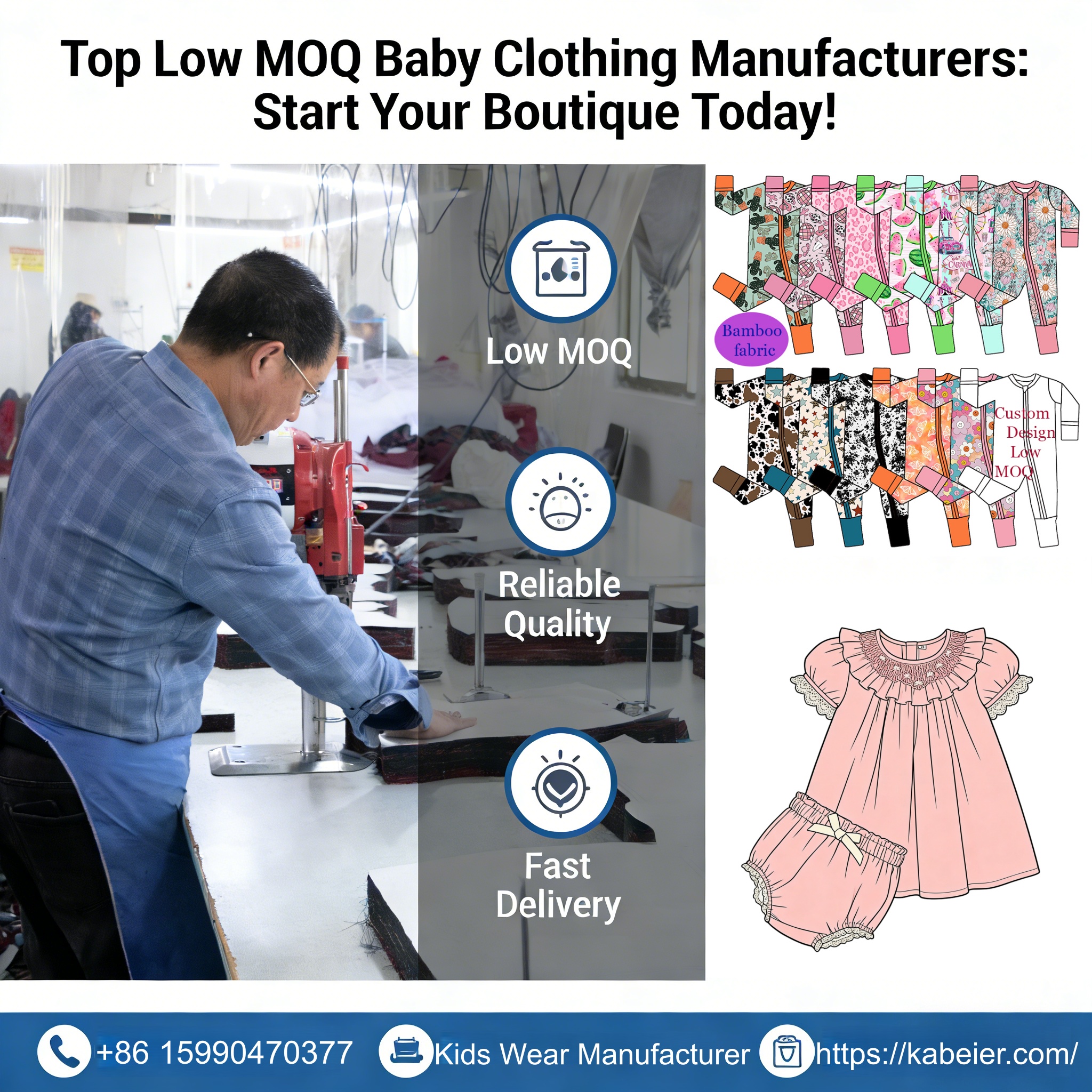 Order volumes can shape everything from price per unit to the level of adaptability a manufacturer offers, so it’s worth understanding exactly how their minimums work before you commit. Some suppliers set one blanket minimum across all styles, while others separate it by color, size runor fabric type. Ask whether the minimum applies to each design or to the entire order, and whether you can mix styles to meet the threshold. This detail matters especially for seasonal babywear, where testing a small launch collection can reduce risk without slowing your market entry.
- Ask for the MOQ by style, color, and size range
- Confirm whether sample orders count toward production minimums
- Check if repeat orders can be smaller than the first run
- Clarify how custom prints, trims, or packaging affect the minimum
The sample process deserves just as much attention as the production quote. A clear approval workflow helps prevent surprises later, especially with baby clothing where softness, stitching, and fit are non-negotiable. Find out how many sample rounds are included, who covers shipping, and what happens if revisions are needed after the first version arrives. Some manufacturers provide a pre-production sample for design confirmation, while others offer a fit sample followed by a final sales sample. A simple review sheet can keep the process organized:
| Step | What to Check | Outcome |
|---|---|---|
| First sample | Fabric, shape, trims | Initial approval |
| Revisions | Fit, stitching, labeling | Updated version |
| Final sample | Color, packaging, finish | Production sign-off |
Before placing an order, confirm the timeline from sample approval to bulk production and ask whether delays in feedback will affect your delivery date. If the manufacturer has a strict approval window, missing it could push your launch back by weeks. It also helps to ask whether digital mockups are accepted for early review or if physical samples are required before cutting fabric. A supplier who explains these points clearly is often easier to work with when your brand needs consistency, speed, and room for refinement.
Discuss Customization Options for Labels Packaging and Design Details
Ask how much freedom you have over labels, packaging, and presentation details before production begins. A reliable manufacturer should be able to explain whether you can choose woven labels,printed neck tags,hang tags,care cards,tissue paper,and bag inserts without creating delays or minimum-order headaches.Small design choices can shape how your brand feels in the customer’s hands, so it helps to confirm what is standard, what is customizable, and what requires extra lead time.
it is also smart to review the practical side of branding finishes. Some details look stunning but may not suit baby clothing, especially if they irritate sensitive skin or affect garment comfort. Ask about soft-edge labels, tagless printing, eco-friendly inksand packaging materials that protect delicate fabrics while keeping the unboxing neat and memorable. A clear conversation here can help you avoid costly revisions later.
| Detail | Choice | Best Use |
|---|---|---|
| Labels | Woven / Printed | Brand identity |
| Packaging | Bag / Box / Wrap | Retail or gift-ready |
| Finish | Matte / Gloss | Premium look |
- Confirm material safety for anything that touches the garment.
- Ask for samples to compare texture, color, and print clarity.
- Check branding flexibility if you plan seasonal or limited-edition packaging.
- Review logo placement so it stays visible without overpowering the design.
Verify Lead Times, Production Capacity , and Return Policies
Ask for a realistic timeline from sampling to shipment, not just a promised delivery date. A reliable manufacturer should be able to explain how long each stage takes, including pattern development, fabric sourcing, cutting, sewing, quality checks, and packing. It also helps to ask what can cause delays, such as seasonal fabric shortages, print approvals, or customs issues, so you can plan launches with fewer surprises.
Production capacity matters just as much as lead time. A factory that can produce 500 units quickly may not be able to handle 5,000 units with the same consistency. Clarify whether they can scale with your brand, what their minimum and maximum order volume looks like, and how many styles they can manage at once. If you expect repeat orders or seasonal drops, ask whether they can reserve machine time or production slots for you.
| Question | Why It Matters |
|---|---|
| What is your standard lead time? | Sets launch expectations |
| How much can you produce monthly? | Shows real capacity |
| What is your return or remake policy? | Protects against defects |
Return policies should be clear before any deposit is paid. Ask what happens if items arrive with stitching defects, sizing errors, or fabric issues. Some manufacturers offer remakes, while others provide credits or partial refundsand that difference can be notable when you are building inventory. A good partner will also define the inspection window, the proof required for claims, and whether they cover return shipping for confirmed faults.
Q&A
Q&A: What to Ask a Baby Clothing Manufacturer Before Placing an Order
Q1: Why is it significant to ask questions before placing a baby clothing order?
A: Because baby clothing is more than just cute design. It must be safe, soft, durable, and properly made for delicate skin. Asking the right questions helps you avoid quality issues, delays, and costly mistakes.
Q2: What should I ask about material quality?
A: Ask what fabrics are used, where they come from, and whether they are suitable for baby skin. Good questions include:
- Is the fabric organic or certified?
- Is it free from harmful chemicals?
- How soft, breathable, and washable is it?
Q3: Why does fabric certification matter?
A: Certifications can show that the manufacturer follows certain safety or quality standards. For baby clothes, this matters because parents often expect products that are gentle, tested, and trustworthy.
Q4: What should I know about safety standards?
A: You should ask whether the clothing meets relevant safety regulations in your target market.Also ask about:
- small parts like buttons or snaps
- Flammability standards
- Neck, sleeve, and leg openings
- Any choking or strangulation risks
Q5: How can I check the manufacturer’s experience with baby apparel?
A: Ask how long they have produced baby clothing and whether they have worked with similar brands or product types. Experience frequently enough means they understand fit, comfortand safety details better.
Q6: Should I ask for samples before ordering?
A: Yes. Samples let you inspect fabric feel, stitching, sizing, print qualityand overall finish. They are the clearest way to see whether the manufacturer can deliver what they promise.
Q7: What should I ask about customization options?
A: If you want your own brand identity, ask whether the manufacturer can customize:
- Fabrics
- Colors
- Prints
- Labels
- Packaging
- Design details
Q8: Why is sizing such an important question?
A: Baby sizes can vary widely between markets and age groups. Ask whether the manufacturer can follow your size chart and whether they have standard measurements for different age ranges.
Q9: What should I ask about minimum order quantity?
A: Ask what their MOQ is for each style, coloror size. This helps you plan your budget and inventory. If you are starting small, a flexible MOQ can be especially helpful.
Q10: How do I find out about production lead times?
A: Ask how long it takes to produce samples, complete bulk ordersand handle shipping.Clear timelines help you avoid missed launch dates and manage seasonal demand.
Q11: Should I ask about quality control?
A: Absolutely. Ask what inspection steps they use during production and before shipment. You want to know how they catch defects in stitching, sizing, labelingand packaging.
Q12: What should I ask about packaging?
A: Packaging matters because it affects presentation, protectionand retail readiness. Ask whether they offer eco-friendly packaging, custom brandingand safe packing methods for delicate items.
Q13: Is it useful to ask about communication and support?
A: Yes. Good communication can save time and reduce misunderstandings. Ask who your main contact will be, how often updates are sharedand how quickly they respond to questions or issues.
Q14: What should I know about pricing?
A: Ask for a full price breakdown, including production, sampling, customization, packaging, and shipping if possible. A low unit price can still become expensive if hidden costs appear later.
Q15: Can the manufacturer help with design changes?
A: Some can. Ask whether they offer design support, pattern adjustments,or technical guidance. This is useful if you have a concept but need help turning it into a production-ready product.
Q16: What should I ask about shipping and delivery?
A: Ask how orders are shipped, who handles logistics, and whether they can support international delivery. It is also wise to ask about tracking, customs documentsand obligation if delays happen.
Q17: Why ask about returns or problem handling?
A: Even with careful planning, issues can happen. Ask how the manufacturer handles defective productsorder mistakesor shipping damage. A clear process protects both sides.
Q18: What is the most important question to ask first?
A: start with safety and material quality. For baby clothing, comfort and compliance come before everything else. Once those are clear, you can move on to pricing, customizationand delivery.
Q19: How can these questions help my baby clothing business?
A: They help you choose a manufacturer who can support your brand, meet your standards, and deliver products that parents can trust. In a market built on care, asking smart questions is the first step toward a strong partnership.
Q20: What is the best way to end the conversation with a manufacturer?
A: Summarize your needs, confirm key details in writing, and request next steps. A good final question is: “Can you share a sample,quotation,and production timeline so we can review everything before proceeding?”
If you want,I can also turn this into:
-
- a more SEO-friendly Q&A,
-
- a blog-style FAQ section,
-
- or a more sales-focused version for B2B readers.
To sum up
In the world of baby clothing, every detail matters—from the softness of the fabric to the reliability of your manufacturing partner. The questions you ask today can shape the quality of your products, strengthen your brand, and build lasting customer trust.
At Kabeier, we believe every successful partnership starts with open communication, exceptional craftsmanship, and a commitment to quality. Whether you’re launching a new collection or expanding your business, our experienced team is here to support you with OEM & ODM solutions, premium materials, and reliable production.
Ready to bring your ideas to life? Contact Kabeier today to discuss your project and request a customized quote. We’re excited to help your brand grow with confidence.