
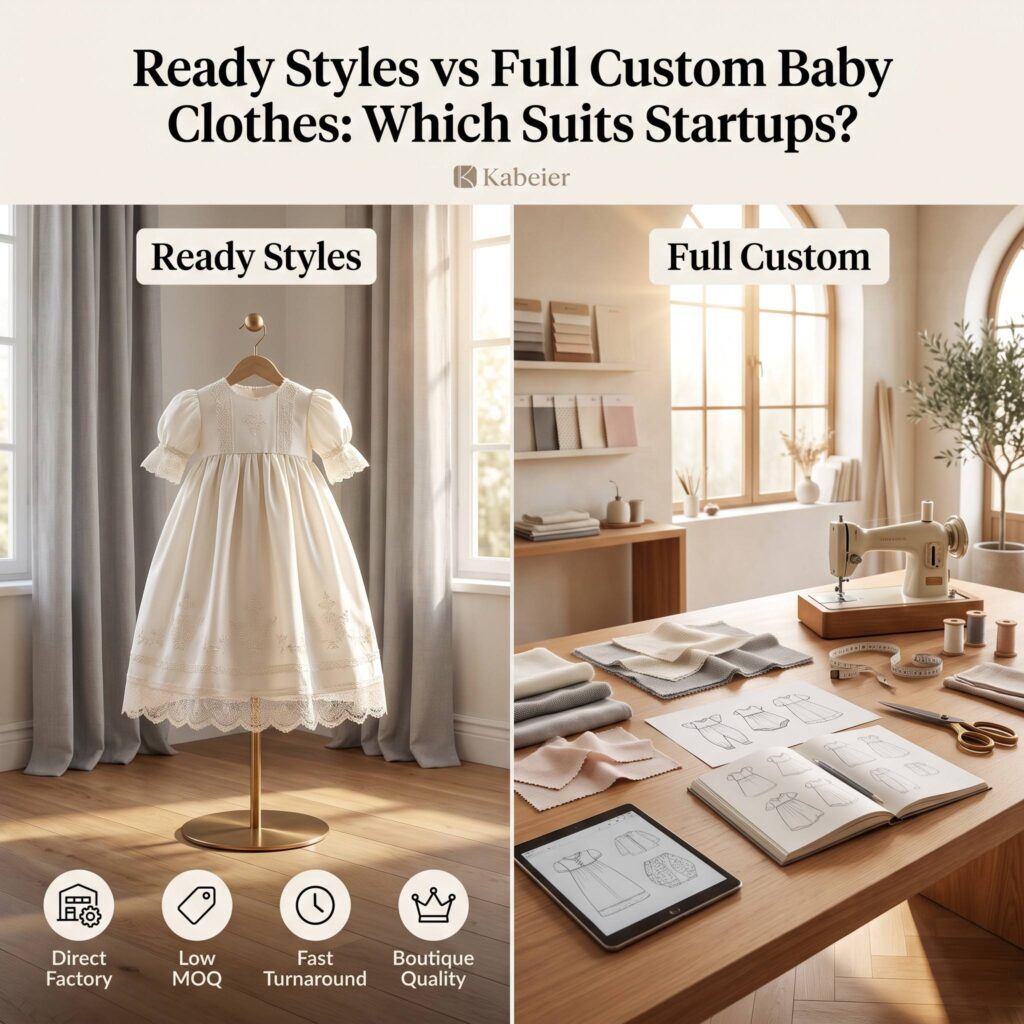
In the vibrant world of baby apparel, startups face a crucial choice early on: should they lean towards ready styles or dive into the intricate world of full custom clothing? Each approach carries its own set of advantages and challenges, shaping not only a brand’s identity but also its operational flow and connection with customers. As entrepreneurship in the baby clothing market continues to flourish, understanding the nuances between these two paths becomes essential. This article explores the creative and practical dynamics of ready-made versus fully customized baby clothes, helping emerging brands decide which route aligns best with their vision and growth plans.
Table of Contents
- Ready Styles and Full Custom Baby Clothes Overview
- Evaluating cost Efficiency and production Timelines
- Balancing Brand Identity with Design Flexibility
- Assessing Quality Control and Customer Satisfaction
- Making the Right Choice for Your Startup’s Growth
- Q&A
- To Wrap It Up
Ready Styles and Full Custom Baby Clothes Overview
 Choosing between ready styles and full custom baby clothes involves weighing flexibility against efficiency. Ready styles offer a fast turnaround with pre-designed templates that have proven appeal in the market. These options are ideal for startups looking to minimize production time and inventory complexity, as they come with established sizing and popular motifs that reduce the guesswork of design.
In contrast, full custom baby clothes provide unmatched personalization, allowing brands to craft exclusive pieces that reflect their unique identity. While this route can foster strong brand recognition and deeper customer engagement, it demands more resources in design, sampling, and production management. The balance often boils down to whether a startup prioritizes speed and simplicity or creative control and differentiation.
| Feature | Ready Styles | Full Custom |
|---|---|---|
| Design Flexibility | Limited to templates | highly customizable |
| Production Speed | Fast | Slower |
| Inventory Complexity | Low | High |
| Cost Implication | More affordable | Higher investment |
| Customer Appeal | Mass-market | Niche & premium |
- Ready styles suit startups aiming for quick market entry and streamlined operations.
- Full custom clothes fit startups focusing on brand uniqueness and long-term customer loyalty.
- Both have their merits, but the choice should align with your startup’s core priorities and resources.
Evaluating Cost Efficiency and Production Timelines
When launching a baby clothing startup, managing budgets and timelines is critical. Ready styles often come with the benefit of established production processes, which means faster turnaround times and predictable costs. Manufacturers typically have inventory ready or can quickly fulfill smaller orders, allowing startups to hit the market sooner and test their product with minimal upfront investment.
On the other hand, full custom baby clothes require a longer lead time due to design finalization, prototyping, and specialized manufacturing steps. While the initial expense is usually higher, it offers startups the unique advantage of tailoring products exactly to their audience’s needs and building a distinctive brand identity from day one.
| Aspect | ready Styles | Full Custom |
|---|---|---|
| Production Time | 1-3 Weeks | 6-12 Weeks |
| Cost per Unit | Lower | Higher |
| Order Flexibility | Limited | Highly Flexible |
| Brand Differentiation | Low | High |
For startups prioritizing efficiency and cash flow, leveraging ready styles can offer a practical path forward. However, if long-term brand value and unique product offerings are key, investing time and resources into custom production makes sense despite initial hurdles. Ultimately, weighing these factors helps tailor the approach to the startup’s growth strategy.
- Ready Styles: Quicker stock availability, lower risk, streamlined budgeting.
- Full Custom: unique branding, bespoke designs, potential for premium pricing.
Balancing Brand Identity with Design Flexibility
 Startups frequently find themselves walking a tightrope between maintaining a cohesive brand identity and offering enough design flexibility to appeal to a diverse customer base. When it comes to baby clothes, this balance becomes crucial. On one hand, adhering strictly to a brand’s visual language—colors, logos, and style guidelines—helps build recognition and trust among new parents. Conversely, offering varied designs that suit different tastes and needs ensures that products don’t feel monotonous or overly standardized.
Ready styles offer a streamlined way to reinforce your brand’s core elements consistently, ensuring every piece aligns seamlessly with your vision. However, these styles can sometimes limit creative exploration, which might alienate potential customers looking for something unique or personalized. Conversely, full custom designs provide the freedom to experiment with different patterns, fabrics, and styles, but may dilute the brand’s signature look unless well coordinated.
- Ready Styles: Uniformity, quick production, brand consistency
- Full Custom: Unique appeal, broader customer reach, higher design variance
| Aspect | Ready Styles | Full Custom |
|---|---|---|
| Brand Cohesion | High | Variable |
| Design Variety | Limited | Expansive |
| Time to Market | Fast | Longer |
| Customer Appeal | Consistent | Diverse |
Assessing Quality Control and Customer Satisfaction
Quality control is a critical factor that can make or break a startup’s reputation in the competitive baby clothes market. Ready-made styles often benefit from standardized production lines, which allow for consistent quality checks at every stage. Manufacturers typically implement rigorous inspection processes, minimizing defects and ensuring that each garment meets safety and comfort standards before it reaches the consumer.
On the other hand, full custom baby clothes pose unique challenges. Each item may have variations, and the non-repetitive nature of customization can increase the chance of errors. However, startups that excel in quality control here tend to emphasize personalized attention, including:
- Manual inspection of each piece
- Direct communication with customers to align expectations
- Flexible adjustment protocols to address defects swiftly
| Aspect | Ready Styles | Full Custom |
|---|---|---|
| Consistency | High | Variable |
| Inspection Method | Automated and standardized | Manual and personalized |
| Customer Feedback Impact | slower adaptation | Faster and more tailored |
Ultimately, customer satisfaction hinges on the perceived value of the product and the reliability of the brand. With ready styles, buyers appreciate swift delivery and predictable quality, while custom options delight customers seeking a unique touch. Startups must weigh their capacity for quality management against their desired customer experience to ensure loyalty and positive reviews that drive growth.
Making the Right Choice for Your Startup’s Growth
On the other hand, full custom baby clothes offer a distinct way to differentiate your brand in a crowded market. They enable startups to tailor everything from fabric choice to cut, creating a unique identity that can resonate strongly with niche audiences. However, custom options usually demand longer production times and larger initial investments, which might strain limited resources during early stages.
| Aspect | Ready Styles | Full Custom |
|---|---|---|
| Speed to Market | Fast | Slower |
| Initial Investment | Lower | Higher |
| Brand uniqueness | Standardized | Highly Unique |
| Customization Flexibility | Limited | High |
For startups prioritizing agility and market feedback, ready styles provide a pragmatic launchpad that minimizes complexity. Conversely, if your vision centers on crafting an exclusive brand narrative and you have the bandwidth to manage production intricacies, custom designs might pave a stronger path for long-term growth. Balancing resource availability with brand aspirations remains key—choose the approach that aligns tightly with your startup’s unique goals.
Q&A
Q&A: Ready Styles vs Full Custom Baby Clothing — Which Is Better for Startups?
Q1: What exactly are “ready styles” in baby clothing?
Ready styles are pre-designed baby clothes that come in standard sizes, colors, and patterns. They’re produced in bulk and can be ordered right off the rack or from a catalog, allowing startups to quickly stock popular designs without the fuss of creating something from scratch.
Q2: How does full custom baby clothing differ from ready styles?
Full custom baby clothing means you design every aspect of the garment—from fabric choice and colors to patterns, embroidery, and fit. It’s a made-to-order approach, giving startups the freedom to craft truly unique pieces that reflect their brand identity and customer desires.
Q3: What are the core advantages of using ready styles for a baby clothing startup?
Ready styles offer speed and simplicity. They require lower upfront costs and faster turnaround times since the designs are already finalized. This can be a great way to test the market, reduce risk, and quickly build inventory without needing a design team or complex supply chains.
Q4: When should a startup consider full custom baby clothing?
If standing out brand-wise is a top priority, or if the startup targets a niche market seeking personalized, exclusive babywear, full customization is the way to go. It allows for creativity, direct customer input, and can build a loyal following eager for one-of-a-kind items.
Q5: Are there drawbacks to each approach that startups should be aware of?
Yes. Ready styles might limit originality and could blend into the sea of competitors offering similar products. Full custom usually means higher costs, longer production times, and more intricate logistics , which might strain a startup’s early budget and capacity.
Q6: How do production timelines compare between ready styles and full custom baby clothing?
Ready styles frequently enough have quicker turnaround—sometimes within days—as they rely on existing designs and stock. Custom options may take weeks to develop, sample, and manufacture, especially if multiple iterations or complex requests are involved.
Q7: What about scalability—can both options grow with the startup?
Ready styles are inherently scalable due to bulk manufacturing and standardized processes. Full custom, while scalable, often requires more hands-on coordination and can grow more slowly because each piece is unique or made in smaller batches, potentially limiting volume.
Q8: How do costs differ between the two models?
Ready styles usually come with lower per-unit costs because of mass production. Custom clothing involves higher costs upfront for design growth and often higher per-item manufacturing expenses. However, custom pieces can command premium pricing that may offset these costs.
Q9: Can startups mix both strategies?
Absolutely. Many startups adopt a hybrid approach—starting with ready styles to build cash flow and brand presence, then gradually introducing custom options as they gain resources and a clearer sense of their customers’ preferences.
Q10: Which option is “better” for baby clothing startups?
There’s no one-size-fits-all answer. Ready styles suit startups seeking quick entry and lower risk. Full custom appeals to brands aiming for uniqueness and deep customer connection. The best choice depends on your startup’s vision, budget, timeline, and target audience. Sometimes, blending both brings the best of both worlds.
To Wrap It Up
The choice between ready styles and full custom baby clothing hinges on the unique vision and resources of your startup. Ready styles offer convenience and speed, helping you enter the market with tried-and-true designs, while full custom options provide unparalleled creative freedom to craft a brand identity that truly stands out. Whether you prioritize efficiency or innovation, understanding these paths allows you to make informed decisions that nurture both your business and the little ones it’s destined to dress. After all, in the world of baby apparel, there’s no one-size-fits-all answer—only the right fit for your entrepreneurial journey.