
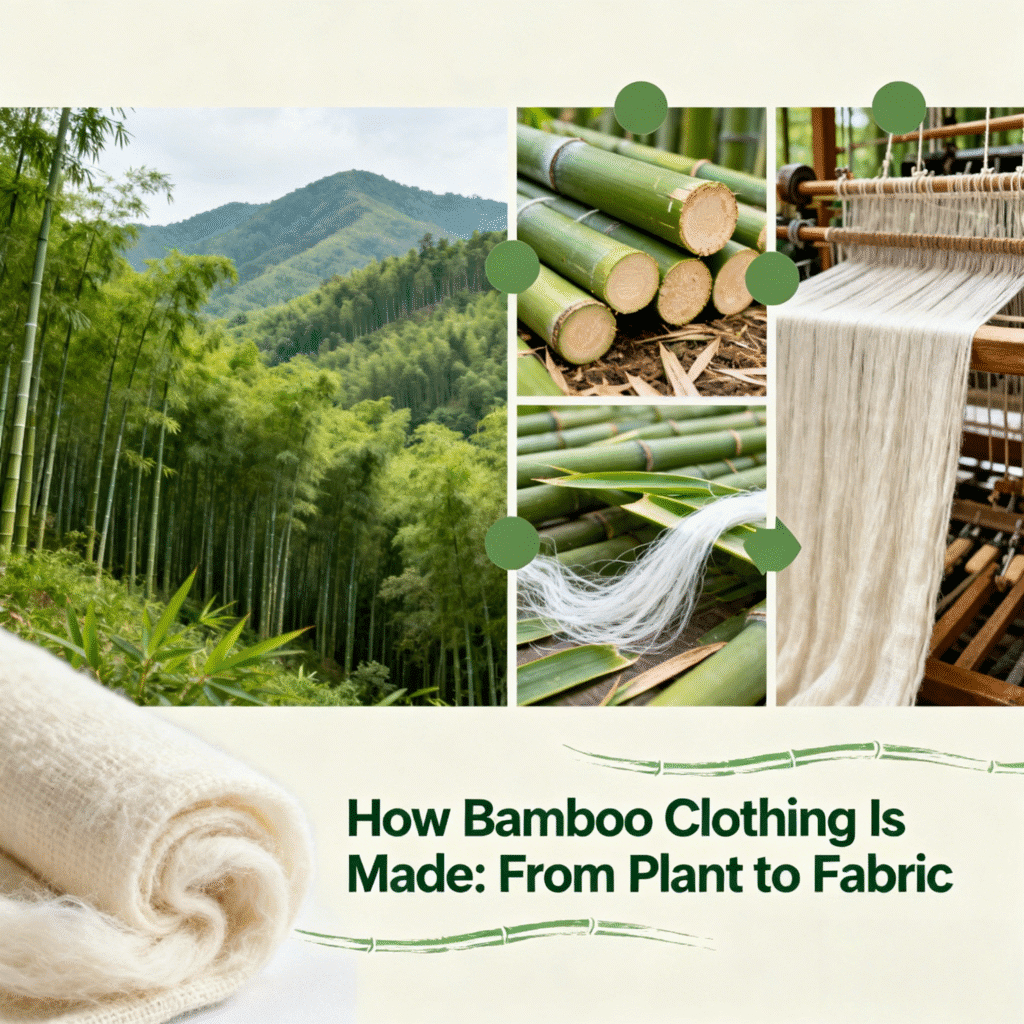
A stand of bamboo can look like an economy of motion: tall, resilient, and endlessly renewing. It’s easy to imagine garments growing there like green threads waiting to be plucked, but the path from stalk to shirt is a surprising blend of conventional craft, industrial chemistry, and textile engineering. Exploring how we make bamboo clothing reveals not only processes and technologies but also the choices about materials, methods, and values that shape what ends up on our skin.
This article will follow that journey step by step: a look at how bamboo is grown and harvested, the two main ways its fibers are liberated (mechanical processing versus chemical regeneration), and the subsequent stages of spinning, dyeing, knitting or weaving, and finishing. Along the way, we’ll touch on the performance and care of bamboo fabrics, and the environmental and social considerations that often accompany claims about “bamboo” textiles. The goal is to demystify the change so readers can judge the trade-offs and appreciate the craftsmanship and chemistry behind a fabric that began as a simple, silent grove.
Table of Contents
- Selecting the Right Bamboo and Cultivation Techniques for Textile Quality and Sustainability
- Mechanical vs Chemical Processing: Detailed Steps, Environmental Trade-offs, and Best Practices
- Spinning, Weaving, and Finishing: How Process Choices Affect Texture, Durability, and Care Recommendations
- Transparency, Certifications, and Consumer Tips: How to Read Labels, Verify Claims, and Choose Responsible Bamboo Clothing
- Q&A
- In Summary
Selecting the Right Bamboo and Cultivation Techniques for Textile Quality and Sustainability
Choosing the plant that will become your fabric is less about trend and more about a quiet conversation with soil, climate, and end use: fast-growing culms for durability, slender stalks for fine fibers, and species that thrive with minimal inputs. Look for traits such as high cellulose content for a silky hand, low lignin for easier pulping, and natural resilience to pests so water and chemical use stay low. Local adaptation matters – a bamboo that flourishes where it’s planted reduces irrigation and preserves biodiversity, delivering a better environmental profile long before spinning begins.
Cultivation decisions shape sustainability as clearly as any label. Practical on-farm techniques include:
- Soil-building – cover crops and compost to feed microbial life and improve fiber quality;
- Water-smart irrigation – drip systems and rain-harvesting to cut consumption;
- Coppicing and staggered harvest – maintaining continuous canopy and carbon uptake while producing a steady culm supply;
- Agroforestry – interplanting to boost habitat value and reduce erosion;
- Chemical restraint – prioritizing natural pest control and avoiding persistent agrochemicals.
The right combination of species and stewardship shows up in both environmental reports and the feel of the final textile. A speedy comparison highlights common choices and their strengths:
| Species | Fiber Quality | Water Needs | Sustainability Note |
|---|---|---|---|
| Moso | Silky, long fibers | Moderate | High yield; widely used in textiles |
| Guadua | Strong, coarse | Low | Excellent for mixed-use agroforestry |
| Bambusa | Fine to medium | Low-Moderate | Versatile; low-input options available |
Traceability and third-party certification (forest or textile standards) then bridge farm practices to consumer trust, ensuring that the softness in your bamboo tee is matched by rigor in cultivation and care for the land.
Mechanical vs Chemical Processing: Detailed Steps, Environmental Trade-offs, and Best Practices
The raw stalks can be transformed in very different ways: one path is hands-on and mechanical, the other leans on chemistry and industrial spinning. The mechanical route typically follows gentle, physical steps that preserve the natural filament but yield a coarser yarn-excellent for robust textiles and low-chemical footprints. common stages include:
- Retting & Crushing: natural breakdown of pectin to free fibers.
- Carding & Combing: aligning fibers into a sliver for spinning.
- Spinning & Weaving: turning aligned fibers into yarns and fabric.
| Aspect | Mechanical | Chemical |
|---|---|---|
| Energy | moderate-high (manual and machine work) | High (industrial processing) |
| Water & Chemicals | Minimal chemicals, variable water use | Significant solvents (unless closed‑loop) |
| Fiber Quality | Coarser, more textured | Smoother, softer (e.g., viscose/lyocell) |
| Waste & Emissions | Bulky plant waste, compostable | Risk of solvent pollution, treatable with proper tech |
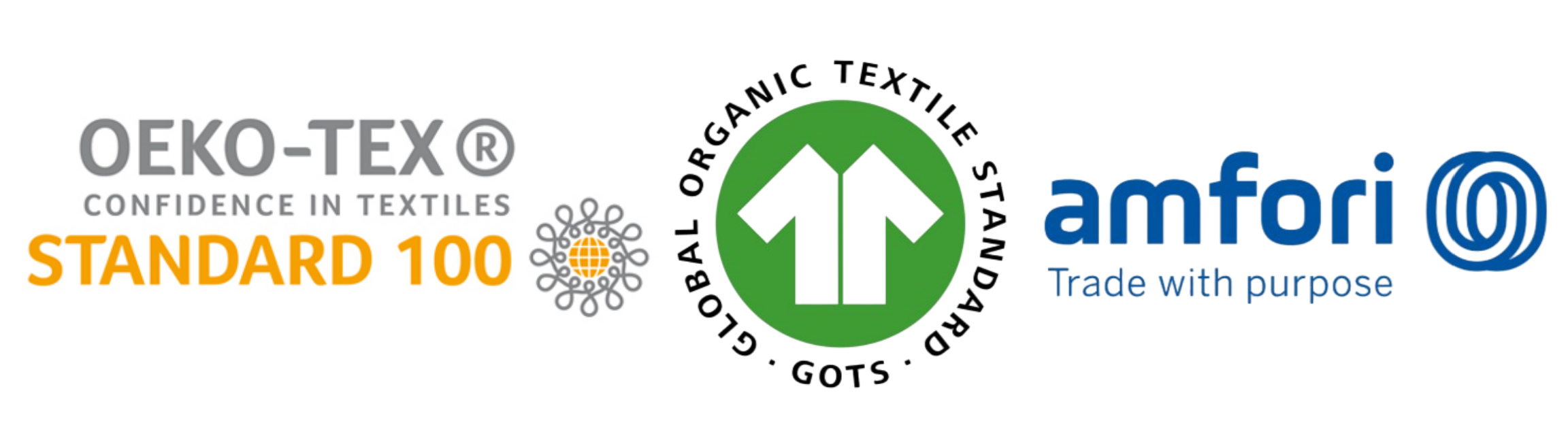
Choosing the better option depends on values and context: for the smallest chemical risk, favor mechanical or certified closed-loop processes; for silky, apparel-grade fabrics, look for chemical methods with strong wastewater treatment and solvent recovery. Best practices include transparent supply chains, certification (e.g., FSC for raw bamboo, Oeko‑Tex or GOTS for processing), investment in closed‑loop chemical systems, and local processing where possible to reduce transport emissions. These measures help balance durability, fabric feel, and ecological impact so bamboo clothing can be both stunning and responsible.
 Spinning, Weaving, and Finishing: How Process Choices Affect Texture, Durability, and Care Recommendations
The choices made at the spinning stage set the personality of a bamboo garment. Ring-spun and open-end methods produce yarns with different twists and surface – ring-spun yarns are usually finer, stronger , and drape beautifully, while open-end yarns are bulkier and more economical. When bamboo is processed into regenerated cellulose (commonly called bamboo viscose), it can be extruded as a continuous filament for a silk-like sheen or cut into staple fibers to be spun like cotton. These decisions affect more than looks: they determine how the fabric feels against skin, how it responds to abrasion, and whether it will pill or hold shape. Typical outcomes:
- Softness: Filament + low-twist = smooth, silky hand.
- Durability: Higher twist and compact yarns resist wear better.
- Pilling: Staple yarns and looser knits are more prone to pilling.
- Breathability: Yarn structure and knit/weave openness control airflow.
How the yarn is woven or knitted and the finishing touches complete the story. A tight weave yields durability and structure; a loose knit delivers stretch and drape. Finishes like mercerization, enzyme washes, and light brushing can amplify luster, soften the handle, or create a brushed nap – though some finishes make fabrics more delicate in care. Practical care pointers follow from those process choices: cold or gentle machine wash, mild detergents, avoid chlorine bleach, and prefer line‑drying or tumble on low. The quick reference table below connects process to texture and the simplest care rule.
| Process | Typical Texture | Care Tip |
|---|---|---|
| Ring-spun knit | Soft, matte drape | Gentle wash, low heat |
| Filament woven | Smooth, lustrous | Cold wash, line dry |
| Enzyme-brushed finish | Plush, velvety | Air dry, avoid high heat |
Transparency, Certifications, and Consumer Tips: How to Read Labels, Verify Claims, and Choose Responsible Bamboo Clothing
Labels are the storyteller of a garment – read them like a map. Look beyond buzzwords such as “eco” or “natural” and hunt for concrete language: “bamboo viscose/rayon“ usually means a chemical pulping process, while “mechanically processed bamboo” or “bamboo linen” indicates a more natural route. The clearest trust signals are third‑party stamps: OEKO‑TEX for low‑toxicity, GOTS for organic textiles and processing, FSC for responsibly sourced pulp, or manufacturer names like Lenzing™ that certify specific lyocell/closed‑loop processes. Quick checklist:
- Scan for exact fibers and percentages – blends dilute claims.
- Search for words like “closed‑loop” or “solvent recovery” to verify less polluting manufacturing.
- Prefer products with traceable mill or batch info; no traceability frequently enough equals greenwash.
When in doubt, ask – responsible brands publish supply‑chain details, test reports, or QR codes linking to certificates. Use simple verification steps: email the brand for the pulping method, check certification registries online, and compare care labels (chemical finishes often need special instructions). The short table below is a handy reference for what to look for and what to ask the maker before you buy.
| Label or Claim | What to Ask/Check |
|---|---|
| “Made from bamboo” | Is it viscose/lyocell or mechanically processed? Request pulping details. |
| “eco” / “Lasting” | Which certification backs this? Ask for cert IDs or links. |
| “Closed‑loop” | Which solvent recovery rate or certification certifies the process (e.g., Lenzing, EU Ecolabel)? |
Q&A
Q: What exactly is “bamboo fabric”?
A: “Bamboo fabric” is a broad label for textiles made from bamboo plants. It can mean mechanically processed bamboo linen (similar to hemp), chemically regenerated cellulose fibers commonly called bamboo viscose or rayon, or lyocell made from bamboo pulp. The end product is a yarn or fibre that is woven or knitted into cloth.
Q: How does bamboo go from plant to fibre-what are the main steps?
A: The pathway usually follows these stages: harvest the mature bamboo; chip or crush the culms; convert the bamboo cellulose into a usable pulp (either mechanically or chemically); spin the pulp into filaments or staple fibres (regenerated cellulose processes); spin the fibres into yarn; knit or weave into fabric; then dye, finish and sew into garments.
Q: What are the different manufacturing methods?
A: There are two primary routes:
– Mechanical method: bamboo is crushed and retted; fibres are combed out and spun into a linen-like yarn. This yields “bamboo linen” but is rare and labor-intensive.
- Regenerated cellulose method: bamboo cellulose is dissolved and chemically or solvent-processed into a viscous solution, which is extruded through spinnerets to form fibres (bamboo viscose/rayon). A closed-loop solvent-spinning version, similar to lyocell, uses a non-toxic solvent and recovers most of it.
Q: What chemicals are used, and are they safe?
A: For conventional viscose, sodium hydroxide and carbon disulfide are common but perhaps hazardous if not properly managed. Lyocell-type processes use N-methylmorpholine N-oxide (NMMO) in a closed-loop system with high solvent recovery and lower emissions. Safety depends on factory controls, waste treatment, and whether the process is closed-loop.
Q: Is bamboo fabric environmentally amiable?
A: Bamboo as a crop has environmental advantages-fast growth, high yields, and frequently low pesticide needs. Though the overall environmental footprint depends heavily on processing. Mechanical processing and closed-loop solvent systems are more eco-friendly; conventional viscose can cause pollution if chemicals and effluents aren’t controlled. Look at supplier transparency and certifications rather than the label alone.
Q: What certifications should consumers look for?
A: Useful certifications include OEKO-TEX (limits harmful substances), FSC (for responsibly managed plantations, though FSC typically applies to forests), and specific supplier or process certifications-e.g., Lenzing’s lyocell has its own traceability and environmental standards. “Organic” labels like GOTS don’t directly apply to typical bamboo viscose, so read claims carefully.
Q: How does bamboo fabric perform-softness, breathability, and durability?
A: Regenerated bamboo viscose is usually very soft and drapey, with good moisture-wicking and breathability. Mechanical bamboo linen is coarser and more textured. Durability depends on fibre type and construction-viscose can be less strong when wet, so blends or certain weaves improve longevity.
Q: Are bamboo clothes antimicrobial?
A: Many brands market bamboo fabric as antimicrobial due to natural compounds in raw bamboo. But most of those compounds are lost during heavy chemical processing. Some fabrics may show reduced odor because of breathability and moisture wicking, but the “antibacterial” claim is inconsistent and should be treated cautiously.
Q: Can bamboo fabric be blended with other fibres?
A: Yes. Bamboo fibres are frequently blended with cotton, polyester, spandex, or other fibres to improve strength, elasticity, cost, or hand-feel. Blends change care needs and end-of-life behavior (e.g., biodegradability).
Q: How are bamboo garments dyed and finished?
A: Dyeing and finishing follow standard textile industry methods: piece dyeing, reactive dyes for cellulose fibres, and enzymatic or mechanical finishing for softness. Environmentally minded manufacturers use low-impact dyes, water recycling and Oeko-Tex-approved chemicals.
Q: What are the care recommendations for bamboo clothing?
A: Generally: wash on a gentle cycle with mild detergent, avoid high heat in drying, and avoid bleach. Follow the garment’s care label, as some bamboo viscose items may wrinkle or lose shape if overheated.
Q: Is bamboo fabric biodegradable?
A: Regenerated cellulose bamboo fabrics (viscose, lyocell) are biodegradable under appropriate conditions, unlike most petroleum-based synthetics. Blended fabrics with synthetics are less biodegradable.
Q: How does the cost compare to other fabrics?
A: Cost varies widely. Mechanically processed bamboo linen is relatively expensive due to labor intensity. Regenerated bamboo viscose can be cost-competitive with cotton or modal. Prices depend on scale, supply chain transparency, and any eco-friendly processing used.
Q: What are the common uses for bamboo textiles?
A: Bamboo is used for T-shirts, underwear, socks, towels, bedding, and babywear applications that benefit from softness and moisture management. Heavier constructions can produce outerwear or upholstery fabric, too.
Q: What are the ethical and labor considerations?
A: Ethical concerns mirror typical textile industry issues: safe working conditions, exposure to chemicals, fair wages, and wastewater management. Prefer suppliers with good transparency, third-party audits, and responsible sourcing statements.
Q: Are there innovations improving bamboo textile sustainability?
A: Yes. Advances include truly closed-loop solvent systems, enzymatic and microbial processing to reduce chemical use, better plantation management, and recycling of bamboo textiles. Research into nanocellulose and upcycling also aims to make the supply chain greener.
Q: How can a buyer make a responsible choice?
A: Ask suppliers where the bamboo is grown, which processing method is used, and for certifications or testing reports. Favor closed-loop lyocell-style production, verified chemical management, and transparent supply chains. Consider blends and end-of-life when making purchasing decisions.
Q: Any quick myths to debunk?
A: Myth: “All bamboo clothing is eco-friendly.” Reality: environmental impact depends on processing and factory practices. Myth: “Bamboo is naturally antibacterial in the finished garment.” Reality: the effect is frequently reduced or lost during processing.
Q: Final takeaway?
A: Bamboo has strong potential as a sustainable raw material, but the real story is in the factory.From grove to garment, method choices-mechanical vs. chemical, open- vs. closed-loop, dyeing and finishing-determine environmental and performance outcomes. Ask questions, read labels, and prioritize transparent practices.
In Summary
As we untangle the threads of how bamboo becomes the shirts and socks we wear, the process reveals a mix of ancient plant resilience and modern industrial ingenuity – from careful cultivation and harvesting to the different mechanical and chemical paths that turn stalks into fiber. Each step carries trade-offs and opportunities: thoughtful land management and fair labor, cleaner processing technologies, and transparent certifications can steer bamboo clothing toward being both practical and more responsibly made.
Whether you’re a maker, buyer, or curious observer, understanding these stages helps you weigh the choices behind a garment beyond its soft feel. The story of bamboo clothing is still being written; by asking the right questions and supporting clearer production practices, we can shape a future in which style, function, and stewardship coexist.