

Smocking has a way of making fabric speak softly, tiny, regular gathers that turn flat cloth into a surface of texture and stretch, a detail that reads handcrafted even on a mass-produced rack. That quiet complexity is part of smocking’s appeal: it can add fit, breathability, and visual interest without heavy construction. But what feels effortless on a finished garment often masks a chain of technical choices and trade-offs behind the scenes.
For brands, sourcing smocked pieces brings specific challenges. From yarn and fabric selection to pattern placement, machine versus hand techniques, grading across sizes, and wash performance, each decision affects cost, lead time, and the final product’s look and longevity. Overlooking a single variable, such as thread tension, shrinkage allowance, or a supplier’s actual smocking capacity, can make a well-designed sample unravel in production.
This article highlights the common mistakes brands make when sourcing smocked clothing and why they matter. We’ll walk through the practical pitfalls-material mismatches, inadequate sampling, miscommunicated specs, unrealistic MOQs and timelines, and quality-control gaps-and offer clear ways to anticipate and avoid them so that smocking enhances your collection rather than complicates it
Table of Contents
- When Fabric and Elasticity Do Not Match: Choosing Materials that Hold Up
- Pattern Placement and Seam Allowances: Practical Preproduction Checks
- Collaborating with Suppliers on Smocking Technique consistency: specs, Samples, and Communication
- Cost-Cutting Pitfalls That Sabotage Wearability and How to Avoid Them
- Q&A
- Concluding Remarks
When Fabric and Elasticity Do not Match: Choosing Materials That Hold Up
When the stretch of the fabric and the give of the elastic are out of sync, garments betray themselves with puckering, gaps, or a stretched-out waistline after a few wears. Small mismatches – a high-recovery elastic paired with a low-recovery knit, or a soft jersey pulled across a firm braided elastic – can produce uneven gathers and tension lines that look amateur. Prioritize recovery and elongation specs over aesthetics alone, and always make a micro-sample: a sewn swatch that’s pulled, steamed, and washed to see how the two materials behave together.
Practical fixes are simple but decisive: pick elastics with comparable stretch percentage to the fabric, use a compatible stitch (a zigzag or a flexible coverstitch rather than a straight stitch), and add a narrow stabilizer when attaching elastic to slippery or open-weave fabrics. Consider these rules of thumb:
- Light knits: soft knit elastic or picot elastic for gentle gathers.
- Medium-weight wovens: woven elastic with moderate recovery to avoid rolling.
- Heavy fabrics: braided or non-roll elastic plus a stabilizer tape to keep shape.
Use the quick reference below when specifying trims – then do a final wash-test before bulk ordering to ensure the ensemble endures laundering and wear.
| Fabric | Recommended Elastic | Performance Note |
|---|---|---|
| Light Jersey | Picot / Soft Knit | Delicate gathering, good comfort |
| Midweight Woven | Woven Elastic | Stable, clean waistband line |
| Heavy Denim / Canvas | Braided / Non-roll | Holds shape, needs wider attachment |
Pattern Placement and Seam Allowances: Practical Preproduction Checks
Getting the layout right on the fabric is as crucial as the smocking itself. Pay attention to the grainline, pattern repeat, and nap so motifs fall cleanly across panels – a shifted placement can turn a symmetrical yoke into a visual mismatch. Also, allow extra room where smocking channels and gathers will sit: these areas need more fabric for movement and stitching, so standard cutting plans frequently require slight adjustments before bulk runs.
Before sending a marker to the factory, run a short preproduction checklist and document the results. Create a single-piece mock-up with the intended seam allowances, photograph alignment points, and confirm that the chosen allowances preserve the smock’s pitch after gathering. Practical checks include:
- Mark grainlines and motif centers on both the pattern and the fabric
- Make a sewn sample of one panel , including smocking channels
- Verify allowance shrinkage after washing and steaming
- Annotate adjustments on the pattern before final grading
| Area | seam Allowance (metric) | Seam Allowance (imperial) |
|---|---|---|
| Side seams | 1.5 cm | 5/8″ |
| Smocking channels/gathers | 2.0 cm | 3/4″ |
| Hem allowance | 3.0 cm | 1 1/8″ |
Collaborating with Suppliers on Smocking Technique Consistency: Specs, Samples, and Communication
Make the smocking process measurable. Move away from vague instructions like “close gathers” and hand suppliers precise, visual specs: pleat spacing in mm, tuck depth, stitch count per inch, thread type, and elastic tension. Include annotated diagrams, high-resolution photos from multiple angles, and a tolerance table so everyone knows what variation is acceptable. When specs are written as measurable targets, deviations become solvable issues rather than surprises in bulk.
- Tech pack with callouts and measurement points
- Master sample and one approved fit sample per size
- Inspection checklist for stitch density, pleat uniformity, and puckering
- Material swatches and thread references
- Regular calibration calls or on-site demos for new batches
| Element | Spec | Verification |
|---|---|---|
| Pleat spacing | 4.5 ± 0.3 mm | Ruler photo + measurement sheet |
| Stitch density | 8-10 stitches/cm | Macro photo + stitch count |
| Elastic tension | Medium (stretch 20-25%) | Tension test video |
Keep communication tight and versioned: require time-stamped photos of pre-production samples, short video walk-throughs of the smocking station, and a formal sign-off on each sample round. Small, frequent feedback cycles prevent big failures-treat the supplier as a partner, not a mailbox.
 Cost-Cutting Pitfalls That Sabotage Wearability and How to Avoid Them
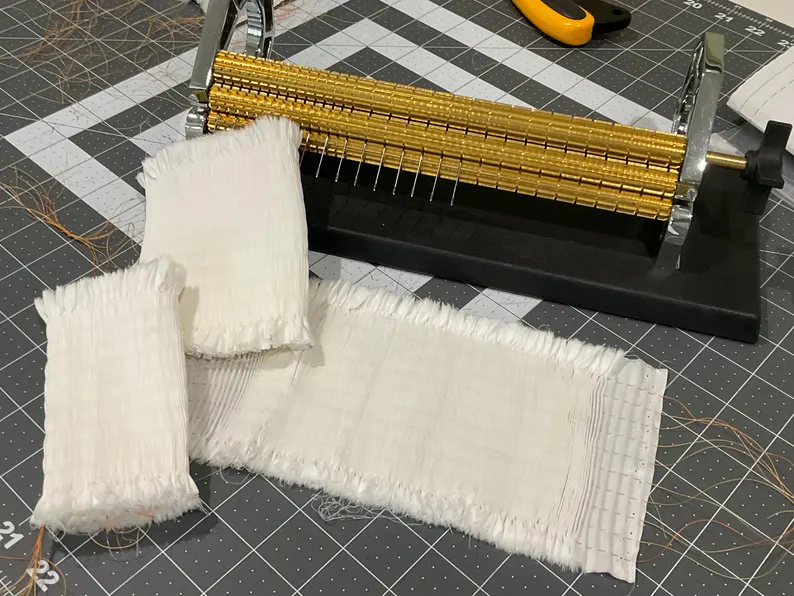
When brands pinch pennies on smocked pieces, the cost savings are obvious on paper but invisible to the customer until the first wash or wear. Common shortcuts, like substituting low-grade elastic, skimping on fabric weight, or reducing the number of shirring rows, quickly translate into misshapen bodices, puckering, and a brittle hand feel. These failures are not aesthetic alone: they erode fit consistency, shorten garment life, and create returns that cost far more than the original savings. Prioritize material integrity over unit price and insist on batch-tested elastics, properly graded patterns, and seam allowances specified in the tech pack to prevent manufacturing shortcuts from becoming product defects.
- Cheap elastic: loses recovery after a few wears and distorts smocking.
- Thin base fabric: shows puckers, lacks body, and makes smocking look sloppy.
- Minimal stitching: single-thread seams and reduced shirring rows fail under stress.
- No wash tests: leads to shrinkage surprises and inconsistent fit across batches.
Fixes are practical and strategic: set clear acceptance criteria in your tech packs, require pre-shrink and tensile tests, demand sample approvals across sizes, and include dedicated QC checks for shirring tension and seam durability. Below is a quick reference to help buyers convert costly errors into simple specs that suppliers can action.
| cutting Move | Wearability Issue | Quick Fix |
|---|---|---|
| cheap elastic | Loss of shape | Use tested, dyed elastic; specify recovery % |
| low fabric GSM | Puckering & poor drape | Specify minimum GSM and hand feel samples |
| Skipped grading rounds | Inconsistent fit | Require graded samples for target sizes |
Q&A
Q: What is smocking, and why do brands confuse it with shirring?
A: Smocking is a decorative embroidery technique that gathers fabric into small pleats and secures them with stitches to create a pattern and stretch; traditional smocking is hand- or machine-embroidered into pleated fabric. Shirring, on the other hand, uses elastic thread to create stretch gathers (often by sewing multiple parallel rows). Brands mix the terms because both produce garments, but they behave, cost, and require different production methods and fabric choices – so the distinction matters for specs, costing, and quality control.
Q: What’s the biggest early mistake brands make when specifying smocked garments?
A: Vague tech packs. Not providing clear, scaled diagrams, pleat depth, stitch counts/patterns, placement measurements, and finished-measure expectations leads to mismatched samples, costly reworks, and frustrated vendors. At Kabeier, we often see early sampling delays traced back to missing smocking details rather than execution issues. A precise tech pack is the foundation of predictable smocking and efficient supplier collaboration.
Q: How should a brand decide between pre-smocked fabric and on-garment smocking?
A: Pre-smocked fabric speeds production and offers consistency for simple panels but limits pattern placement, cutting options, and design versatility. On-garment smocking allows custom placement and tailored shaping but is more labor-intensive and expensive. Choose based on design complexity, order size, and cost tolerance.
Q: Why is fabric choice so critically important for smocking?
A: Smocking relies on the fabric’s drape, weave, and recovery. Heavy, stiff, or very slippery fabrics won’t form neat pleats; loosely woven fabrics can distort under stitches; high-stretch knits don’t behave predictably. From Kabeier’s production experience, fabric mismatches are one of the most common causes of uneven pleats and durability issues in smocked panels. Not matching the fabric to the smocking technique will produce poor texture, puckering, or reduced garment lifespan.
Q: What fabric properties should be specified?
A: Specify fiber content, weight (gsm/oz), weave/knit type, hand/drape descriptions, thread count or denier if relevant, and pre-wash condition. Also call out direction (nap/grain), shrinkage allowance, and any finishes (calendaring, mercerization) that affect how the fabric gathers and holds stitches.
Q: How do shrinkage and wash-testing errors show up after production?
A: Smocked areas often react differently in a wash: dense smocking may not shrink evenly, stitch tension can loosen, and patterns can change proportion. Brands that skip pre-production wash and wear tests risk garments changing fit, sagging, or bleeding colors after the first wash.
Q: What should brands test before bulk production?
A: Pre-production wash tests on finished samples, colorfastness tests, elasticity and recovery tests for smocked areas, seam strength, and abrasion testing for smocking threads. Also test trims and labels under the same wash conditions. Approve a lab-tested pilot run if possible.
Q: How does thread choice affect smocked garments?
A: Thread type, tensile strength, and elongation determine durability and feel. Cotton thread can look softer but may wear faster; polyester or poly-wrapped threads offer strength and colorfastness. Elastic thread (for shirring) must be compatible with the outer thread and fabric. Wrong thread selection causes breakage, pilling, or distorted gathers.
Q: What common communication failures happen with factories?
A: Assuming shared vocabulary (smocking vs shirring), not sharing visual references, failing to define tolerances, and neglecting to articulate production sequence (e.g., smock before or after cutting/constructing). These lead to incorrect execution, wasted labor, and delayed timelines.
Q: How should a tech pack describe smocking so factories get it right?
A: include a clear front/back/side diagram with exact placement measurements, a close-up of the smocking repeat (stitch pattern and stripe/pattern alignment), pleat depth and spacing, row count, stitch type, and whether smocking is hand or machine. Add photos or physical samples and call out finished measurements and acceptable tolerances.
Q: What are typical quality-control checkpoints for smocked garments?
A: Incoming fabric inspection (direction, defects, pre-wash), smocking gauge/sample approval, in-line checks for stitch density and tension, post-wash recheck, and a final inspection for pattern alignment, seam integrity, and elasticity/recovery of smocked areas. At Kabeier, smocked garments are always rechecked after wash testing to confirm stretch recovery and stitch stability before bulk approval. Don’t skip random destructive tests on a small sample to verify strength.
Q: How do MOQ and lead time impact smocked sourcing?
A: Smocking (especially hand or on-garment) is labor-intensive; suppliers frequently require higher MOQs or longer lead times. Brands that ignore this either pay heavy premiums for small runs or rush production, increasing errors. Plan orders with realistic lead times or accept simplified designs for smaller runs.
Q: What cost drivers should brands anticipate?
A: Labor (hand smocking), machine set-up, sampling rounds, complex pattern placement, multicolor threads, pre-smocked fabric procurement, and special finishes. Underestimating any of these leads to margin erosion or quality compromises.
Q: What production decisions commonly backfire?
A: Choosing the cheapest factory without smocking experience, skipping on adequate samples, asking factories to “figure it out,” and cutting corners on specs or testing. These often result in inconsistent aesthetics, returns, and long-term brand damage.
Q: How do trims and finishes affect smocked areas?
A: Elastic bands, linings, or heavy trims can distort smocking or reduce its stretch. Attachments like buttons or appliqués placed over smocked areas can pull and damage stitches. Specify stitch reinforcement areas and test the interaction of trims and smocking in samples.
Q: Any advice on sustainability and ethical sourcing for smocked pieces?
A: Hand smocking is labor-intensive – ensure fair wages and reasonable working hours. For materials, consider lower-impact fibers and recyclable elastic options. Ask suppliers about their practices, audit where possible, and weigh the social cost when calculating pricing.
Q: How should brands handle color and pattern matching across smocked panels?
A: Pattern repeat and grain direction must be laid out before cutting. Provide clear fabric layout diagrams and insist on marker approvals. For stripes or prints, allow extra fabric for matching and include this in cost calculations.
Q: How can a brand speed up approval cycles without sacrificing quality?
A: Use a tiered approval: approve a physical “golden sample” first, then a small pre-production lot for wash and stress tests, and finally full production. Digitally share high-resolution photos, close-ups, and videos of smock stretch and recovery to speed remote approvals.
Q: What are the signs a supplier lacks smocking expertise?
A: Inconsistent stitch density, uneven pleats, weak/uneven tension, misaligned pattern repeats, inability to produce a repeatable sample, or defensive answers to specific technical questions. if you see these, seek a different supplier or arrange targeted training and a pilot run.
Q: Quick checklist brands can follow before committing to bulk production?
A: 1) Finalize fabric selection and pre-wash behavior.2) Create a detailed tech pack with smocking close-ups and tolerances. 3) Approve a hand- or machine-smocked golden sample. 4) Run wash/colorfastness/elastomer recovery tests. 5) Confirm pricing with MOQ and lead time. 6) Inspect the pilot lot and do in-line QC checkpoints. 7) Verify packaging won’t deform smocking. 8) Ensure supplier compliance with labor and safety standards.
Q: What’s the single most critically important mindset shift for brands sourcing smocked garments?
A: Treat smocking as a specialized craft, not a decorative afterthought. Invest time in detailed specs, sampling, and testing up front – the small effort early saves big headaches, costs, and reputational risk later.
If you’d like, I can convert any of these Q&As into short pull-quotes or expand a few into deeper “how-to” steps (example tech-pack language, sample test protocols, or vendor questionnaire).
Concluding Remarks
Sourcing smocked clothing is part craft, part chemistry, and part conversation – and it’s easy for the conversation to go off-key. The mistakes covered here, from overlooking fabric behavior to underestimating production time, are not fatal flaws so much as familiar missteps that ripple through cost, quality , and brand reputation.
The antidote is methodical curiosity: test, measure, and ask the humble questions early and frequently enough. Treat smocking as a technical specification and also an aesthetic choice; give suppliers clear samples and timelines, and respect the craft behind the gathers and stitches. Small investments in alignment – fit trials, trim specs, and quality checkpoints - pay back in fewer surprises and a garment that carries your brand with confidence.
If you leave the sourcing process with one takeaway, let it be this: smocked clothing rewards patience and precision. Get those two factors working together, and what begins as a potential pitfall becomes a distinctive advantage.