
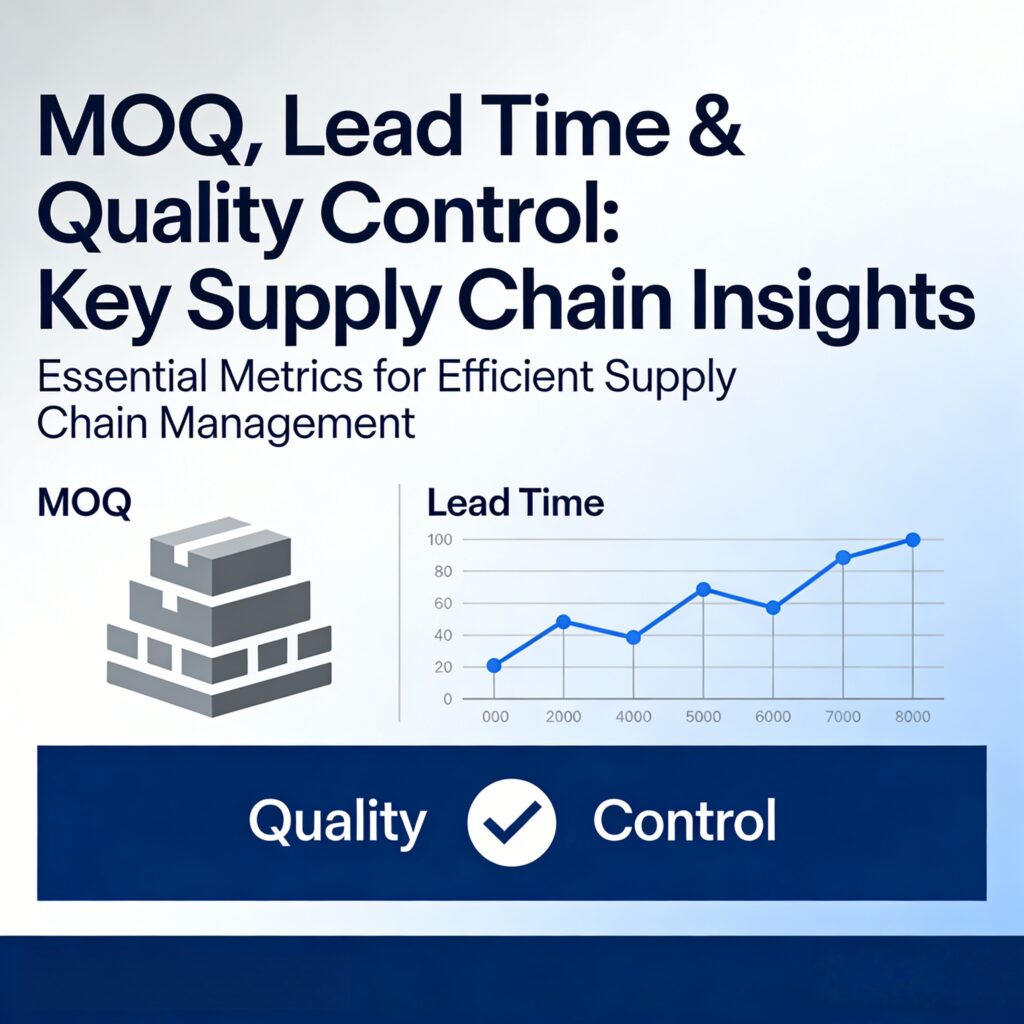
In the intricate world of manufacturing and supply chain management, three terms consistently come into play: MOQ, Lead Time, and Quality Control. These factors are the silent architects behind every product that reaches the market, shaping costs, timelines, and customer satisfaction. Understanding what they mean and how they impact production can transform the way businesses plan, negotiate, and deliver. This article unpacks these essential concepts, offering a clear guide to navigating the complexities of minimum order quantities, production schedules, and ensuring quality every step of the way. Whether you’re a seasoned professional or new to the industry, getting to grips with these fundamentals is key to making informed decisions and building strong partnerships.
Table of Contents
- Understanding Minimum Order Quantities and Their Impact on Inventory Management
- Optimizing Lead Time for Enhanced Supplier Collaboration and Customer Satisfaction
- Implementing Effective Quality Control Measures to Minimize Defects and Returns
- Balancing Cost efficiency with Quality Standards in global Supply Chains
- Strategic Recommendations for Integrating MOQ, Lead Time, and Quality Control Practices
- Q&A
- To Wrap It Up
Understanding Minimum Order Quantities and Their Impact on Inventory Management
Minimum Order Quantities (MOQs) serve as a critical checkpoint in the supply chain, acting as both a hurdle and a guidepost for inventory managers. When MOQs are set too high, businesses frequently face the challenge of overstocking, tying up capital and warehouse space that could or else be allocated to faster-moving products. Conversely, low MOQs might allow flexibility but can drive up per-unit costs and complicate supplier relationships. Striking the right balance means understanding not just quantity requirements, but how these numbers interact with demand patterns and storage capabilities.
- Cash flow constraints: Ordering large minimum quantities can deplete working capital and delay profitability.
- Storage optimization: Excess stock demands efficient warehouse planning and can increase holding costs.
- Demand forecasting accuracy: Incorrect MOQs amplify the risk of inventory obsolescence or stockouts.
| MOQ Level | advantages | challenges |
|---|---|---|
| High | Lower unit cost, supplier priority | Excess inventory, cash flow impact |
| Medium | balanced costs and flexibility | Requires accurate demand forecasting |
| low | Greater agility, less stock risk | Higher unit costs, complex ordering |
Optimizing Lead Time for Enhanced Supplier Collaboration and Customer Satisfaction

- Real-time dialog: Utilize digital platforms to keep all stakeholders updated on order statuses and potential delays.
- Flexible manufacturing schedules: Encourage suppliers to implement adaptable workflows that accommodate rush orders or design tweaks.
- Inventory buffer optimization: Maintain just enough safety stock to absorb supply chain fluctuations without escalating holding costs.
Below is a snapshot of how improving lead time impacts different facets of the supply chain:
| Area | Impact of Lead Time Optimization |
|---|---|
| Supplier Relations | Stronger partnerships through predictable and reliable scheduling |
| Customer Satisfaction | Faster delivery times enhance customer experience and loyalty |
| Operational Efficiency | Reduced downtime and optimized production planning |
Implementing Effective Quality Control Measures to Minimize Defects and Returns
- Real-time Quality Monitoring: Utilize sensors and software to track production metrics continuously.
- Supplier Quality Audits: Regular evaluations to ensure raw materials meet agreed specifications.
- Batch sampling: Random checks within batches to assess consistency and identify anomalies.
| Quality Control stage | purpose | Common tools |
|---|---|---|
| Incoming Materials | Verify material standards | visual inspection, chemical analysis |
| In-Process Controls | Detect deviations during production | SPC charts, automated sensors |
| Final Inspection | Ensure finished goods quality | Functional testing, packaging checks |
Balancing Cost Efficiency with Quality Standards in Global Supply Chains
- Flexible MOQ: Adapts to market demand fluctuations without sacrificing order economics.
- Optimized Lead Time: Streamlines production and shipping schedules to reduce downtime.
- Quality Audits: scheduled and surprise inspections to maintain consistent standards.
- Supplier Collaboration: Open communication channels that accelerate problem-solving.
| Factor | Cost Impact | Quality Influence |
|---|---|---|
| MOQ | Reduces per-unit cost with larger batches | Risk of leftover inventory if demand drops |
| Lead time | Short lead times reduce storage expenses | Too short may compromise thorough checks |
| Quality Control | Investment in inspections adds upfront cost | Prevents costly rework and reputational damage |
Strategic Recommendations for Integrating MOQ, Lead Time, and Quality Control Practices
| Focus Area | Strategic Actions | Expected Outcome |
|---|---|---|
| MOQ Negotiation |
|
Lower carrying costs & greater supply flexibility |
| Lead Time Management |
|
Reduced delivery variability & improved responsiveness |
| Quality Control |
|
Minimized defects & enhanced customer satisfaction |
Q&A
MOQ, Lead Time & Quality Control Explained: Q&A
Q1: What does MOQ stand for, and why is it important?
MOQ stands for Minimum Order Quantity. It is indeed the smallest number of units a supplier is willing to produce or sell in a single order. MOQ is important because it helps manufacturers optimize production runs, reduce costs, and ensure profitability. For buyers, understanding MOQ helps in planning inventory and budgeting effectively.
Q2: How does MOQ impact small businesses or startups?
For small businesses or startups, MOQ can be a double-edged sword. While large MOQs may require considerable upfront investment and storage space, negotiating or finding suppliers with flexible MOQs allows smaller buyers to test markets and manage cash flow more efficiently.
Q3: What is lead time, and how does it affect the supply chain?
Lead time is the total period from placing an order to receiving the finished product. It includes manufacturing, processing, shipping, and handling time. Lead time affects inventory management, customer satisfaction, and overall supply chain efficiency. Longer lead times require careful forecasting and may increase the risk of stockouts.
Q4: Can lead time be shortened? If so, how?
Yes, lead time can frequently be shortened by working closely with suppliers to streamline processes, selecting faster shipping methods, or maintaining good communication to avoid delays. Some manufacturers offer expedited production options at additional cost.
Q5: What role does quality control play in manufacturing?
Quality control (QC) ensures that products meet defined standards and customer expectations. It involves regular inspections, testing, and process monitoring to detect defects early. QC safeguards brand reputation, reduces returns, and improves customer satisfaction.
Q6: How do MOQ, lead time, and quality control interact with each other?
These three elements are interconnected. For example, a higher MOQ might allow a supplier to dedicate resources to quality control, while shorter lead times may require streamlining QC processes without compromising standards. Balancing MOQ, lead time, and quality control is essential for smooth production and delivery.
Q7: What should buyers consider when negotiating MOQ, lead time, and quality control?
Buyers should clearly communicate their needs, be realistic about capabilities, and seek transparency. Negotiations can include MOQ flexibility, realistic lead times based on production capacity, and agreed-upon QC standards or inspection checkpoints to align expectations.
Q8: Are there industries where MOQ and lead times are especially critical?
Yes, industries like electronics, fashion, and perishable goods often see strict requirements. Fast fashion demands rapid lead times and manageable MOQs to avoid excess inventory, while electronics require stringent QC with appropriate MOQ to ensure functionality and safety.
Q9: How can technology influence MOQ, lead time, and quality control?
Advanced manufacturing technologies, automation, and data analytics enable more flexible MOQs, faster lead times through optimized workflows, and enhanced quality control with real-time defect detection, driving efficiency across the production cycle.
Q10: What’s the key to managing MOQ, lead time, and quality control effectively?
The key is clear communication, realistic expectations, and ongoing collaboration between buyers and suppliers. Understanding the trade-offs and aligning these factors with business goals helps create a balanced, efficient, and reliable manufacturing process.
To Wrap It Up
In the intricate dance of manufacturing and supply chains, understanding MOQ, lead time, and quality control is more than just business jargon-it’s the rhythm that keeps the entire process in harmony. By mastering these elements, businesses can strike the perfect balance between efficiency, cost, and excellence. Whether you’re a seasoned buyer or just stepping into the world of sourcing, keeping these factors in sync ensures smoother operations and stronger partnerships. After all, in the quest for success, it’s the details behind the scenes that often make all the difference.