

Like a chorus of tiny pleats, smocking turns flat cloth into texture, stretch, and shape – a low-tech magic that has held its place in fashion from country cottages to couture runways. For manufacturers, that magic is not accidental. It’s the product of pairing the right fabric with the right technique: fiber, weave, weight, and finish all influence how gathers fall, how seams survive repeated wear, and how a garment behaves on a body.
This guide looks beyond aesthetics to the practical choices that determine whether smocked pieces are beautiful, reliable, and scalable in production. You’ll find a clear framework for evaluating fabrics – including drape, recovery, thread compatibility, shrinkage, and finishing – and a close look at fabric families that commonly succeed (and occasionally fail) in smocking applications. Manufacturing considerations such as handling during pleating, machine settings, and quality-control checkpoints are woven through the discussion.
Read on for a manufacturer-focused roadmap that balances craft and commerce: technical insights, material recommendations, and production tips to help you select fabrics that make smocked garments look artisanally crafted and perform consistently on the line and in the closet.
Table of Contents
- Why Cotton and Linen Are the Smart Base Choices for Smocked Garments
- Best Blends and Synthetics to Balance Recovery , Durability , and Cost
- Weave Structure, Thread Count, and Fabric Weight That Improve Smocking Results
- Finishes treatments and Prewashing Practices to ensure Consistent Gathers
- Production Tips, Care Instructions, and a Fabric Selection Checklist for Manufacturers
- Q&A
- In Conclusion
Why Cotton and Linen Are the Smart Base Choices for Smocked Garments
For smocked pieces, fabric choice is as much about behavior as it is about feel. Natural fibers like cotton and linen combine breathability, absorbency, and a pleasing hand that lets smocking tuck and puff with predictability. They take heat and steam well, so pleats can be set crisply without the fabric becoming limp; their textures range from smooth voile to slubby linen, giving designers options for everything from delicate babywear to artisanal summer dresses. The result is a garment that looks intentionally gathered, wears comfortably, and ages gracefully.
From a production standpoint, these fabrics are forgiving and reliable. Benefits that matter on the cutting table and in bulk production include:
- Excellent breathability – keeps smocked garments comfortable in warm weather.
- Holds pleats and stitches - smocking patterns remain defined after laundering and wear.
- Easy to press and finish – steam sets smocking without damaging fibers.
- Wide weight range – from lightweight cotton lawn to sturdy linen, suitable for diverse designs.
- Sustainable and widely available – accessible options for responsible production.
| Attribute | Cotton | Linen |
|---|---|---|
| Hand | Soft, smooth | Textured, crisp |
| Drape | Fluid to moderate | Crisp, structured |
| Shrinkage | Low to medium (pre-wash) | Medium (relaxes with laundering) |
| Best use | Everyday smocked garments | Tailored, breathable summer pieces |
Both fibres give manufacturers a predictable, professional base that makes smocking easier to execute and results more reliable – a simple choice that elevates both craftsmanship and comfort.

Best Blends and Synthetics to Balance Recovery, Durability, and Cost
When designing smocked garments that must hold their shape through wear and washing, the smart move is to pair a resilient synthetic with a comfortable natural or high-drape cellulosic. Adding 3-8% elastane (spandex) to a woven or light knit dramatically improves recovery without making the hand feel plasticky. For heavier-duty pieces or activewear-inspired smocking, a polyester or nylon base with 8-15% elastane gives exceptional bounce-back and abrasion resistance at a modest cost; for premium lines, swap polyester for Tencel® or modal blends to preserve drape and sheen while still relying on elastane for structure.
Manufacturers should prioritize blends according to end use: soft, everyday dresses favor cotton/spandex for breathability and comfort, while travel-friendly, low-maintenance collections perform best with polyester/spandex or nylon/spandex. Below are concise, production-ready recommendations and fast trade-offs to keep at the cutting table:
- 97/3 Cotton/Elastane – natural hand, subtle recovery, low cost.
- 95/5 Cotton/Elastane - reliable for most smocking panels; balances comfort and shape.
- 90/10 Polyester/Elastane – strong recovery, high durability, economical for volume runs.
- 85/10 Modal/Polyester/Elastane - luxe drape with good recovery; mid-range cost.
- 88/12 Nylon/Elastane – best for smooth surface and long-term shape retention in fitted styles.
| Blend | Recovery | Durability | Cost |
|---|---|---|---|
| Cotton 97/3 | Medium | Medium | Low |
| Poly 90/10 | High | High | Low |
| Modal/Poly 85/10/5 | High | Medium | Medium |
| Nylon 88/12 | Very High | Very High | Medium-High |
Weave Structure , Thread Count, and Fabric Weight That Improve Smocking Results
Smocking performs best on fabrics whose weave is an even, regular “architecture” – think of a grid that lets each tiny pleat sit predictably. A plain or balanced weave provides the most consistent stitch tension; tight weaves hold crisp stitches without puckering, while slightly open weaves give softer, more painterly gathers. Avoid pronounced diagonal twills or very loose knits that distort the pattern as you pull the threads. For reliable results choose fabrics with a fine, uniform surface and a stable selvedge so rows of smocking remain parallel and true.
Thread count and fabric weight work together to determine whether pleats read clearly or muddle into bulk. As a rule, aim for medium-to-high thread counts with lightweight-to-midweight fabrics – light enough to gather neatly but substantial enough to keep shape. Below is a simple guide to common choices and their sweet spots:
| Fabric | Weave | GSM | thread Count (TPI) |
|---|---|---|---|
| Cotton Voile | Plain | 60-90 | 120-180 |
| Cotton Lawn / Batiste | Plain/Balanced | 80-120 | 140-200 |
| Poplin / Cambric | Plain, close | 120-170 | 150-220 |
| Lightweight Linen | Plain, slub | 120-200 | 80-140 |
- Too light: sheer chiffons and very open weaves can lose stitch definition.
- too heavy: heavyweight canvases or dense twills resist gathered folds and strain the embroidery.
- Ideal balance: pick fabrics that let smocking become texture rather than weight.
Finishes Treatments and Prewashing Practices to Ensure Consistent Gathers
Control of finishes and a disciplined prewashing routine are the unsung heroes behind even, stable gathers. Lightweight finishes like softeners and light starch can help threads slide past one another during stitching, producing smooth pleats, whereas heavy resins or durable press treatments can lock fibers in place and make gathers look stiff or uneven. Always aim for finishes that preserve hand and flexibility – flexible finishes, low-resin content, and heat-set options that are compatible with subsequent steam blocking work best for smocked garments.
Before sewing, follow a short prewash ritual to remove mill oils and predict shrinkage:
- Cold, gentle wash to test dye fastness and prevent unexpected shrinkage.
- mild detergent and no bleach to protect fibers and elastic threads.
- Line dry or low-heat tumble to set fabric hand without over-shrinking.
Below is a quick guide to common finishes and how they influence gathering behavior.
| Finish | Effect on Gathers | Recommended Approach |
|---|---|---|
| None (mill-washed) | most predictable shrinkage; natural drape | Prewash, single gentle press, proceed to smocking |
| Light starch | Sharper pleats initially; softens after wear | Use sparingly; test stitch tension |
| Resin/durable press | Rigid gathers; hard to manipulate | Avoid or request a low-resin finish |
| Silicone softener | Improves slide, maintains fullness | Good for fine gathers; ensure compatibility with the thread |
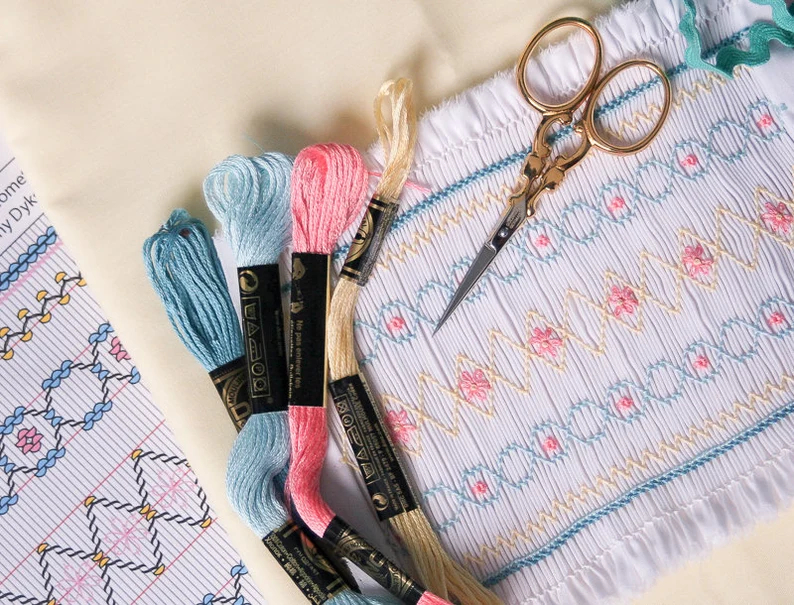
Production Tips , Care Instructions , and a Fabric Selection Checklist for Manufacturers
Pre-wash fabrics to remove sizing and predict shrinkage before cutting-this simple step saves fit issues after the first wash. Stabilize lightweight weaves with a light fusible stay or narrow interfacing along high-stress areas, and always align patterns on the correct grain to avoid distortion in the smocked panels. Use fine, high-tensile thread for gathers , and match the elastic width to the stitch density; too-wide elastic will flatten decorative pleats, too-narrow will create puckers. Finish seams with a gentle serger or French seam on delicate fabrics, and press smocked areas with a low-heat, steam-free setting to preserve elasticity and texture.
A compact checklist keeps production consistent on the floor: run a short test panel for every new fabric, document stitch tension and elastic count, and store care labels with batch records for traceability. Below are practical checkpoints and a quick fabric guide for fast decision-making.
- Test panel: 5 x 5 in sample, smocked and washed twice.
- Tension log: record needle size, stitch length, and elastic type per fabric.
- Cutting layout: place smock panels on straight grain; mark fold lines clearly.
- Pressing protocol: specify temperature and whether steam is allowed.
- Care label: include wash temperature, drying advice, and ironing limits.
| Fabric | Best Use | Care |
|---|---|---|
| Cotton lawn | Crisp dresses & blouses | Machine wash 30°C |
| Poplin | Structured smocking with clear pleats | Warm wash, tumble low |
| Viscose challis | Drapey, romantic, smocked panels | Hand wash or gentle cycle |
| Stretch jersey | Comfort-fit smocked bodices | Cold wash, lay flat |
Q&A
Q: What is smocking, and why does fabric choice matter for manufacturers?
A: Smocking is a technique that gathers fabric into regular pleats, then secures and decorates those pleats with stitching or elastic. Fabric choice determines how neatly pleats form, how stable decorative stitches sit, how garments behave during wear and care, and how efficient production will be. The right fabric reduces waste, saves sewing time, and yields consistent, durable results.
Q: Which fiber families work best for smocked garments?
A: Natural fibers (cotton, linen, silk) and breathable cellulosic synthetics (viscose/rayon, Tencel™) perform best. In Kabeier’s smocked babywear production, cotton and cotton blends are the most forgiving and easiest to pleat and stitch. Lightweight linens and silk blends offer refined drape for premium lines, while knits like cotton jersey or interlock are commonly used for elastic shirring in children’s wear.
Q: Recommended fabric constructions (weave/knit) for smocking?
A: Wovens with a stable structure and moderate drape are best: lawn, batiste, cotton poplin, voile, chambray, lightweight flannels, and lightweight denims/chambrays for casual looks. For delicate, elegant smocking, choose silk chiffon, crepe de chine, or rayon challis (handled with care). For elastic shirring, stretch knits (single jersey, interlock) and lightweight woven-blends with some elastane work well.
Q: What fabric weights (GSM) should manufacturers target?
A: General guidance:
– Fine smocking/children’s separates or sheer effects: 40-100 gsm (voile, chiffon, batiste)
– Most classic smocked garments: 100-170 gsm (cotton lawn, poplin, chambray)
– Heavier casual pieces with pronounced texture: 170-250 gsm (lightweight denim, brushed cotton)
Always prototype – weight interacts with weave and finish.
Q: Which fabrics should manufacturers avoid for smocking?
A: Very stiff or heavily finished fabrics (heavy twills, coated fabrics, stiff canvas, thick denim, heavy wool) resist pleating. Very loosely woven fabrics that fray or snag easily, and some highly slippery satins can be problematic. Also, avoid large-scale prints or directional textures where smocking will disrupt motif registration.
Q: How do blends and stretch affect smocking?
A: Small amounts of elastane (3–5%) improve comfort and recovery for shirred panels. Kabeier’s production experience shows that cotton/Tencel blends strike an excellent balance between drape and pleat definition. Polyester-heavy fabrics hold shape well but may feel less breathable—important for baby clothing.
Q: What pre-production fabric treatments are crucial?
A: Pre-wash/pre-shrink every fabric and repeat with the laundering method the garment will expect. Mercerizing cotton increases strength and luster and can improve stitch quality. Consider softeners and anti-pilling finishes depending on end use. Always test colorfastness – smocking concentrates fabric layers in one area and can amplify dye transfer.
Q: How should prints and stripes be handled?
A: Small-scale repeats and ditsy prints work best. Large motifs will break up under pleats and become disjointed. For stripes, decide if you want stripes to read across pleats or be broken: plan cutting so critical motifs or stripe orientation align across smocked panels; expect extra fabric for matching.
Q: Pleat spacing and density – what are typical ranges?
A: Rough guidelines:
– Fine smocking: 2-4 mm (very close, delicate)
– Medium/standard: 4-8 mm
- Loose/gathered look: 8-15 mm
Spacing affects the number of rows needed and the final elasticity. Always prototype with the same thread and stitch density you’ll use in production.
Q: Machine settings and hardware tips for shirring and machine smocking?
A: For shirring (elastic thread in bobbin):
– Use elastic thread in the bobbin, regular thread on top.
– low bobbin tension; keep elastic ribbon untwisted.
– Stitch length: 3.0-4.0 mm (longer stitches help gather evenly).
– Use a longer presser foot pressure on heavier fabrics; reduce pressure for delicate sheers.
For machine smocking devices (smocking plates or pleating machines), follow manufacturer settings and run pre-production samples until pleats are consistent.
Q: Needles, threads, and elastic recommendations?
A: Needles: Use 70/10 for very fine sheers, 80/12 for lightweight wovens, 90/14 for medium weights. Microtex needles help with tight weaves; ballpoint for knits. Threads: polyester all-purpose for strength; cotton-wrapped polyester for vintage look. Decorative smocking stitches often use embroidery, polyester, or rayon. Elastic: commercial elastic thread (polyamide or polyester covered) for shirring; test brands for breakage and recovery.
Q: Stitches and decorative considerations for production?
A: Decorative smocking may use embroidery stitches (honeycomb, cable, wave). For factory production, use stabilized machines or programmed embroidery attachments. Keep stitch density moderate – very dense decorative stitches restrict stretch and can cause puckering under stress. Choose thread color carefully; darker threads show on light fabrics and vice versa.
Q: Interfacing and lining – where to apply them?
A: Avoid interfacing on smocked panels – it blocks pleating and negates elasticity. Use light stretch stabilizers or sheer wash-away basting where temporary stabilization is needed during stitching. Apply interfacing to collars, cuffs, facings, and other non-smocked areas as usual. Lining can be used behind smocking for opacity or comfort, but test how the lining interacts with pleats.
Q: Edge finishing, seaming , and serging tips before smocking?
A: Serge or overlock cut edges to prevent fraying before pleating, especially on loosely woven fabrics. Use stay-stitching on curved edges that will be smocked. Plan seam allowances to accommodate the gathering – many designs need extra fabric to pleat without compromising pattern pieces.
Q: Quality control checks specific to smocked production?
A: Check pleat regularity, stitch consistency, elastic recovery after laundering, seam strength adjacent to smocked areas, and colorfastness. Measure pleat density and elasticity specs on random samples from each roll/dye lot. Inspect for skipped stitches or broken elastic on runs.
Q: Care labeling and consumer instructions?
A: Recommend gentle machine washing or handwashing for delicate fabrics, cool to warm water depending on fiber, low tumble or line dry, and low-temperature ironing from the wrong side or using a press cloth. Note that high heat damages elastic; include that warning.
Q: Cost and yield considerations in bulk manufacturing?
A: Smocking increases fabric usage and labour. Estimate 2-6× the base width in fabric, depending on pleat density and design complexity. Order extra fabric for sampling, tests, and potential dye-lot variations. Consider centralizing smocking on specific production lines or subcontracting to specialists for complex decorative work.
Q: Sustainable and eco-friendly fabric choices for smocking?
A: Organic cotton lawn/batiste, Tencel™/lyocell challis, linen blends, and recycled polyester are good options. Avoid heavy chemical finishes and choose low-impact dyes when possible. Sourcing consistent, certified fabric helps maintain quality and reduces waste.
Q: Differences between hand smocking and machine smocking in manufacturing?
A: Hand smocking gives artisanal granularity but is slow and costly. Machine smocking and automated pleating speed production and ensure consistency; however, not every decorative stitch translates perfectly to machine embroidery. Manufacturers often combine machine pleating with embroidered or sewn finishes for efficiency.
Q: Final prototyping checklist for manufacturers before full production
A: - Pre-wash and test fabric sample with the intended care cycle.
– Run pleating/smocking sample at target machine settings.
– Test stitch density and thread/elastics for stretch/recovery.
– Check print/stripe registration on pleated fabric.
– Validate seam and edge finishes adjacent to smocked areas.
– Order a small pilot run and perform QC tests before scaling.
This is the standard workflow used by Kabeier before mass production. For a deeper look at our smocking capabilities and production process, visit the smocked clothing manufacturer page
Q: Quick recommendations – top fabric picks for different smocking styles
A: – Classic children’s smocking: cotton lawn, batiste, poplin (100-140 gsm)
– Elegant, fine smocking: silk blends, crepe de chine, fine cotton batiste (40-120 gsm)
– Casual, structured smocking: chambray, light twill, brushed cotton (150-220 gsm)
– Elastic shirring: single jersey, cotton interlock, cotton/elastane blends
- Sustainable option: organic cotton lawn, Tencel challis, linen lawn
In Conclusion
Like any good craft, successful smocking begins with the cloth. Lightweight to midweight woven fabrics with a fine, even weave – long-staple cottons (batiste, lawn, poplin), cotton blends, viscose and rayon, lightweight silks and silk blends, and finely knit jerseys - all respond well to the small, repeated gathers that define smocking. The ideal fabric holds crisp pleats without bulk, tolerates repeated handling and stitching, and matches the end use: breathable and soft for children’s and summer wear, drapey and elegant for adult fashion, stable and durable for workwear or uniforms.
For manufacturers, fabric choice is only the start. Account for pre-shrinking, selvedge behavior, fray resistance, and how finishing treatments (pre-wash, mercerization, sanforization) will change hand and size. Adjust tooling and parameters – needle size, thread type and tension, pleating pitch, and machine speed – to the fabric’s weight and fiber content. Factor in yield and wastage, supplier lead times, and quality checks on colorfastness and tensile strength so small-scale beauty survives large-scale production.
The best fabric for smocked clothing balances aesthetics, performance , and manufacturability. Treat swatches and prototypes as essential experiments, document what works, and refine specs before full runs. With measured choice and careful testing, smocking can move seamlessly from a decorative tradition to a consistent, market-ready product – pleat by pleat.