
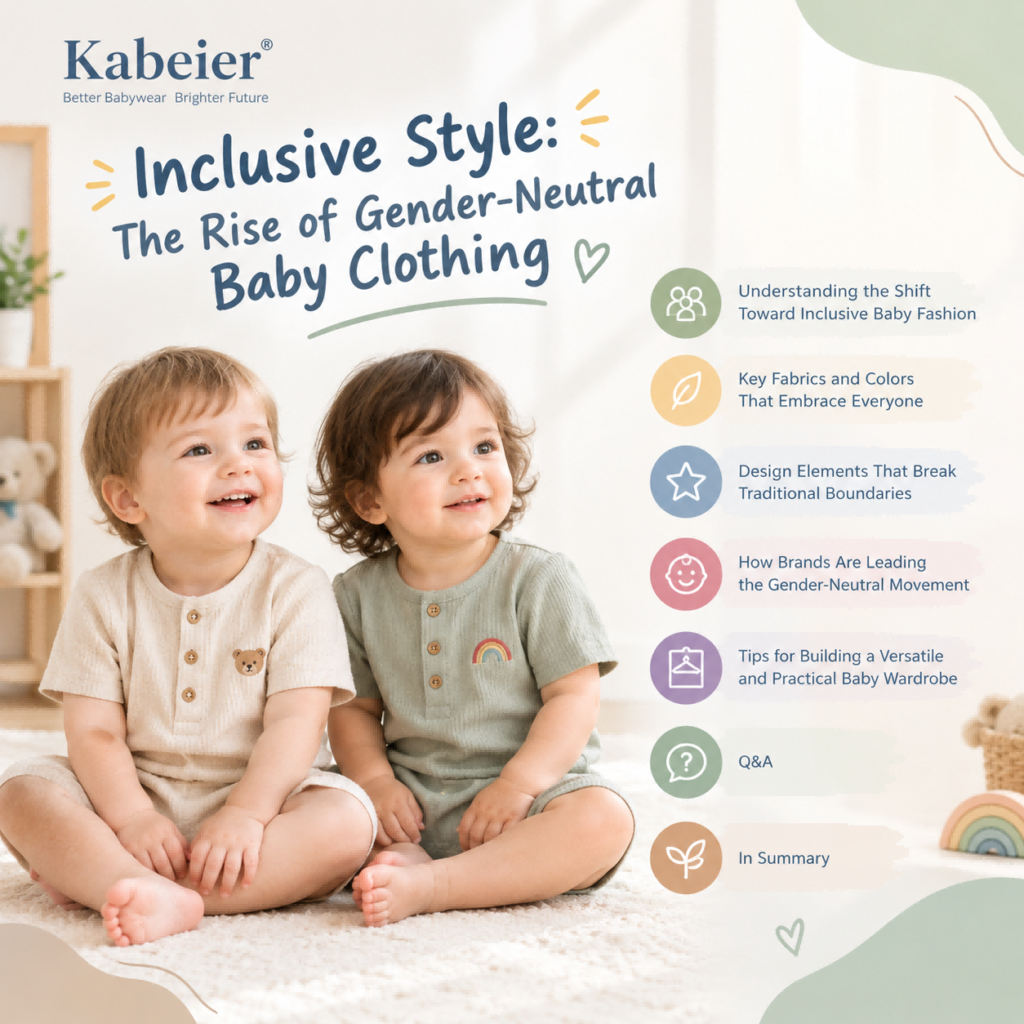
In a world increasingly attuned to diversity and inclusion, the realm of baby fashion is experiencing a quiet revolution. Gender-neutral baby clothing design is reshaping traditional notions of childhood attire, offering garments that embrace freedom, comfort, and individuality without the constraints of color or style stereotypes. This emerging trend invites parents and designers alike to rethink how clothing can nurture expression from the very start of life’s journey-where vibrant possibilities outshine old boundaries and every tiny outfit tells a story unbound by gender.
Table of Contents
- Understanding the Shift Toward Inclusive Baby Fashion
- Key Fabrics and Colors That Embrace Everyone
- Design Elements That Break traditional Boundaries
- How Brands Are Leading the Gender-Neutral Movement
- Tips for Building a Versatile and Practical Baby Wardrobe
- Q&A
- In Summary
Understanding the Shift Toward Inclusive Baby Fashion
 As society evolves, so does the way we approach dressing our little ones. Traditional color codes and outfit expectations based on binary gender are giving way to a more inclusive and expressive mindset. Parents and designers alike are embracing clothing that prioritizes comfort, versatility, and personality over outdated conventions. This shift not only supports individuality but also fosters an environment where children can explore their identity without limitations imposed by societal norms.Several factors contribute to this movement, including a growing awareness of gender diversity and the desire to create sustainable wardrobes. Gender-neutral baby clothing often features softer color palettes, playful patterns, and adaptable designs that transcend the “pink vs. blue” divide. Brands are now launching collections that focus on:
- Durability: Pieces designed to last through multiple stages of infancy and toddlerhood.
- Unisex appeal: Styles suitable for any child, encouraging hand-me-down culture and reducing waste.
- Expressive fabrics and motifs: Patterns and textures that spark curiosity and joy, rather than conforming to gender stereotypes.
| Traditional Baby Fashion | Inclusive Baby Fashion |
|---|---|
| Pink and blue dominant colors | Muted tones, earth colors, and vibrant mixes |
| Gender-specific slogans and imagery | Neutral symbols, nature-inspired and abstract designs |
| Limited mix-and-match options | Versatile pieces for layering and pairing |
Key Fabrics and Colors That Embrace Everyone
- Soft Textures: Organic Cotton, Bamboo Jersey, Modal
- Color Highlights: Sage Green, dusty Mustard, lavender Gray
- Design Elements: Unisex Patterns, Minimalist prints, Nature-Inspired Motifs
Design Elements That Break Traditional Boundaries
 One of the most exciting shifts in baby clothing lies in how designers are redefining aesthetics without the constraints of traditional gender norms. Rather than defaulting to stereotypical pinks for girls and blues for boys, creators now focus on a vibrant palette of earthy tones, soft pastels, and playful neutrals that appeal universally. Fabrics are chosen not only for comfort but also for their adaptability, with innovative textures that bring tactile joy irrespective of gender identity.Beyond color, the silhouettes of these garments embrace versatility. Think chunky knits, wrap-around onesies, and adjustable features that grow with the child. Patterns, too, steer clear of clichés, often drawing inspiration from nature, abstract shapes, or cultural art, which speak to all children without labeling them. This approach encourages freedom of expression from the very beginning, nurturing identity without the invisible boundaries that gender norms can impose.
- Multi-functional designs: Clothing that adapts as the child develops.
- Gender-neutral prints: Patterns like stars, animalsor geometric shapes.
- Inclusive sizing: Built to fit a wide range of body types comfortably.
| Design Feature | Traditional Style | Inclusive Innovation |
|---|---|---|
| Color Palette | Pink / Blue | Earth tones, Pastels, Neutrals |
| Fit | Gender-specific sizing | Adjustable, Unisex fit |
| Patterns | Floral / Cars | Abstract, Nature-inspired |
| Fabric | Standard cotton blends | Organic, Texture-rich materials |
How Brands Are Leading the Gender-Neutral Movement
- Collaborations with artists to create gender-ambiguous prints inspired by nature and fantasy
- Eco-friendly fabrics dyed in universal color palettes like forest greens, warm beigesand gentle grays
- Modular clothing systems that grow and adapt with the child, avoiding the need for frequent gender-specific replacements
To illustrate this transformation, compare traditional brand offerings with those pioneering the movement:
| Brand Type | Color Focus | Design Approach |
|---|---|---|
| Conventional | Pink & Blue | Distinct gender themes, bows, and trucks |
| Gender-Neutral Innovators | Muted tones & earth colors | Patterns inspired by animals, stars, and abstract art |
Tips for Building a Versatile and Practical Baby Wardrobe
- One-piece bodysuits in assorted neutral hues
- Simple pull-on pants and leggings with flexible waistbands
- Unisex outerwear such as hooded sweaters or lightweight jackets
- Durable socks and soft hats that fit all year
| Essential Item | Ideal fabric | Key Feature |
|---|---|---|
| Bodysuits | Organic Cotton | Envelope Neckline |
| Leggings | Bamboo blend | Elastic Waistband |
| sweaters | Soft knit | Front Zipper |
Embrace versatility by prioritizing neutral designs that encourage freedom of expression over strict adherence to pink or blue.This approach not only simplifies laundry day but also fosters an inclusive environment where style is all about fun and function - perfect for every little explorer’s journey.
Q&A
Q&A: Exploring the World of Gender-Neutral Baby Clothing Design
Q: What exactly is gender-neutral baby clothing?
A: Gender-neutral baby clothing refers to apparel designed without adhering to traditional gender-specific colors, patterns, or styles. Rather than categorizing clothes as “for boys” or “for girls,” these designs focus on inclusivity, comfort, and versatility, allowing babies to express themselves freely from the start.
Q: Why is there a growing interest in gender-neutral baby clothing?
A: Many parents and designers are embracing gender-neutral options to challenge outdated norms and stereotypes. This approach encourages self-expression beyond the binary and supports a more inclusive society. Additionally, gender-neutral clothes often bring practical benefits, such as easier hand-me-downs and a simplified shopping experience.
Q: How do designers create gender-neutral clothing?
A: Designers often focus on soft, natural fabrics and simple, timeless patterns like stripes, dots, or abstract shapes. Colors tend to be muted or lively but not traditionally “gendered”-think mustard yellow, teal, gray, or earthy tones rather than bright blue or pink. The styles are usually unisex, with roomy fits and minimal embellishments.
Q: Does gender-neutral baby clothing appeal to all cultures?
A: While the concept is gaining global traction, cultural perceptions of gender vary widely. Some societies embrace gender neutrality more readily, while others hold tightly to traditional gender norms. Designers and brands aiming for international reach frequently navigate these sensitivities by blending universal styles with culturally respectful elements.
Q: Are there any challenges in marketing gender-neutral baby clothes?
A: Absolutely. Retail environments and consumers still frequently expect clothes to be sorted by gender, which can create confusion or resistance. Packaging and branding must communicate inclusivity clearly without alienating traditional shoppers. Additionally, some parents worry about whether gender-neutral clothing might limit identification or expression, so education around the benefits is essential.
Q: How can gender-neutral baby clothing impact a child’s development?
A: By sidestepping restrictive gender codes, gender-neutral clothing allows children to explore their personalities without preset expectations. This freedom can foster creativity, confidence, and empathy by promoting the idea that interests and behaviors aren’t confined by gender.
Q: Where can parents find gender-neutral baby clothing?
A: Many contemporary brands focus on this niche, including boutique designers and larger retailers expanding their offerings. Online platforms frequently provide curated selections, making it easier to find stylish, ethical, and comfortable options that suit every family’s values.
Q: What is the future outlook for gender-neutral baby clothing design?
A: As conversations around gender identity and inclusivity evolve, the trend toward gender-neutral design is likely to deepen and diversify. Innovations in sustainable fabrics, adaptive sizing, and culturally sensitive aesthetics may shape the next generation of baby clothes – all designed to celebrate individuality without boundaries.
In Summary
As the lines between tradition and innovation continue to blur, gender-neutral baby clothing design stands at the crossroads of style, comfort, and individuality. By embracing fabrics, colors, and patterns beyond conventional labels, creators can give families more freedom to celebrate every child’s unique personality. At Kabeier, we believe thoughtful babywear should balance comfort, practical design, and creative expression. Through flexible OEM & ODM solutions, we help brands develop versatile baby clothing collections that reflect modern lifestyles while maintaining quality and craftsmanship. In this evolving landscape, clothing becomes more than just attire—it becomes a thoughtful expression of openness, possibility, and individuality from the very first stitch.