
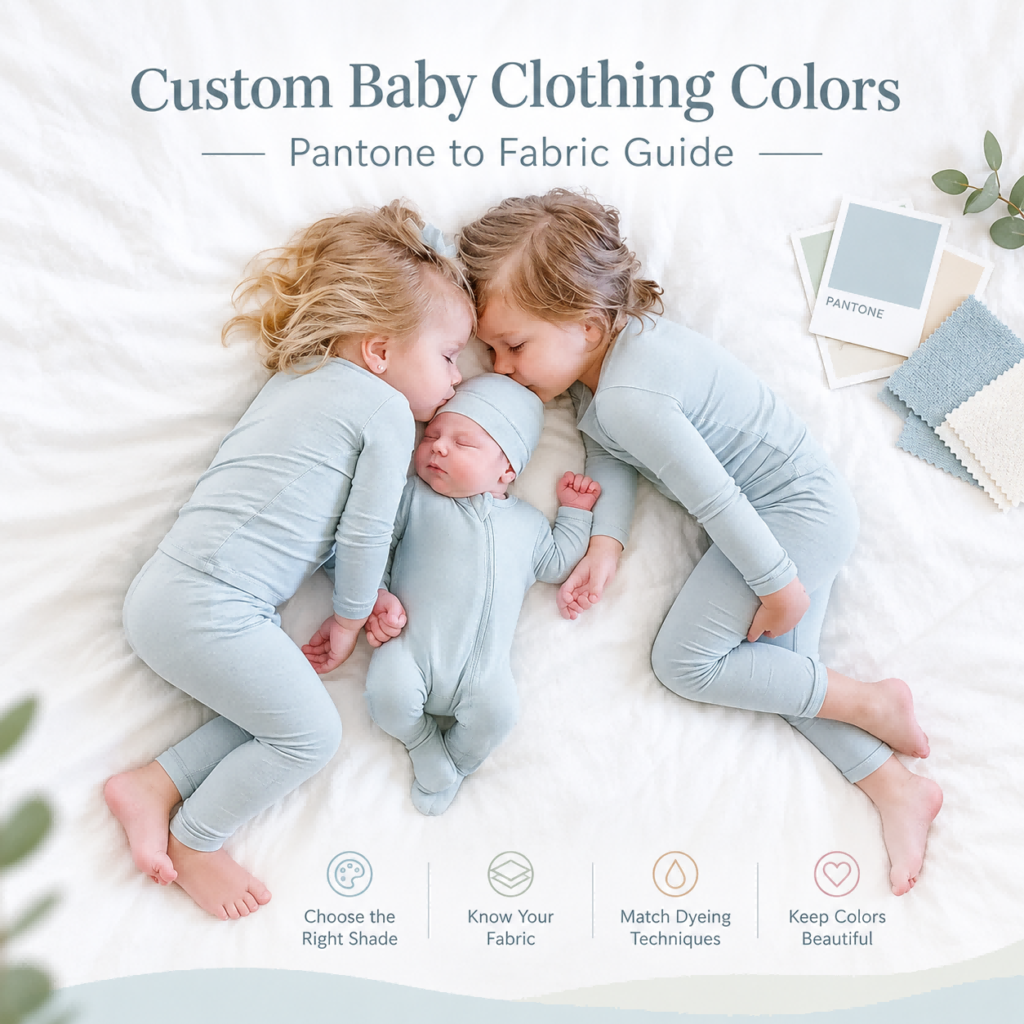
In the world of custom baby clothing, colour is more than just a hue-it’s a delicate language that speaks comfort, joy, and individuality. From the initial spark of inspiration to the final stitch, developing the perfect shade requires a careful blend of artistry and precision. This journey begins with the universal Pantone system, a trusted guide for designers and manufacturers alike, and culminates in the production-ready fabric that will wrap a newborn in softness and style. Join us as we explore the intricate process behind custom baby clothing color growth, uncovering how a concept in color transforms into a tangible, wearable creation that celebrates the innocence and vibrancy of early life.
Table of Contents
- Choosing the Perfect Pantone Shades for Baby Apparel
- Understanding Fabric Types and Their Impact on Color Rendering
- Matching Pantone Colors to Fabric Dyeing Techniques
- Tips for Maintaining Vibrant Colors in Custom Baby Clothing
- Balancing Trends and Comfort with Color Selection
- Q&A
- Closing Remarks
Choosing the Perfect Pantone Shades for Baby Apparel
| Pantone Shade | recommended Fabric | Color Effect |
|---|---|---|
| Pantone 14-2808 (Lullaby) | Organic Cotton | Soft, Pastel Finish |
| Pantone 15-0343 (Greenery) | Bamboo Blend | Vibrant, Matte |
| Pantone 16-1546 (Living Coral) | Polyester Mix | Bold & Luminous |
Keep in mind that durability and washability also influence color longevity, especially for baby clothing that requires frequent laundering. Opting for shades with moderate saturation can minimize fading while sustaining that fresh-from-the-box look. Ultimately, mixing color psychology with fabric behavior will ensure every piece not only looks adorable but feels comfortable and safe for little ones.
Understanding Fabric Types and Their Impact on Color Rendering
 When selecting colors for custom baby clothing, understanding how different fabric types affect color rendering is crucial. Natural fibers like cotton and linen tend to absorb dyes deeply, resulting in rich, soft hues that feel warm and inviting. Conversely, synthetic fabrics such as polyester or nylon often reflect light differently, producing brighter and sometimes sharper tones. This intrinsic quality of fabric can alter the perceived color from the Pantone swatch, making the final product look vibrant or muted depending on the textile used. Additionally, fabric texture and weave contribute significantly to color appearance. Smooth weaves create a more uniform surface, allowing colors to stand out clearly, whereas textured or loosely woven materials can scatter light, softening or dulling colors. When choosing Pantone shades for baby clothes, consider how the fabric’s characteristics align with the desired color effect-whether you wont those soft pastel Pantone tones to radiate gentle warmth or bold colors to pop with intensity.
| Fabric Type | Typical Color Rendering | Best Color Matches |
|---|---|---|
| Cotton | Matte, Deep Absorption | Soft Pastels, Earthy Reds |
| Polyester | Bright, Reflective | Vibrant Blues, Neon Greens |
| Linen | Muted, Slight Sheen | Neutral Tones, Warm Yellows |
| Velvet | Rich, Deep Contrast | Jewel Tones, Dark Pinks |
Keep in mind that care instructions and fabric treatments like mercerization or finishing coats also influence color stability and brightness over time. For baby clothing, where softness and safety are priorities, always balance color vibrancy with fabric comfort and durability to ensure a product that’s not only beautiful but also gentle on tiny skin.
Matching pantone Colors to fabric Dyeing Techniques
- Reactive Dyeing: Best for vibrant,true-to-Pantone colors on cellulose fibers like cotton and linen.
- Disperse Dyeing: Suited for polyester blends, providing sharp and intense colors but sometimes with a slightly darker tone.
- Pigment Printing: Provides excellent color stability but may introduce a softer, less saturated effect compared to reactive dyes.
- Vat Dyeing: Ideal for deep and rich blues and blacks, offering excellent wash fastness.
| Dyeing Technique | Fabric Compatibility | Color Accuracy | best for Pantone Shades |
|---|---|---|---|
| Reactive | Cotton, Linen | High | Bright, Pastel |
| Disperse | Polyester | Medium-High | Bold, Deep Tones |
| Pigment | Various (Print) | Medium | Muted, Earth Tones |
| Vat | Cotton, synthetic blends | Very High | Dark Blues, Blacks |
Achieving a seamless color match is both an art and a science-embracing the properties of each dyeing process allows designers and manufacturers to bring custom baby clothing to life with Pantone-perfect precision while ensuring comfort and longevity.
Tips for Maintaining Vibrant Colors in Custom Baby Clothing
- Turning garments inside out before washing to protect the colored surfaces
- Air drying rather than tumble drying to prevent heat-induced discoloration
- Avoiding direct sunlight for extended periods , as UV rays can fade colors quickly
| Washing Method | Effect on Vibrant Colors |
|---|---|
| Cold Water Wash | Preserves color integrity and fabric texture |
| Hot Water Wash | Accelerates fading and fabric wear |
| Gentle Cycle | Reduces friction and color loss |
| Regular Cycle | Increases risk of color fading and damage |
Balancing Trends and Comfort with Color Selection
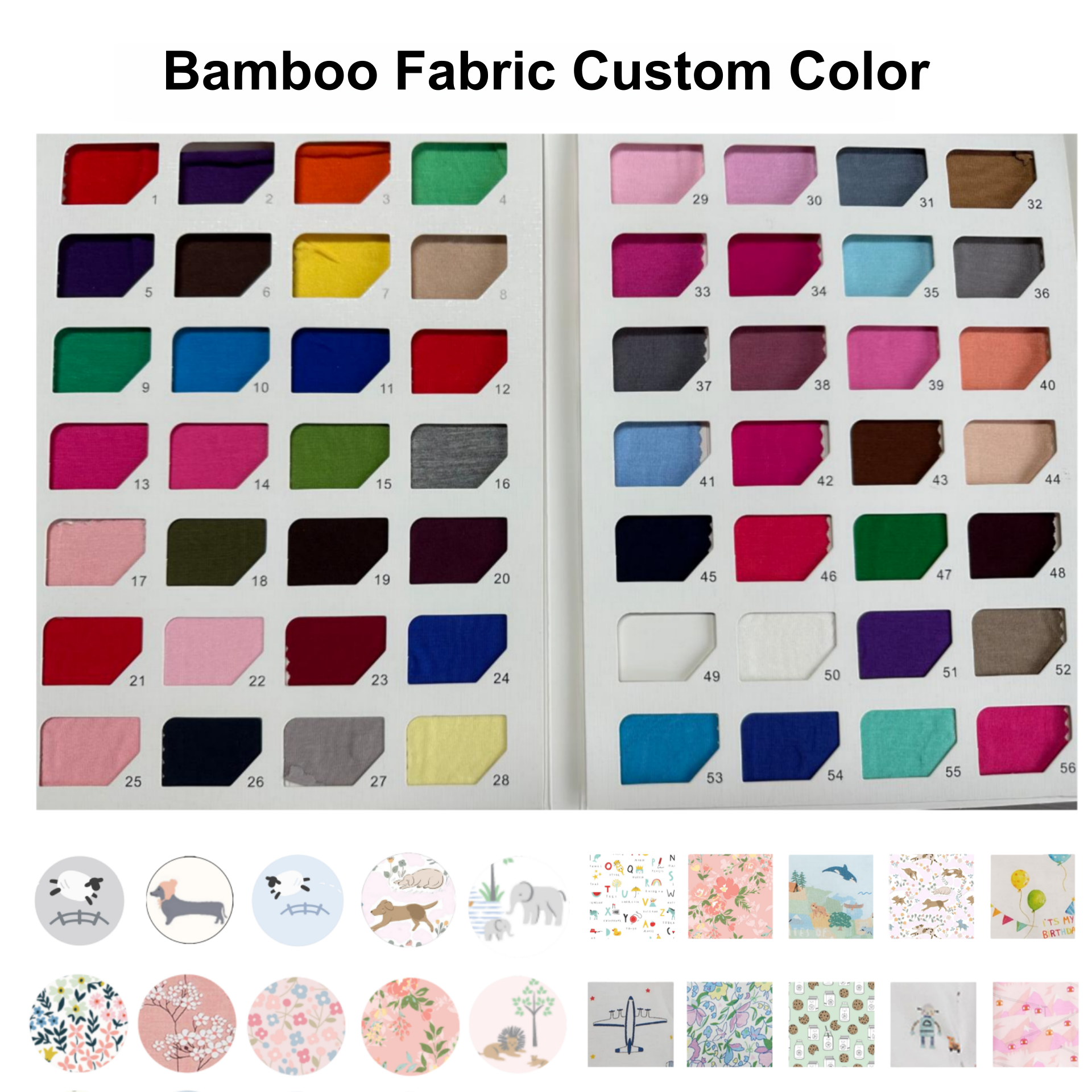 When choosing colors for custom baby clothing, striking the perfect balance between contemporary trends and timeless comfort is essential. While Pantone colors can guide you toward the hottest shades of the season, it’s equally important to consider how those colors translate onto soft, breathable fabrics that babies can comfortably wear all day long. Vibrant hues like Pantone 14-0852 (Spectra Yellow) or muted pastels such as Pantone 13-1406 (Rose Quartz) can be trendy on paper, but the actual fabric texture and dye saturation play a crucial role in ensuring the color is gentle on sensitive skin.
To help navigate this balance, keep in mind these core principles:
- Fabric type: Organic cotton and bamboo blends absorb color differently, often giving a softer, more natural appearance to saturated tones.
- Colorfastness: Babies’ clothes go through frequent washing, so selecting Pantone-inspired dyes that maintain vibrancy without harsh chemicals is key.
- Seasonal suitability: Light shades often enhance comfort during warmer months, while richer, deeper tones can add warmth visually without sacrificing style in cooler seasons.
| Pantone Color | Fabric Compatibility | Best Use |
|---|---|---|
| 16-1546 Living Coral | Organic Cotton | Spring & Summer Rompers |
| 17-5104 Ultimate Gray | Bamboo Blend | gender-neutral Outerwear |
| 12-2904 Baby Pink | Soft fleece | Winter Onesies & Hats |
Q&A
Q&A: Custom Baby clothing Color Development – From Pantone to Production-Ready Fabric
Q1: Why is color development critically important in custom baby clothing?
A1: Color sets the mood and identity of baby clothing. It captures attention, conveys brand values, and appeals to parents’ tastes. Because babies’ skin tones are delicate, choosing the right color ensures the clothing looks soft and comforting. Accurate color development bridges creative concepts and the final product’s real-world appeal.
Q2: What role does Pantone play in the color development process?
A2: Pantone is the global standard for color interaction. Designers start by selecting Pantone shades to specify exact colors, reducing guesswork and ensuring everyone from the design team to manufacturers aligns on a precise hue. It’s the color language that turns abstract ideas into clear specifications.
Q3: How is a Pantone color translated into fabric?
A3: Translating Pantone colors into fabric involves dyeing trials where textile specialists match the Pantone shade using dyes and pigments appropriate for the fabric type. Because fabric texture, fiber composition, and dye absorption affect the final color, multiple test runs are often necessary to hit the exact tone.
Q4: What challenges arise during this color matching phase?
A4: Several challenges can occur, such as color shifts due to fabric weave or fiber differences, dye inconsistency, and lighting variations affecting perception. Additionally, ensuring colorfastness (resistance to washing and fading) is crucial, especially in baby clothing, which undergoes frequent laundering.
Q5: How do manufacturers ensure the final fabric color remains consistent in production?
A5: Manufacturers establish a color standard or “colorway” sample that serves as a benchmark. Throughout production, quality control teams use color measurement tools-like spectrophotometers-to assess fabric batches, making adjustments if deviations occur, thereby securing uniformity from first bolt to last.
Q6: Can custom colors in baby clothing impact production costs or timelines?
A6: Yes. Custom colors frequently require unique dye formulations and extra testing, which can extend lead times and add costs compared to stock colors. Though, leveraging Pantone and a streamlined color development process can minimize these impacts by reducing trial-and-error cycles.
Q7: Are there sustainability considerations when developing custom colors for baby clothing?
A7: Absolutely. Enduring dyeing practices use eco-friendly dyes, reduce water consumption, and avoid harmful chemicals-all vital for baby products. Choosing colors that require less intensive dyeing or using natural dye alternatives can improve the environmental footprint of custom baby apparel.
Q8: What should brands keep in mind when initiating a custom color development project?
A8: Brands should start with a clear color vision and lean on Pantone guides for precise communication. Collaborating closely with textile experts, allowing adequate time for trials, and prioritizing quality control ensures the final fabric reflects the intended hue, safety standards, and overall brand identity.
Q9: How does lighting affect color perception in baby clothes, and how is this managed?
A9: Lighting-natural vs. fluorescent or LED-can dramatically affect how colors appear. To manage this, color approval is typically done under standardized lighting conditions that simulate retail or home environments, ensuring the fabric color looks as was to be expected to consumers in real-life settings.
Q10: What is the key takeaway about custom baby clothing color development?
A10: The journey from Pantone to production-ready fabric is a blend of art and science, requiring precise communication, rigorous testing, and thoughtful material selection. When done well, it results in baby clothes that are visually delightful, safe, and consistently true to the brand’s unique color story.